Men's Health Supplements: What the Clinical Evidence Actually Supports

Ashwagandha, shilajit, magnesium, vitamin D and lion's mane are the five men's health supplements with the strongest randomised controlled trial evidence in 2026, covering testosterone, stress, fertility, sleep and cognition. Ashwagandha KSM-66 at 600 mg/day raised testosterone by roughly 14.7 per cent over eight weeks in a placebo-controlled trial in men aged 21 to 45, shilajit at 500 mg/day raised total testosterone by around 20 per cent in men aged 45 to 55 over 90 days, and vitamin D lifts testosterone specifically in men who are deficient at baseline. Tribulus terrestris, fenugreek and over-the-counter DHEA are the three widely-sold "testosterone boosters" that fail rigorous human trials in healthy men.
This UK guide breaks down each ingredient with a named study, a real dose, an honest read on who it helps, and clear labels on where the marketing outruns the evidence. Every claim below comes with a cited human trial, and the "what doesn't work" section is included on purpose.
Where the Evidence Is Strongest
Ashwagandha (14.7 per cent testosterone rise in an 8-week RCT), magnesium (positive association with testosterone, over 300 enzymatic roles) and vitamin D (NHS-recommended, deficiency affects most UK adults in winter) have the most robust clinical trial data for men's health. Shilajit and lion's mane also have positive RCT results but from smaller study populations.
In this article
- Why is ashwagandha the most-studied adaptogen for men?
- Does shilajit really raise testosterone and sperm quality?
- Why do most UK men fall short on magnesium?
- Which UK men actually need a vitamin D supplement?
- Does zinc really boost testosterone in healthy men?
- What do B vitamins do for stress, energy and cognition?
- Does lion's mane actually improve focus and cognition?
- Which men's health supplements don't have the evidence?
- How should you match supplements to your goals?
- Which supplements help with men's mental health?
- Which two or three should you actually try first?
- Frequently asked questions
Why is ashwagandha the most-studied adaptogen for men?
Ashwagandha (Withania somnifera) has more clinical trial data relevant to men's health than any other adaptogen. The root extract, particularly the standardised KSM-66 form, has been tested across testosterone, stress, sexual function and fertility in multiple randomised controlled trials.
A 2019 randomised, double-blind, placebo-controlled trial by Lopresti et al enrolled 57 young men aged 21-45 who took 300 mg of ashwagandha root extract twice daily for eight weeks. Compared with placebo, the ashwagandha group showed a 14.7 per cent greater increase in testosterone and an 18 per cent greater increase in DHEA-S, the precursor hormone to testosterone (Lopresti et al., 2019, DOI: 10.1177/1557988319835985). The same study found significant improvements in fatigue and vigour scores.
For sexual health, a 2022 randomised controlled trial by Chauhan et al tested 300 mg of ashwagandha root extract twice daily in 50 healthy adults over eight weeks. The treatment group reported significant improvements in sexual well-being and sexual function compared with placebo, with increases measured across desire, arousal, satisfaction and overall performance (Chauhan et al., 2022, DOI: 10.1002/hsr2.741).
The fertility evidence is particularly striking. An earlier study of infertile men found that ashwagandha root powder at 5 g daily for three months produced a 167 per cent increase in sperm count, 53 per cent increase in semen volume and 57 per cent increase in sperm motility, with serum testosterone rising alongside. These results were observed in men with stress-related fertility problems, suggesting ashwagandha's cortisol-lowering effects may partly explain the reproductive improvements.
Ashwagandha also has consistent evidence for reducing cortisol and perceived stress, which indirectly supports testosterone because chronic stress suppresses the hypothalamic-pituitary-gonadal axis. Browse our ashwagandha supplement range including KSM-66 capsules and ashwagandha gummies. For a deeper look at how ashwagandha compares to other adaptogens, see our complete ashwagandha benefits guide.
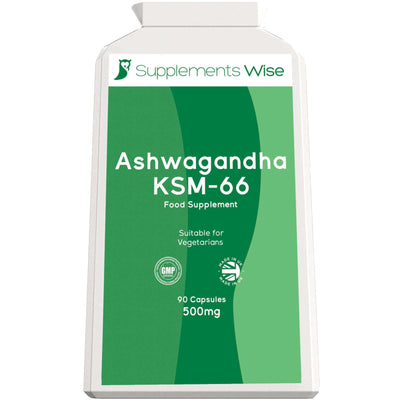
Ashwagandha KSM-66 500mg, 90 Capsules
The KSM-66 extract used in the Lopresti 2019 testosterone RCT. 500 mg per capsule, standardised to at least 5 per cent withanolides, made in the UK.
UK GMP-certified · Vegetarian · 30-day returns · Free UK shipping
£15.95
Add to CartDoes shilajit really raise testosterone and sperm quality?
Shilajit is a mineral-rich resin found in Himalayan rock formations, used in Ayurvedic medicine for centuries. Unlike many traditional remedies, shilajit has been tested in randomised controlled trials specifically measuring testosterone and fertility outcomes in men.
A 2016 randomised, double-blind, placebo-controlled trial by Pandit et al enrolled 96 healthy male volunteers aged 45-55 who took 250 mg of purified shilajit twice daily for 90 days. The results showed a 20.45 per cent increase in total testosterone compared with baseline, alongside significant rises in free testosterone and DHEA-S (Pandit et al., 2016, DOI: 10.1111/and.12482). The placebo group showed no meaningful change in any hormonal parameter.
For fertility, Biswas et al (2010) tested shilajit in 60 infertile men over 90 days. The treatment group showed a 61.4 per cent increase in total sperm count and a 37.6 per cent increase in sperm motility, with testosterone rising by 23.5 per cent versus baseline.
The active compounds include fulvic acid, dibenzo-alpha-pyrones and trace minerals, and the proposed mechanism involves supporting mitochondrial energy production and reducing oxidative damage to reproductive cells. While the shilajit evidence base is smaller than the ashwagandha one, the existing trials show consistent positive results in middle-aged and infertile men. Our shilajit complex combines purified shilajit with complementary nutrients, and for a head-to-head comparison of these two adaptogens, read our shilajit vs ashwagandha comparison.
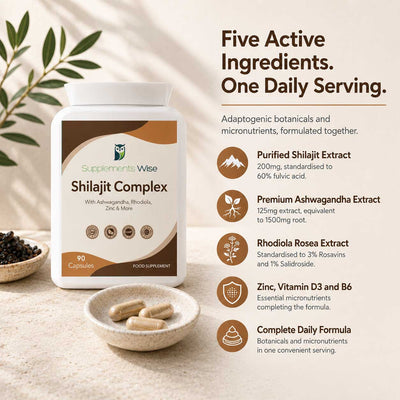
Shilajit Complex with Ashwagandha & Rhodiola, 90 Capsules
400 mg purified shilajit plus 250 mg KSM-66 ashwagandha and 250 mg rhodiola rosea at two capsules a day. Adaptogen stack for testosterone and energy in one bottle.
UK GMP-certified · Vegetarian · 30-day returns · Free UK shipping
£16.95
Add to CartWhy do most UK men fall short on magnesium?
Magnesium is involved in over 300 enzymatic reactions in the body, yet research consistently shows that roughly 48 per cent of the population consumes less than the recommended daily amount. For men, this matters because magnesium plays direct roles in testosterone production, sleep quality, muscle recovery and cardiovascular function.
A 2014 review by Maggio et al examined the relationship between magnesium and anabolic hormones in ageing men, showing a significant positive association between magnesium levels and testosterone even after adjusting for confounders (Maggio et al., 2014, DOI: 10.1155/2014/525249).
Cinar et al (2011) tested magnesium supplementation at 10 mg/kg/day in three groups: sedentary men, moderate exercisers and taekwondo athletes. All three groups showed increases in free and total testosterone after four weeks, but the greatest testosterone increases were observed in the athletes who combined magnesium with regular exercise (Cinar et al., 2011, DOI: 10.1007/s12011-010-8676-3).
Beyond hormones, magnesium deficiency is linked to poor sleep, increased inflammation, muscle cramps and higher cardiovascular risk, and for physically active men, losses through sweat can further deplete already marginal stores. The recommended daily intake for adult men is 400-420 mg, and most diets fall short without deliberate effort or supplementation. Our magnesium citrate tablets and triple magnesium complex provide highly bioavailable forms that address this common gap.
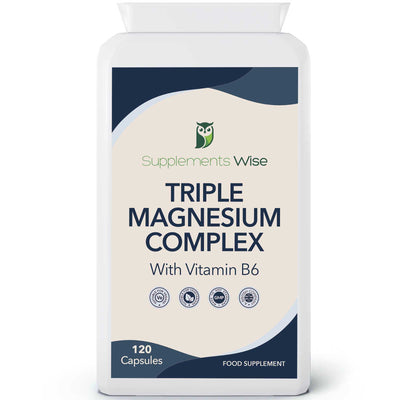
Triple Magnesium Complex, 3 Forms with B6, 120 Capsules
Citrate, bisglycinate and malate in one capsule with vitamin B6. Covers sleep, muscle relaxation and testosterone-relevant intake in one product.
UK GMP-certified · Vegan · 30-day returns · Free UK shipping
£14.95
Add to CartWhich UK men actually need a vitamin D supplement?
Vitamin D functions more like a hormone than a traditional vitamin, and its receptors are found throughout the male reproductive system including the testes, prostate and sperm cells. In northern latitudes like the UK, vitamin D insufficiency affects the majority of the population during autumn and winter months, making supplementation a practical necessity rather than an optional extra.
A 2024 meta-analysis of 17 randomised controlled trials examined the effect of vitamin D supplementation on testosterone levels in men. The pooled results showed a significant increase in total testosterone among men who supplemented with vitamin D compared with placebo (2024, DOI: 10.3390/diseases12100228). The effect was most pronounced in men who were vitamin D deficient at baseline, which highlights an important caveat: if your vitamin D levels are already adequate, supplementation is unlikely to boost testosterone further.
Beyond testosterone, vitamin D supports immune function, bone density, muscle strength and mood regulation. A large observational study found that men with sufficient vitamin D levels had lower rates of cardiovascular disease, type 2 diabetes and all-cause mortality. The UK government recommends all adults consider supplementing with at least 10 micrograms (400 IU) daily during autumn and winter, though many researchers argue this is too conservative.
For men targeting testosterone, the clinical trials used doses between 1,000 and 3,332 IU daily. Our vitamin D3 3000 IU with K2 pairs the trial-relevant dose with K2 for calcium metabolism (stock rotates, so check availability), while our vitamin D3 deficiency guide covers the symptoms most likely to prompt a blood test. Getting your vitamin D levels tested through a simple blood test is the best way to determine your personal need.
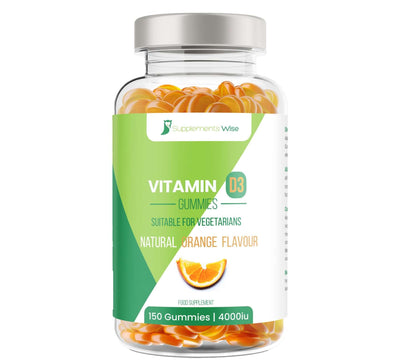
Vitamin D3 Gummies 4000 IU, 150 Gummies
Pectin-based orange gummies at 4,000 IU per gummy, sitting inside the trial dose range for the men's testosterone RCTs. 150-day supply.
UK GMP-certified · Vegetarian · 30-day returns · Free UK shipping
£16.95
Add to CartDoes zinc really boost testosterone in healthy men?
Zinc is frequently marketed as a testosterone booster, and it does play a genuine role in testosterone synthesis and sperm production. However, the clinical evidence tells a more nuanced story than the marketing suggests.
A meta-analysis of 20 studies examining zinc's effect on male reproductive hormones found that zinc supplementation significantly increased testosterone levels in men who were zinc deficient (DOI: 10.1038/srep22386). Mild zinc deficiency is relatively common, particularly in men who exercise heavily, follow restrictive diets or drink significant amounts of alcohol.
However, the FAZST trial, one of the largest and most rigorous studies on zinc and male fertility, tested zinc supplementation in men from the general population (not specifically deficient men) and found no significant improvement in semen quality or fertility outcomes. This is the crux: zinc helps when you are deficient, but it does not boost testosterone or fertility above your normal baseline.
If you suspect zinc deficiency due to diet, lifestyle or symptoms like frequent illness, slow wound healing or loss of taste, supplementation makes sense. If your zinc levels are already adequate, adding more zinc will not raise your testosterone further. The recommended daily intake for adult men is 11 mg, easily achieved through a balanced diet containing meat, shellfish, nuts and seeds.
What do B vitamins do for stress, energy and cognition?
B vitamins are essential cofactors in energy metabolism, neurotransmitter production and red blood cell formation. For men facing high-stress work environments or demanding physical routines, B vitamin status can directly influence energy levels, mood and mental clarity.
A well-designed randomised controlled trial by Kennedy et al (2010) enrolled 215 healthy males aged 30-55 and tested a high-dose B complex over 33 days. Compared with placebo, the B complex group showed significantly reduced personal strain, confusion and depressed mood, along with improved cognitive performance on demanding mental tasks (Kennedy et al., 2010, DOI: 10.1007/s00213-010-1870-3). The effect sizes were meaningful and consistent across multiple psychological measures.
Vitamin B12 deserves an honest mention: a 2021 meta-analysis of 16 randomised controlled trials found that B12 supplementation did not improve cognitive function, depression or fatigue in people without overt B12 deficiency. This does not mean B12 is unimportant; like zinc, the benefits are real for those who are deficient but do not extend to people with adequate levels. Men most at risk of B12 deficiency include vegans, vegetarians, older adults and those taking proton pump inhibitors.
For broader stress and energy support, a B complex supplement covering all eight B vitamins is more evidence-based than B12 alone. If you specifically need B12 due to dietary restrictions, our methylcobalamin B12 provides the bioactive form at a clinically relevant dose. For more options to support energy levels naturally, our energy and fatigue supplements guide covers the full evidence base.
Does lion's mane actually improve focus and cognition?
Lion's mane (Hericium erinaceus) is a medicinal mushroom that has attracted significant research interest for its effects on nerve growth factor (NGF) production and cognitive function. For men in demanding professional roles where mental performance matters, the emerging evidence is worth examining.
A 2023 randomised, double-blind, placebo-controlled trial by Docherty et al tested lion's mane extract in healthy adults and found that the supplementation group demonstrated quicker performance on the Stroop colour-word interference test, a standard measure of cognitive speed and executive function (Docherty et al., 2023, DOI: 10.3390/nu15224842). The researchers proposed that lion's mane's bioactive compounds, hericenones and erinacines, stimulate NGF synthesis and support neural plasticity.
An earlier study in older adults with mild cognitive impairment found that 250 mg of lion's mane taken three times daily for 16 weeks produced significant improvements on cognitive function scales compared with placebo. Notably, when supplementation stopped, cognitive scores declined again over the following four weeks, suggesting the benefits require ongoing intake.
While the evidence base for lion's mane is smaller than for nutrients like magnesium or vitamin D, the existing trials point toward genuine cognitive benefits through a unique NGF-stimulation mechanism rather than simply replacing a missing nutrient. Our lion's mane capsules provide 1,500 mg per serving, and our mushroom complex combines lion's mane with other medicinal mushrooms for broader support.
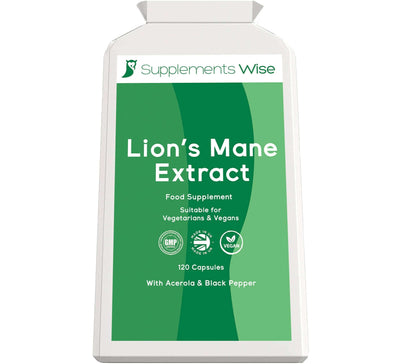
Lion's Mane Capsules, 1500 mg, 120 Vegan Caps
1,500 mg per serving of Hericium erinaceus for focus, executive function and NGF support. 60-day supply, vegan and UK-made.
UK GMP-certified · Vegan · 30-day returns · Free UK shipping
£14.95
Add to CartWhich men's health supplements don't have the evidence?
Honest supplementation means acknowledging where the evidence is weak or absent. Several commonly marketed men's health ingredients lack sufficient human clinical trial data to justify their claims.
Tribulus terrestris is widely sold as a testosterone booster, but systematic reviews consistently find no significant effect on testosterone in healthy men. The positive studies are largely conducted in animals, and the human trials that do exist show no hormonal benefit.
Fenugreek has some limited evidence for libido, but the testosterone claims rest on studies that measured "free testosterone" using methods now considered unreliable. Better-designed studies using accurate measurement methods have produced inconsistent results that do not support the marketing claims.
DHEA supplementation in men under 40 with normal hormone levels has not been shown to meaningfully increase testosterone. DHEA may have a role in older men with documented low levels, but over-the-counter DHEA supplements are not a reliable testosterone-boosting strategy for younger men.
This does not mean these supplements are useless for all purposes, but their specific claims about testosterone enhancement are not supported by the weight of current evidence. Spending your supplement budget on ashwagandha, magnesium and vitamin D has far stronger research backing.
What the Research Says
Lopresti AL, Smith SJ, Malvi H, Kodgule R (2019). An investigation into the stress-relieving and pharmacological actions of an ashwagandha extract: A randomized, double-blind, placebo-controlled study. Medicine (Baltimore) / American Journal of Men's Health, 13(2). DOI: 10.1177/1557988319835985. The trial showed a 14.7 per cent greater increase in testosterone and an 18 per cent greater increase in DHEA-S vs placebo at 600 mg/day KSM-66 over 8 weeks in men aged 21 to 45. This remains the single most-cited randomised trial in men's ashwagandha research.
How should you match supplements to your goals?
| Health Goal | Top Evidence-Based Options | Evidence Strength | Key Trial Dose |
|---|---|---|---|
| Testosterone support | Ashwagandha, shilajit, vitamin D (if deficient) | Strong (multiple RCTs) | 600 mg/day, 500 mg/day, 3,000 IU/day |
| Stress and energy | Ashwagandha, B complex, magnesium | Strong (multiple RCTs) | 600 mg/day, high-dose complex, 400 mg/day |
| Fertility | Ashwagandha, shilajit, zinc (if deficient) | Strong (RCTs in infertile men) | 5 g/day root powder, 500 mg/day, 11 mg/day |
| Cognitive performance | Lion's mane, B complex, omega-3 | Moderate (smaller RCTs) | 750-1,500 mg/day, high-dose complex, 1-2 g/day |
| Sexual health | Ashwagandha, shilajit | Moderate to strong (RCTs) | 600 mg/day, 500 mg/day |
| Sleep and recovery | Magnesium, ashwagandha | Strong (multiple RCTs) | 400-420 mg/day, 600 mg/day |
The table above reflects what the clinical trials actually show rather than what marketing materials claim. Notice that ashwagandha and magnesium appear across multiple goals, which is why they earn the "foundational" label for men who want to address several concerns without taking a dozen products. Adding omega-3 fish oil rounds out the picture for cardiovascular and anti-inflammatory support, and our NMN supplements UK guide and complete supplement guide both extend the strategy for longevity and general daily basics.
Which supplements help with men's mental health?
Men in the UK are three times more likely to die by suicide than women, yet significantly less likely to seek help for mental health difficulties. While supplements are not a substitute for professional support, nutritional deficiencies can genuinely worsen mood, energy and cognitive function in ways that compound existing mental health challenges. The NHS Every Mind Matters men's mental health hub and the charity Movember both offer free UK-specific support that any supplement stack should sit alongside.
The Kennedy et al B complex trial mentioned earlier specifically recruited men and found meaningful improvements in mood and stress markers. Ashwagandha's cortisol-lowering effects have been replicated across multiple trials, and vitamin D deficiency is associated with increased risk of depression in observational studies, though the intervention trials for vitamin D and depression have produced mixed results.
The practical message is not that supplements cure depression or anxiety: it is that ensuring adequate levels of magnesium, B vitamins, vitamin D and omega-3 removes nutritional barriers that can make mental health management harder than it needs to be. If you are struggling, speak to your GP; if you are already receiving support, our best supplements for stress and anxiety guide lists the specific options with the clearest trial data.
Which two or three should you actually try first?
Almost every reader lands on this article with a specific loudest problem. The table below maps the common ones onto a first move that reflects the trial evidence, not the marketing.
| Loudest issue | Start here | Sensible daily dose | Review at |
|---|---|---|---|
| Wired-but-tired, low mood, poor sleep | Ashwagandha KSM-66 | 600 mg | 6 to 8 weeks |
| Low energy, low libido, over 40 | Shilajit Complex | 400 mg shilajit (2 caps) | 12 weeks |
| Muscle cramps, sleep and general top-up | Triple Magnesium Complex | 375 mg elemental (3 caps) | 4 to 8 weeks |
| Autumn/winter or deficient bloods | Vitamin D3 4000 IU Gummies | 4,000 IU (1 gummy) | 12 weeks |
| Focus, executive function, mental fatigue | Lion's Mane 1500 mg | 1,500 mg | 8 to 16 weeks |
Ready to build your supplement stack?
Browse our men's health range, backed by the clinical evidence discussed above.
Shop Ashwagandha Browse All SupplementsWorth Knowing
Ashwagandha may interact with thyroid medications, immunosuppressants and sedatives, and is contraindicated during pregnancy. High-dose vitamin D (above 4,000 IU daily) should be guided by blood-test results because fat-soluble vitamins accumulate. Zinc above 40 mg daily long-term can cause copper depletion, and if you take any prescription medication, discuss new supplements with your GP first.
Key Takeaway
If you can only afford two or three men's health supplements, pick ashwagandha, magnesium and vitamin D. Together they cover testosterone, stress, sleep, muscle recovery, mood and immune function with the strongest RCT backing on the UK shelf. Skip tribulus, fenugreek and over-the-counter DHEA until better evidence emerges.
Frequently asked questions
What is the best supplement for men's testosterone levels?
Ashwagandha has the strongest clinical evidence for testosterone support in men, with a 2019 RCT showing a 14.7 per cent greater increase versus placebo over 8 weeks at 600 mg per day. Shilajit also showed a 20.45 per cent testosterone increase in a 90-day trial. Vitamin D and zinc are worth testing for deficiency first because correcting either can restore testosterone that is being suppressed by inadequate nutrition.
Do testosterone booster supplements actually work?
Some do and many do not. Ashwagandha, shilajit and vitamin D (in deficient men) have positive results from randomised controlled trials. However, popular ingredients like tribulus terrestris and fenugreek lack convincing evidence for testosterone increases in healthy men, so the key distinction is between supplements tested in rigorous human trials and those marketed on animal studies or unreliable measurement methods.
How much magnesium should men take daily?
The recommended daily intake for adult men is 400-420 mg of magnesium, and research shows roughly 48 per cent of the population consumes less than this amount. Men who exercise regularly may need more due to magnesium losses through sweat. Magnesium citrate is one of the most bioavailable forms, so the body can absorb a higher percentage of the dose than from cheaper oxide forms.
Can ashwagandha help with male fertility?
Clinical trials in infertile men show ashwagandha can significantly improve sperm parameters, with one study reporting a 167 per cent increase in sperm count, 53 per cent increase in semen volume and 57 per cent increase in sperm motility after three months of daily supplementation. The benefits appear strongest in men with stress-related fertility problems, and shilajit showed similar improvements with a 61.4 per cent increase in sperm count in a separate trial of infertile men.
Is lion's mane good for focus and concentration?
A 2023 randomised controlled trial found that lion's mane supplementation improved performance on the Stroop test, which measures cognitive speed and executive function, and an earlier study in older adults with mild cognitive impairment showed significant improvements over 16 weeks. The proposed mechanism involves stimulation of nerve growth factor production in the brain. Benefits appear to require ongoing supplementation because cognitive improvements declined when participants stopped taking it.
Should men take B12 or a B complex supplement?
For most men, a B complex is the better choice. A clinical trial of 215 healthy men showed that high-dose B complex reduced stress and improved cognitive performance over 33 days. Standalone B12 supplementation has not shown benefits for cognition or mood in people without B12 deficiency, but vegans, vegetarians and older men should specifically ensure adequate B12 intake because these groups are at higher risk of deficiency.
What supplements should I take if I can only afford two or three?
If you are limited to two or three supplements, ashwagandha, magnesium and vitamin D give you the broadest evidence-based coverage. Ashwagandha addresses testosterone, stress, energy and sexual health; magnesium covers sleep, recovery, muscle function and hormonal support; and vitamin D supports testosterone, immunity and bone health. Together they address the most common deficiencies and health concerns for men at a reasonable cost.
Start the sensible 8-week ashwagandha trial
KSM-66 ashwagandha at 500 mg per capsule, the exact extract used in the Lopresti 2019 men's testosterone RCT. One capsule a day, 90 in a bottle, made in the UK to GMP standards.
Shop KSM-66 AshwagandhaUK GMP-certified · Vegetarian · 30-day returns · Free UK shipping
This article is for information only and is not medical advice. Food supplements should not replace a varied diet or a healthy lifestyle. Speak to your GP or pharmacist before starting any new supplement, especially if you are pregnant, breastfeeding, taking medication or managing a health condition.