Cranberry vs D-Mannose: Which Actually Helps with UTIs?

Cranberry and D-mannose are the two supplements most people reach for at the first sign of a urinary tract infection. Both target the same underlying problem, but they work differently and the evidence behind each one has shifted noticeably over the last few years.
This UK guide compares them honestly, covering the 2024 JAMA D-mannose trial, the Cochrane reviews on both ingredients, and how to choose between them based on your situation. We will also explain when taking them together actually makes sense.
Key Takeaway
Cranberry has the stronger recent evidence for preventing recurrent UTIs in women, with a 2023 Cochrane review showing around a 26 percent reduction. D-mannose remains popular and has a clean safety record, but a large 2024 UK trial found no clear benefit over placebo. For day-to-day prevention many people use one or the other, and some combine them.
Cranberry vs D-Mannose: The Short Answer
The simplest way to choose is to match the supplement to your goal. Cranberry has the most consistent UTI prevention data, while D-mannose has the strongest mechanistic story but recently shakier clinical evidence.
Neither is a treatment for an active infection that needs antibiotics, and neither replaces the basics of hydration, hygiene, and seeing your GP when symptoms persist. The table below summarises which option suits which situation.
| Your Situation | Better Starting Point | Why |
|---|---|---|
| Recurrent UTIs in women | Cranberry | Strongest Cochrane evidence for prevention |
| Occasional UTI prone after sex or travel | D-mannose | Easy short-term use, very low side effect profile |
| Already taking cranberry with poor results | Add D-mannose | Complementary mechanism, no known interaction |
| Diabetic or pre-diabetic | Cranberry capsules | D-mannose is a sugar, discuss higher doses with your GP |
| Active UTI with fever or back pain | See your GP, not a supplement | May need antibiotics urgently |
Based outside the UK?
we don't ship internationally yet, but both are widely available worldwide. Find-D-Mannose or Cranberry extract on iHerb.
How Cranberry and D-Mannose Actually Work
Both ingredients are designed to do the same job: stop E. coli, the bacteria behind around 80 percent of UTIs, from sticking to the lining of the bladder. Bacteria that cannot stick get flushed out in the urine before they can multiply.
Cranberry contains a group of compounds called proanthocyanidins, often shortened to PACs. The A-type PACs in cranberry physically block the tiny hair-like attachments that E. coli uses to grip the bladder wall.
D-mannose is a simple sugar that the body does not metabolise for energy. Instead it passes through the digestive system and into the urine, where it acts as a decoy that bacteria attach to instead of the bladder lining.
The two mechanisms are complementary rather than identical. Cranberry blocks the attachment points, while D-mannose offers an alternative target the bacteria latch onto first.
What the Latest UK and International Research Shows
The evidence picture has changed meaningfully in the last three years. Cranberry has been re-validated by a major Cochrane review, while D-mannose has had its biggest trial yet return a disappointing result.
The 2023 Cochrane review of cranberry products pooled 50 studies covering more than 8,800 participants. It concluded that cranberry reduced the risk of recurrent UTIs in women by around 26 percent and in children by around 54 percent.
What the Research Says
A Cochrane systematic review found that cranberry products reduced the risk of symptomatic, culture-verified UTIs in women with recurrent infections by about 26 percent compared with placebo or no treatment (Williams et al., 2023, DOI: 10.1002/14651858.CD001321.pub6). The MERIT trial of 598 UK women, by contrast, found D-mannose 2g daily was no more effective than placebo at preventing further UTIs (Hayward et al., 2024, DOI: 10.1001/jamainternmed.2024.0411).
The 2022 Cochrane review on D-mannose was also cautious, rating the certainty of the evidence as very low and noting that the strongest earlier trial was small and at risk of bias (Cooper et al., 2022, DOI: 10.1002/14651858.CD013608.pub2). This does not mean D-mannose does not work for anyone, but it does mean the evidence is weaker than many older blog posts suggest.
A separate 2024 laboratory study comparing the two found that a cranberry PAC product produced greater anti-adhesion activity in urine than a D-mannose product across 24 hours (Mantzorou et al., 2024, DOI: 10.3389/fmicb.2023.1319785). That is a test-tube result rather than a clinical outcome, but it lines up with the trial data above.
Cranberry for UTIs: Strengths, Limits, and Best Use
Cranberry's biggest strength is that the prevention data is now genuinely robust for women with recurrent UTIs. The 26 percent risk reduction in the Cochrane review is large enough to matter and was consistent across multiple studies.
Where Cranberry Falls Short
The same Cochrane review found no clear benefit for older adults in care settings, pregnant women, or people with neurological causes of urinary problems. Cranberry juice carries a lot of sugar, which makes capsules or tablets a more practical option for daily use.
Cranberry also treats prevention, not active infection. If you already have symptoms like burning, urgency or cloudy urine, cranberry will not clear them on its own.
How to Use Cranberry
Most clinical trials used standardised cranberry extracts providing 36 mg of A-type PACs, or equivalent concentrated cranberry. A 5000 mg equivalent tablet from a 36 to 1 extract delivers a comparable concentrated dose without the sugar load of juice.
Consistency matters more than peak dose. Take it daily for at least 8 to 12 weeks before judging whether it is helping.

Made in the UK · GMP certified
90 tablets · 3-month supply
- 5040mg equivalent from a 36:1 concentrated extract
- One tablet daily, no added sugar
- Vegan tablet
Vegan · 30-day returns · Free UK shipping
D-Mannose for UTIs: Strengths, Limits, and Best Use
D-mannose's biggest strengths are an extremely clean safety record and a clear, easy-to-understand mechanism. It is well tolerated even at the higher doses used in trials, and serious side effects are rare.
It is also fast-acting in the sense that it appears in the urine within hours. That is why many people use it after a known trigger such as intercourse or travel, in addition to daily use.
Where D-Mannose Falls Short
The MERIT trial mentioned above is the largest and most rigorous D-mannose study to date, and it did not find a benefit over placebo. Earlier, smaller studies were more positive, but they had weaknesses the MERIT trial addressed.
This puts D-mannose in an uncertain place: the mechanism is real, anecdotes are positive, but the best evidence is mixed. People with diabetes should speak to a GP before using higher doses, since D-mannose is technically a sugar.
How to Use D-Mannose
Across trials and clinical recommendations the standard dose is 2 g daily, taken as four 500 mg capsules or as a single powder serving in water. Some practitioners use a higher loading dose for 24 to 48 hours after a trigger event, then drop back to a daily prevention dose.
For a deeper look at the dose options, see our D-mannose dosage guide.

Made in the UK · GMP certified
D-Mannose 500mg Capsules, 180 Value Pack
180 vegan capsules · value pack
- Four capsules deliver the 2g dose used in the trials
- Pure D-mannose, no fillers or blends
- Double-size pack for a longer trial
Vegan · 30-day returns · Free UK shipping
Cranberry vs D-Mannose Side-by-Side Comparison
The next table sets the two supplements out feature by feature so you can see the trade-offs at a glance. Neither one is universally better, but their profiles are different enough that the right choice depends on your goal.
| Feature | Cranberry | D-Mannose |
|---|---|---|
| Strongest evidence in | Recurrent UTI prevention in women | Short-term anti-adhesion, anecdotal prevention |
| Mechanism | PACs block bacterial attachment points | Acts as a decoy sugar bacteria stick to |
| Typical daily dose | 5000 mg equivalent (140 mg of 36 to 1 extract) | 2 g (four 500 mg capsules or one powder serving) |
| How long until you feel a difference | 8 to 12 weeks of daily use | Hours for acute use, weeks for prevention |
| Sugar content | Negligible in tablets, high in juice | Is a sugar but barely metabolised |
| Best UK monthly cost guide | Around £3 per month at one tablet a day | Around £10 to £13 per month at four caps a day |
| Side effect profile | Mild stomach upset, interacts with warfarin | Occasional loose stools at high doses |
Can You Take Cranberry and D-Mannose Together?
Yes, and this is a common combination in UK pharmacies and online formulas. The two ingredients work on different parts of the same problem, so taking them together is a reasonable belt-and-braces approach for people prone to recurrent UTIs.
There are no known interactions between cranberry and D-mannose. Most combination products use a daily cranberry extract alongside a 1 to 2 g D-mannose dose, with the option to step up D-mannose around trigger events.
If you would rather buy them separately to control the doses, the same daily targets apply: one cranberry tablet at 5000 mg equivalent plus four 500 mg D-mannose capsules. Browse our full bladder support collection for the options.
Dosage and Timing: How to Get It Right
Timing matters more for D-mannose than for cranberry. Cranberry builds protection over weeks, while D-mannose passes through the system within hours of a dose.
Take cranberry once daily with food, ideally at the same time each day for consistency. The fat in your meal does not improve absorption noticeably, but eating with food helps reduce any mild stomach effects.
For D-mannose, split the 2 g across the day rather than taking it all at once. This keeps urinary mannose levels higher for longer, which is when the anti-adhesion effect happens.
Worth Knowing
Cranberry can interact with warfarin and other blood thinners by altering how they are metabolised. If you are on warfarin, apixaban or any anticoagulant, speak to your GP or pharmacist before starting a daily cranberry supplement.
When to See Your GP Instead of Supplementing
Neither cranberry nor D-mannose is a treatment for an active urinary tract infection. If you already have UTI symptoms, supplements are not the right starting point and a delay can let the infection move up to the kidneys.
Book an urgent GP appointment, contact NHS 111, or visit a pharmacy through the Pharmacy First scheme if you have any of the following:
- A temperature above 38 degrees Celsius alongside urinary symptoms
- Pain in your lower back, sides or kidneys
- Blood visible in your urine
- Symptoms during pregnancy
- A UTI that is not improving after 48 hours of self-care
- More than three UTIs in twelve months
- UTI symptoms in men, children, or anyone with a catheter
For broader bladder health guidance including hydration, hygiene and over-the-counter relief, see our natural bladder support guide.
Choosing the Right Supplement for You
If your main goal is preventing recurrent UTIs over months and years, cranberry is the evidence-led starting point. It is also the cheapest of the two and the easiest to take, at one tablet a day.
If you are looking for short-term support around known triggers, or you want a complementary mechanism alongside cranberry, D-mannose is a sensible add-on. The 180 capsule value pack covers a full month at the trial dose.
Key Takeaway
Cranberry has the best recent prevention evidence for women with recurrent UTIs. D-mannose has the cleanest safety profile and the clearest mechanism, but the latest large trial did not show a clinical benefit. Many people get the best results from using them together, with cranberry daily and D-mannose around known triggers.
The Two-Mechanism Combo
One cranberry tablet daily plus four D-mannose caps split across the day, the belt-and-braces approach the article describes.
Vegan · UK GMP-certified · 30-day returns · Free UK shipping
|
BEST EVIDENCE 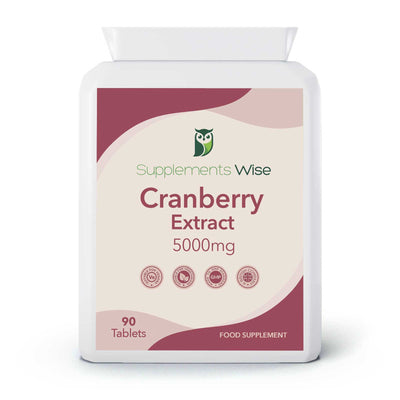
1 tablet daily · 3-month supply £8.95 |
SAVE £3 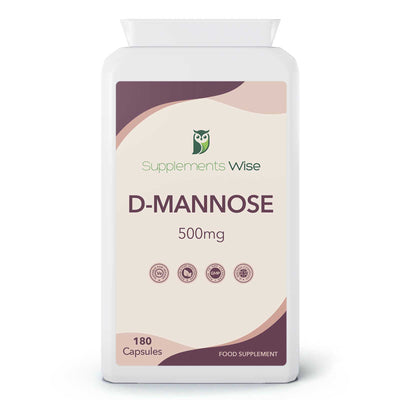
4 caps daily · 45-day course £19.95 £22.95 |
Frequently Asked Questions
Is cranberry or D-mannose better for UTIs?
For preventing recurrent UTIs in women, cranberry has the stronger recent evidence, with a 2023 Cochrane review showing around a 26 percent reduction. D-mannose has a cleaner mechanism story but a large 2024 UK trial found no benefit over placebo. Many people use both together for daily prevention.
Can I take cranberry and D-mannose at the same time?
Yes, the two are commonly combined and have no known interactions with each other. They work through different mechanisms, so taking them together can give belt-and-braces UTI prevention. A typical routine is one cranberry tablet daily plus 2 g of D-mannose split across the day.
Does D-mannose actually work?
The evidence is mixed. Earlier smaller studies were positive, but the 2024 MERIT trial of 598 UK women found D-mannose 2 g daily was no more effective than placebo for preventing further UTIs. The mechanism is real, but the best clinical evidence is currently weaker than for cranberry.
How long does cranberry take to work for UTI prevention?
Cranberry builds protection gradually rather than immediately. Most clinical trials judged results after 8 to 12 weeks of daily use. If you are taking it for prevention, plan for a three month trial before deciding whether it is helping.
Is D-mannose safe for diabetics?
D-mannose is a sugar but it is largely excreted unchanged in urine rather than metabolised for energy. At the standard 2 g dose it has a minimal effect on blood glucose in most people. Anyone with diabetes should speak to their GP or pharmacist before starting it, particularly at higher doses.
Should I use cranberry juice or cranberry tablets?
Tablets are the more practical option for daily prevention. Concentrated extract tablets at 5000 mg equivalent give you a consistent PAC dose without the high sugar load of juice. Juice can still be enjoyed occasionally but is not the ideal vehicle for a daily UTI prevention routine.
Can men take cranberry and D-mannose?
Both are safe for men, though the prevention evidence is strongest in women because UTIs are far more common in women. Men who get any UTI symptoms should see a GP, since male UTIs can indicate an underlying issue. Supplements may have a role for prevention once any cause is investigated.
This article is for information only and is not medical advice. Food supplements should not replace a varied diet or a healthy lifestyle. Speak to your GP or pharmacist before starting any new supplement, especially if you are pregnant, breastfeeding, taking medication or managing a health condition.