Rosehip Supplements UK: Should You Try Them for Joint Pain?

Rosehip is one of the few plant supplements with meta-analysis-grade evidence for osteoarthritis pain relief. A 2008 pooled analysis of three trials in the journal Osteoarthritis and Cartilage found rosehip powder at around 5 grams per day reduced hip and knee osteoarthritis pain more than placebo, with a small-to-moderate effect size (SMD -0.37), working through a specific galactolipid called GOPO that dampens neutrophil chemotaxis. Realistically, expect a 10 to 20 percent pain reduction after 8 to 12 weeks of daily use, not a cure, and treat it as a sensible add-on to weight management, movement and NHS-recommended care rather than a replacement.
This UK evidence guide walks through what rosehip is, the trials that matter, the sensible dose, how long to give it, when it will not work, and how to combine it with the other supplements the NHS and Versus Arthritis actually recognise. Written for adults in the UK dealing with knee, hip or hand osteoarthritis who want an honest read, not a marketing brochure.
Key Takeaway
Rosehip powder or a concentrated rosehip extract with added vitamin C is a reasonable evidence-backed add-on for mild to moderate osteoarthritis. Give it a full 3 months at a sensible dose, track pain honestly, and stop if there is no meaningful change by week 12.
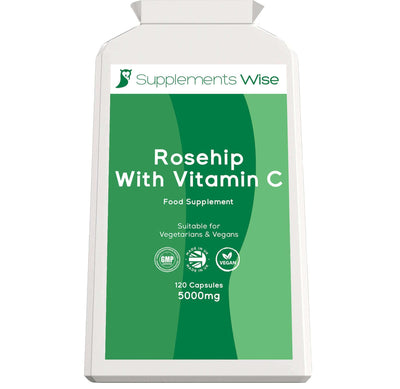
Made in the UK · GMP certified
Rosehip Extract Capsules 5000mg with Vitamin C
120 vegan capsules · 4-month supply
- 250mg 20:1 concentrated Rosa canina extract per capsule (5,000mg dried equivalent)
- Plus 12mg vitamin C as the collagen-forming cofactor for cartilage
- One capsule a day covers a full 12-week evidence-graded trial
Vegan · 30-day returns · Free UK shipping
In this article
- What is rosehip and why do people take it for joint pain?
- Does rosehip actually work for osteoarthritis?
- How does rosehip reduce joint pain (the GOPO mechanism)?
- What is the sensible daily dose of rosehip in the UK?
- How long does rosehip take to work?
- Why do most rosehip supplements include vitamin C?
- What should you take alongside rosehip?
- Which rosehip products should you skip?
- Is rosehip safe and who should not take it?
- When should you see a GP instead of trying a supplement?
- Which UK rosehip supplement should you actually buy?
- Frequently asked questions
What is rosehip and why do people take it for joint pain?
Rosehip is the small red fruit of the wild rose plant (Rosa canina), harvested in late autumn from hedgerows across the UK and northern Europe. It is one of the richest natural sources of vitamin C, along with polyphenols, carotenoids and a specific galactolipid known as GOPO.
The joint-pain interest comes from Scandinavian trials in the early 2000s, when a standardised rosehip powder called Litozin (sold as GOPO in the UK) was tested in osteoarthritis patients. Those trials, alongside a 2008 pooled analysis, are why UK charities including Versus Arthritis now list rosehip as one of the small number of supplements with credible evidence for osteoarthritis symptom relief.
It is important to be honest about what "credible" means here. The evidence is stronger than for most herbal supplements, but the effect size is modest and the trials are small. Rosehip is a sensible add-on, not a replacement for weight management, exercise, or the medication your GP prescribes.
Does rosehip actually work for osteoarthritis?
The short answer is yes, modestly, in mild to moderate osteoarthritis. Three randomised placebo-controlled trials in hip and knee OA patients, pooled in a 2008 meta-analysis, showed rosehip powder reduced pain scores more than placebo across 3 to 4 months of daily use.
Reported pain reductions in the individual trials ranged from around 25 to 40 percent on WOMAC pain scales, with roughly two-thirds of active-group patients reporting meaningful relief compared to a third in the placebo arms. Reductions in painkiller (paracetamol and NSAID) consumption were also reported, which is arguably the more clinically useful signal.
The evidence for rheumatoid arthritis is thinner and mixed. Smaller trials have shown modest improvements in disease activity scores, but rosehip is not recognised as a disease-modifying agent for RA. If you have inflammatory arthritis, rosehip is an adjunct at best, not a substitute for a rheumatologist-directed treatment plan.
What the Research Says
Christensen and colleagues pooled three randomised placebo-controlled trials of standardised rosehip powder in 287 osteoarthritis patients. Rosehip reduced pain more than placebo with a standardised mean difference of -0.37 (95% CI -0.60 to -0.13, p=0.002), roughly a small-to-moderate effect. Adverse events were rare and no different from placebo. (Christensen et al., 2008, DOI: 10.1016/j.joca.2008.03.001)
How does rosehip reduce joint pain (the GOPO mechanism)?
The active compound most credited for rosehip's joint effect is GOPO, short for galactolipid glycoside of octadecatrienoic acid. GOPO appears to reduce neutrophil migration into inflamed joint tissue, which lowers local inflammatory signalling without acting on the same enzymes as ibuprofen or naproxen.
Alongside GOPO, rosehip supplies polyphenols and vitamin C that contribute to normal collagen formation in cartilage and antioxidant defence in joint tissue. This dual mechanism, cooling the inflammatory signal while supporting the connective tissue underneath, is what distinguishes it from a pure anti-inflammatory supplement like turmeric.
Because rosehip does not inhibit COX-1 or COX-2 like NSAIDs, it does not carry the gastric or cardiovascular risk of long-term ibuprofen use. That safety-vs-benefit ratio is a big part of why UK GPs are increasingly comfortable mentioning it as a self-directed option.
What is the sensible daily dose of rosehip in the UK?
Trial doses cluster around 2.5 to 5 grams of dried rosehip powder per day, split into two doses with meals. This is the range Christensen's meta-analysis is built on.
Modern concentrated extracts deliver an equivalent dose in fewer capsules by using a 20:1 or higher extraction ratio. A 250mg extract labelled as "5,000mg equivalent" is designed to match roughly one gram of dried powder per capsule at the trial-relevant potency, though real-world absorption varies by extraction method.
For most UK adults with knee or hip OA, one to two capsules of a 20:1 concentrated extract per day, taken with food, is the sensible starting point. Push to three per day only if there is a partial response at week 6 and you want to test the ceiling before deciding at week 12.
| Format | Trial-relevant daily dose | Time to notice | Best for |
|---|---|---|---|
| Dried rosehip powder (loose or capsules) | 2.5 to 5g | 6 to 12 weeks | Closest to the original trials, higher pill count |
| 20:1 concentrated extract capsules | 250 to 500mg extract (equivalent to 5,000 to 10,000mg dried) | 6 to 12 weeks | Convenient one to two capsules a day |
| Rosehip tea or fresh fruit | Not standardised | Unclear | Nice as a drink, not reliable for OA |
| Rosehip oil (topical) | Not for oral use | Not relevant | Skin, scars and stretch marks only |
How long does rosehip take to work?
Rosehip is a slow-onset supplement. In the Scandinavian trials, patients reported the first meaningful pain change between weeks 3 and 6, with the full effect emerging around week 12. This is roughly the same trajectory people see with glucosamine or omega-3 for joints.
If you are looking for same-week pain relief, rosehip is not that supplement. Paracetamol, topical NSAIDs and, where appropriate, prescription options handle acute pain. Rosehip is what you take alongside those, over months, to reduce the underlying background pain.
A sensible personal trial protocol is: track pain honestly on a 0-10 scale at baseline, week 6 and week 12, and note your weekly painkiller use. If both numbers are meaningfully lower at week 12, keep going. If not, stop and try something else.
Why do most rosehip supplements include vitamin C?
Two reasons. First, rosehip is naturally rich in vitamin C, so adding a modest amount reflects the fruit's whole profile rather than a stripped-down extract. Second, vitamin C is a required cofactor for normal collagen formation, which the EU authorised health claim explicitly ties to cartilage function.
The Supplements Wise Rosehip Extract capsules include 12mg of vitamin C per capsule, which is 15 percent of the UK Nutrient Reference Value. That is a top-up, not a full vitamin C dose, and it is designed to make sure the collagen-supporting cofactor is present at meaningful levels rather than to replace a dedicated vitamin C supplement.
If your background diet is low in fruit and vegetables, you might reasonably pair rosehip with a stand-alone vitamin C source or a rosehip complex product that carries the full 80mg NRV per serving. If you already eat plenty of citrus and peppers, the 12mg top-up is fine.
What should you take alongside rosehip?
Rosehip is best treated as one layer in a joint-support stack, not a standalone hero. For mild to moderate osteoarthritis, the layers with the most consistent UK-relevant evidence are:
- Rosehip extract as the long-run background anti-inflammatory (this article)
- Curcumin or turmeric for a stronger short-term anti-inflammatory kick (see our turmeric supplements guide)
- Omega-3 EPA and DHA for joint stiffness and morning inflammation (see our omega-3 evidence guide)
- Vitamin D3 if you are UK-based, especially October to April, because deficiency worsens musculoskeletal pain (see our vitamin D deficiency signs UK guide)
- Type II collagen for cartilage support if you also have hand or finger involvement
The Supplements Wise turmeric and ginger gummies pair well with rosehip because turmeric acts on the COX-2 and NF-kB pathway rather than on neutrophils. Two different mechanisms, two different time-of-day options, and both are backed by peer-reviewed evidence rather than marketing.

Made in the UK · GMP certified
120 natural orange gummies · 2-month supply
- 13,500mg turmeric equivalent per 2-gummy serving (50:1 extract, 95% curcuminoids)
- Plus 180mg ginger extract for a gentler, gut-friendly anti-inflammatory pairing
- Chew-and-go format for anyone who cannot swallow capsules
Vegan · 30-day returns · Free UK shipping
Which rosehip products should you skip?
Not everything with rosehip on the label is worth your money. The main things to avoid:
| Skip this | Why |
|---|---|
| Rosehip tea for OA pain | Dose is unstandardised and typically far below the trial-relevant range. |
| Topical rosehip oil for joints | Rosehip oil is a skin product. It does not deliver GOPO systemically. |
| 15-ingredient "joint blends" with a token rosehip dose | Fairy dust doses of 50 to 100mg are well below what the trials used. |
| Unlabelled "rosehip powder" from unregulated bulk sellers | No potency guarantee, no UK GMP oversight, and no way to compare to the trial dose. |
| Rosehip syrup or jam | Lovely on toast, useless for OA pain. Vitamin C is largely destroyed by the cooking. |
Is rosehip safe and who should not take it?
Rosehip has an excellent safety record in the published trials. The main side effect reports are mild and gastrointestinal, typically loose stools or a soft stomach in the first week, usually resolving with food or a lower dose.
There are a few groups who should not take rosehip without checking with their GP or pharmacist first:
- People on warfarin or other anticoagulants, because the vitamin C content can theoretically interact and the polyphenol load may compound bleeding risk at high doses.
- People with a history of kidney stones, because vitamin C is metabolised in part to oxalate and rosehip supplies both directly.
- People with haemochromatosis or iron overload, because vitamin C increases iron absorption from food.
- Pregnant or breastfeeding women, where supplement doses have not been formally trialled and lower-risk options should come first.
- Anyone with a known rosehip or rose family allergy, which is rare but reported.
Worth Knowing
If you already take a daily NSAID or paracetamol for OA, do not stop it when you start rosehip. Add rosehip on top for the first 6 to 12 weeks, then discuss reducing the painkiller with your GP if pain scores are meaningfully lower. Never stop a prescribed medicine on your own to test a supplement.
When should you see a GP instead of trying a supplement?
Rosehip is a sensible over-the-counter option for background osteoarthritis pain, but there are situations where a supplement is not the right first step. Book a GP appointment (or use NHS 111) if you have any of the following:
- Sudden joint swelling or heat, especially in a single joint, which can signal infection or crystal arthritis.
- Morning stiffness lasting more than an hour, particularly in multiple joints, which is a red flag for inflammatory arthritis.
- Unexplained weight loss, fever or night sweats alongside joint pain, which need investigation.
- Pain that wakes you at night, especially if it is new or getting worse.
- A joint injury with locking, giving way, or an inability to bear weight, which needs an orthopaedic assessment.
- Rapid progression of pain over weeks rather than the slow decline typical of OA.
See the NHS guidance on osteoarthritis for the current UK first-line approach, which centres on weight management, targeted exercise, topical NSAIDs and physiotherapy referral before oral medication or supplements.
Which UK rosehip supplement should you actually buy?
The two things that matter most are dose per capsule and UK GMP manufacture. A 20:1 concentrated extract with the equivalent of at least 2,500mg dried rosehip per capsule, made under UK Good Manufacturing Practice, is the sensible baseline.
The Supplements Wise Rosehip Extract Capsules 5000mg with Vitamin C deliver 250mg of 20:1 concentrated Rosa canina extract per capsule (equivalent to 5,000mg dried fruit) plus 12mg of vitamin C, in a vegan HPMC capsule made in the UK. At 120 capsules per bottle, one to two capsules per day gives you a two to four month supply per bottle at trial-relevant potency.
Key Takeaway
Give rosehip a full 12-week trial at 5,000 to 10,000mg equivalent per day. Track pain honestly. If it works, it will show up as reduced painkiller use and a lower morning stiffness score by week 12. If nothing has changed, stop and try turmeric or omega-3 instead.
Frequently asked questions
Can I take rosehip long term for joint pain?
Yes. The published trials ran for three to four months, and users on GOPO and similar products have taken them safely for years. Reassess your response every 12 weeks and pause once a year to check whether the pain relief is still real.
How does rosehip compare to glucosamine for osteoarthritis?
The pooled evidence for rosehip is slightly more consistent than for glucosamine at reducing pain scores in mild to moderate OA. Glucosamine works better for some people, particularly at 1,500mg of glucosamine sulphate. Many people trial rosehip after glucosamine has failed to move the needle, or run both alongside for a fuller test.
Is rosehip better than turmeric for joint pain?
They work differently: turmeric acts on the COX-2 pathway and hits harder in the short term, while rosehip works through neutrophil signalling and takes longer to build up. Many people take both, using turmeric for flare days and rosehip as the long-run background support.
Can I take rosehip with paracetamol or ibuprofen?
Yes. There is no known interaction with paracetamol or standard OTC NSAIDs, and the whole point of a rosehip trial is to see whether it reduces how often you need to reach for them. Speak to your pharmacist first if you take daily prescription NSAIDs.
Does rosehip help rheumatoid arthritis?
Small trials show modest symptom improvement, but rosehip is not a disease-modifying treatment for RA. If you have inflammatory arthritis, follow your rheumatologist's plan and treat rosehip as a symptom-support add-on, not a replacement.
Is UK-made rosehip better than imported brands?
UK manufacture under Good Manufacturing Practice gives you clearer potency labelling, contaminant testing and traceability than most bulk-imported alternatives. The plant itself grows across northern Europe, so origin matters less than the manufacturing standard.
Do I need to take rosehip with food?
Yes, with meals is best. Rosehip is well tolerated but a small number of people report mild stomach upset on an empty stomach, and the fat-soluble carotenoids absorb better alongside a meal that contains some fat.
Rosehip will not cure osteoarthritis, but it is one of the few plant supplements with credible UK-relevant evidence for reducing joint pain over a 12-week trial. Combine it with the NHS-recommended basics of weight management, movement and, where appropriate, medication, and treat the supplement as the modest but useful add-on it actually is.
Start your sensible 12-week rosehip trial
One to two capsules a day, with food, for 12 weeks. Track your pain and painkiller use, then decide.
Shop Rosehip ExtractUK GMP-certified · Vegan options · 30-day returns · Free UK shipping
This article is for information only and is not medical advice. Food supplements should not replace a varied diet or a healthy lifestyle. Speak to your GP or pharmacist before starting any new supplement, especially if you are pregnant, breastfeeding, taking medication or managing a health condition.