Shilajit Side Effects UK: 7 to Know Before Your First Capsule

Purified shilajit is generally well tolerated at 200 to 500mg per day of a standardised extract for up to 90 days in healthy adults, with mild stomach upset, headache and a metallic aftertaste the most common reports. The more serious effects to know about are iron overload for people with haemochromatosis, heavy metal contamination in unpurified raw resin, blood pressure interactions and a small uric acid signal that matters for gout sufferers.
A 2014 safety review in Phytotherapy Research summarised the clinical picture as short-lived gastrointestinal effects and rare mineral-related complications, with no serious adverse events in the standardised-extract trials it examined. Almost all controlled studies below 12 weeks at 200 to 500mg report no meaningful blood chemistry changes, so the practical job is matching source, dose and personal health profile rather than avoiding the herb entirely.
This UK guide is written for first-time buyers and existing users who want a calm, honest read of the evidence rather than the miracle-or-poison framing on TikTok. It covers the seven side effects worth knowing, who should never take it, how to spot a problem early, and when to put the bottle down and call your GP.
Key Takeaway
Purified shilajit is safe for most healthy adults at 200 to 500mg of standardised extract per day for up to 90 days. The honest red flags are iron overload risk (haemochromatosis), heavy metals in unpurified raw resin, GI upset in the first two weeks, blood pressure and blood sugar medication interactions, and gout flare-ups. Choose a purified UK-made extract, start at the low end, and stop and see your GP if anything feels off.
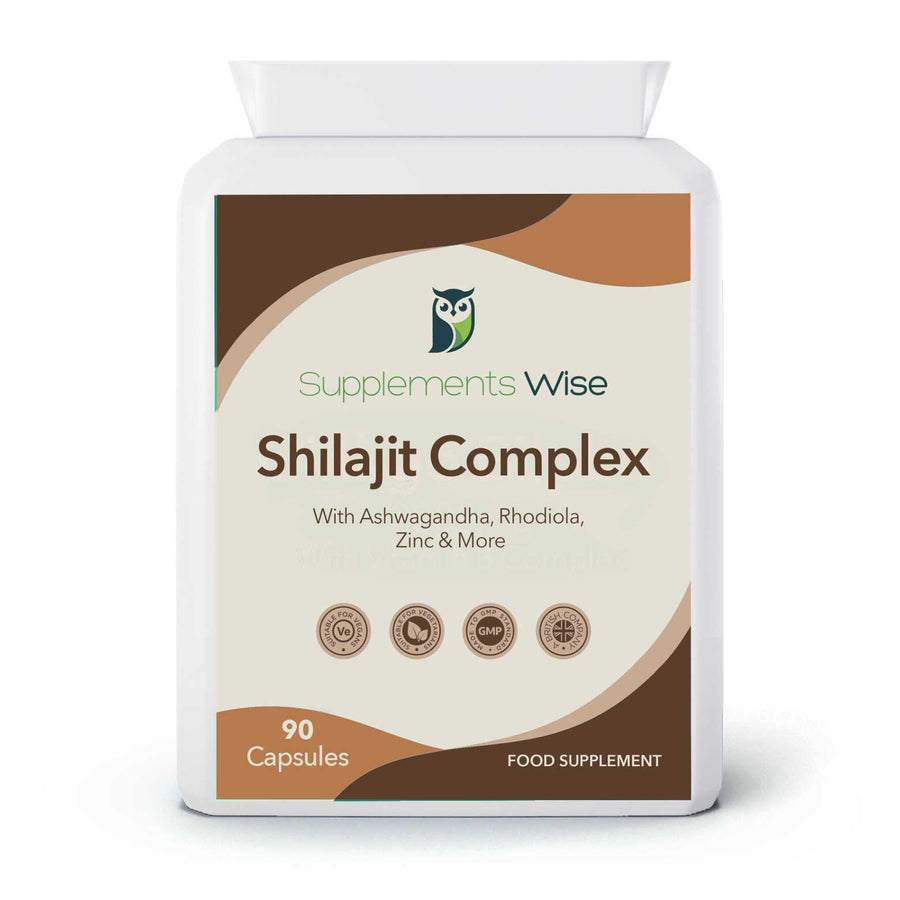
Made in the UK · GMP certified
90 vegetarian capsules · 45-day supply at 2 per day
- 400mg purified shilajit extract per day, standardised to 60% fulvic acid (matches the Pandit 2016 RCT dose)
- KSM-66 ashwagandha 250mg and rhodiola 250mg per day for the adaptogen stack
- Vitamin D3, B6 and zinc for immune, hormone and normal cognitive function
Vegetarian · 30-day returns · Free UK shipping
In this article
- Does shilajit actually cause side effects in healthy adults?
- What are the 7 shilajit side effects most UK buyer guides skip?
- Iron overload and haemochromatosis: the one non-negotiable
- Heavy metals in unpurified raw resin: the source problem
- Stomach upset, loose stool and metallic taste
- Headache in the first one to two weeks
- Blood pressure and blood sugar medication interactions
- Uric acid, gout flares and kidney concerns
- Who should never take shilajit?
- How do you reduce the chance of side effects?
- When should you stop and call your GP?
- Frequently asked questions
Does shilajit actually cause side effects in healthy adults?
Yes, but most are mild and short-lived at trial-grade doses. In randomised trials at 200mg to 500mg per day of a purified standardised extract over 8 to 12 weeks, the most reported side effects are mild gastrointestinal upset, headache and a metallic aftertaste in the first two weeks. Serious adverse events in those trials are rare, and blood chemistry, liver enzymes and kidney markers stayed within normal ranges.
The picture changes when people take much larger doses of unpurified raw resin, mix shilajit with other compounds without knowing the total load, or use products of unknown origin. That is the territory where the safety literature flags heavy metal contamination, mineral overload and interactions with prescription medication as the main long-tail risks (Stohs, 2014, DOI 10.1002/ptr.5018).
The form of shilajit also matters more than most other supplements. The vast majority of positive trials use a purified standardised shilajit extract, not raw tar-like resin from an unregulated marketplace and not gummies of unknown extract content. Most safety reports concerning shilajit either describe non-standardised products or long-term high-dose traditional use, not the modern purified extract sold in the UK.
What are the 7 shilajit side effects most UK buyer guides skip?
The marketing tends to lead with energy, testosterone and cognition benefits and trail off before the trade-offs. The seven worth knowing before you start are:
- Iron overload in people with haemochromatosis, iron-storage disorders or a family history of them.
- Heavy metal contamination in unpurified raw resin, particularly lead, arsenic and mercury from wild-harvested rock exudate.
- Stomach upset, loose stool and a metallic taste in the first one to two weeks, especially on an empty stomach.
- Headache, usually short-lived and settling within a week of starting.
- Lowered blood pressure, helpful if yours runs high but problematic if you already trend low or are on blood pressure medication.
- Uric acid rises and gout flares in people with pre-existing hyperuricaemia or a history of gout attacks.
- Blood sugar shifts that can add to the effect of diabetes medication and push glucose too low.
The serious end of that list (numbers 1 and 2) is rare in healthy adults using a purified UK-made extract, but very real for the wrong person or the wrong source.
| Side effect | How common | When it usually shows up |
|---|---|---|
| Stomach upset, loose stool | Common (up to 1 in 5) | First 7 to 14 days |
| Headache | Occasional | First 1 to 2 weeks |
| Metallic aftertaste | Occasional (more with resin than capsules) | Immediately, fades with use |
| Iron overload signs | Rare, condition-specific | Only with underlying disorder |
| Heavy metal exposure | Rare with purified extract, real with raw resin | Cumulative, long-term use |
| Gout flare | Rare, condition-specific | Within weeks in susceptible users |
Iron overload and haemochromatosis: the one non-negotiable
Shilajit is a mineral-rich resin. A typical purified extract contains bioavailable iron alongside dozens of trace minerals, and that is not a problem for most people. It is a serious problem for the roughly 1 in 200 people of Northern European ancestry with hereditary haemochromatosis, whose bodies cannot regulate iron absorption.
The UK Haemochromatosis Society advises anyone with the condition to avoid iron-containing supplements entirely, and shilajit falls into that category by default. The same caution applies to people with thalassaemia, sideroblastic anaemia or repeated blood transfusion history. Ferritin over 300 in men or 200 in women, whatever the cause, is a reason to talk to a GP before adding shilajit.
If you have never had a blood test that included ferritin and you are of Irish, Scottish, Welsh or Cornish ancestry (the highest-carrier populations in the UK), a NHS ferritin test before starting a long-term shilajit routine is a reasonable, cheap safety check.
Heavy metals in unpurified raw resin: the source problem
Wild raw shilajit is a rock exudate scraped off cliff faces in the Himalayas, Altai and Caucasus. It carries whatever minerals are in the rock and whatever contamination has settled onto it over decades, which historically has included lead, arsenic, mercury and cadmium at levels above food-grade limits.
What the Research Says
The 2014 Phytotherapy Research safety review of shilajit concluded that purified, standardised extracts show acceptable heavy metal profiles and no serious adverse events in the clinical trials examined, but that raw, unpurified resin routinely fails toxicity screens and is unsuitable for oral use. The regulatory answer is a purification step (Stohs, 2014, DOI 10.1002/ptr.5018).
In practical UK terms this means the source of your shilajit matters more than the number of milligrams on the label. A purified extract manufactured under GMP conditions with certificate of analysis coverage for heavy metals is a very different product to a lump of resin bought off a marketplace listing with no traceability. The savings on a suspiciously cheap resin are not savings.
Stomach upset, loose stool and metallic taste
The most common shilajit side effect by a wide margin is mild digestive upset in the first one to two weeks. It usually presents as slight nausea, softer stool or a metallic aftertaste, especially when the first dose is taken on an empty stomach or the total daily dose is above 500mg.
Most trial participants in the Pandit 2016 and Keller 2019 studies settled within seven to fourteen days without stopping the supplement (Pandit et al., 2016, DOI 10.1111/and.12482; Keller et al., 2019, DOI 10.1080/07315724.2018.1564087). Taking the capsule with breakfast or lunch rather than fasted almost always removes the effect, as does splitting a 400mg dose into two 200mg servings across the day.
If the upset persists past two weeks or gets worse, the honest read is that the product is not for you rather than a case of "push through". Loose stool that lasts beyond a fortnight is a reason to stop and see your GP, especially if it is bloody or accompanied by weight loss.
Headache in the first one to two weeks
A subset of new users report a mild dull headache in the first week of use, usually within an hour of taking the capsule. The likely mechanism is a combination of modest vasodilation and blood pressure shift as the body adjusts to the fulvic acid content, and it typically fades as tolerance develops.
Two things reliably help: reducing the starting dose to 200mg for the first week before stepping up to 400mg, and taking the dose with 250ml to 500ml of water rather than dry. Dehydration turns a mild pressure change into a proper headache.
A headache that persists past two weeks, gets worse, or comes with visual changes, jaw pain, neck stiffness or fever is not a shilajit side effect. It is a reason to stop the supplement and see your GP the same day.
Blood pressure and blood sugar medication interactions
Shilajit modestly lowers both blood pressure and fasting blood glucose in the small trials that have measured them. For most healthy adults that is either neutral or mildly beneficial, but it changes the maths for anyone already on antihypertensives, ACE inhibitors, beta-blockers, or metformin, sulfonylureas or insulin.
Worth Knowing
Any supplement that nudges blood pressure or blood sugar can push the numbers below your medication's target range. The result is dizziness, faintness on standing, cold sweats or a hypoglycaemia episode, not a shilajit poisoning event. The fix is a GP conversation about dose review, not stopping the medication.
The safer approach on either medication category is to speak with your GP or pharmacist first, monitor your home BP or glucose readings for the first fortnight, and start at 200mg per day rather than 400mg. The interaction is manageable, but it needs to be acknowledged rather than ignored.
Uric acid, gout flares and kidney concerns
Two published case reports have described a shilajit-associated gout flare-up within weeks of starting in people with previous attacks. The mechanism is not fully understood but is thought to involve mineral-driven uric acid changes, and the flare resolved in both cases after stopping the supplement.
Kidney concerns come up in search a lot ("shilajit side effects on kidney") but the clinical picture is reassuring. Trials measuring creatinine, urea and urinary markers have not shown a signal in healthy adults, and the 2014 Phytotherapy Research safety review recorded no renal adverse events on standardised extracts. The exception is people with existing chronic kidney disease, where the extra mineral load is a genuine reason to check with a nephrologist first.
If you have ever had a gout attack, been diagnosed with hyperuricaemia or have stage 3 or higher chronic kidney disease, shilajit is not automatically off the table but it should not be a self-prescribed decision.
Who should never take shilajit?
Some groups should skip shilajit entirely, either because the risk is real and predictable or because the safety data does not exist. The list below is short but firm:
- Pregnant or breastfeeding women. No trials have established safety, and manufacturers universally advise against it.
- Children and adolescents under 18. No dose has been established.
- People with haemochromatosis, thalassaemia or any iron-storage disorder. The mineral load includes iron.
- People with active gout or hyperuricaemia. Case reports of flare-ups exist.
- People with stage 3 or higher chronic kidney disease. Extra mineral load without oversight is not safe.
- Anyone using unpurified raw resin from an unverified source. Heavy metal exposure is a real and cumulative risk.
Grey-area groups (autoimmune conditions, thyroid disorders, recent surgery, high-dose prescription regimes) are a "GP conversation first" case, not an automatic no.
Compare purified UK shilajit options
See how purified extracts, resins and gummies actually differ on dose, fulvic acid content and heavy metal testing.
Read the buyer's guideHow do you reduce the chance of side effects?
Most shilajit side effects are avoidable with three habits that cost nothing.
- Buy a purified UK-made extract with a certificate of analysis rather than raw resin from a marketplace.
- Start at 200mg per day for the first week and step up to 400mg only if you are tolerating it well.
- Take the dose with food and 250 to 500ml of water, not fasted and not dry.
Timing helps too. Most human trials dosed shilajit in the morning with breakfast, and no trial has tested evening-only dosing. If you are new to it, an early dose with your first meal is the trial-backed default.
Duration matters more than most guides admit. A sensible pattern is an eight to twelve week initial course, then a two to four week break, reassessing whether the benefits you noticed are still worth the ongoing cost. Continuous multi-year use has not been studied in trials and does not have a safety green light from the literature.
When should you stop and call your GP?
Stop shilajit and book an appointment if you notice any of the following, regardless of dose:
- Yellow tint to skin or eyes, dark urine or pale stools (liver-related warning signs).
- Persistent nausea, loose stool or vomiting beyond two weeks.
- Sharp joint pain, redness and swelling (a possible gout flare).
- Dizziness, faintness on standing, or unusually low home BP readings.
- Cold sweats, tremor or unusual hypoglycaemia episodes on diabetes medication.
- A new severe headache, visual changes or neck stiffness.
Bring the product bottle and dose you were taking to the appointment, and mention any other supplements or medications in the same window. Most cases resolve within days of stopping the supplement, but the GP needs the full picture to rule out unrelated causes.
Key Takeaway
Purified UK-made shilajit at 200 to 400mg per day for eight to twelve weeks is well tolerated by most healthy adults. Iron-storage disorders, active gout, advanced kidney disease, pregnancy and any use of unpurified raw resin are the hard nos. Start low, take it with food, buy from a manufacturer that publishes heavy-metal testing, and see your GP if anything feels off.
Frequently asked questions
Is shilajit safe to take every day?
For most healthy adults, a purified standardised shilajit extract at 200 to 500mg per day is safe for up to 90 days of continuous use in the trials to date. A sensible long-term pattern is eight to twelve weeks on, followed by a two to four week break, rather than uninterrupted multi-year use.
Do shilajit side effects go away?
The common side effects (mild stomach upset, headache, metallic taste) usually settle within seven to fourteen days as tolerance develops, especially when the capsule is taken with food. If a side effect persists past two weeks or gets worse, the honest answer is that the product is not for you rather than a case of push through.
Are shilajit side effects different for men and women?
The core side effect profile is the same across sexes. Women should be more alert to iron overload flags because ferritin thresholds differ, and neither pregnant nor breastfeeding women should take shilajit at any dose. Men on testosterone replacement therapy should mention it to their prescriber because shilajit modestly raises endogenous testosterone in the Pandit 2016 trial.
Does shilajit affect the kidneys?
In healthy adults using a purified extract at trial-grade doses, no clinically meaningful kidney signal has been reported in the safety literature. The exception is people with stage 3 or higher chronic kidney disease, where the extra mineral load is a genuine reason to consult a nephrologist before starting.
Can shilajit interact with prescription medication?
The relevant interactions to know are with blood pressure medication (antihypertensives, ACE inhibitors, beta-blockers) and diabetes medication (metformin, sulfonylureas, insulin), because shilajit modestly lowers both blood pressure and fasting glucose. Iron supplements should not be taken alongside shilajit without a ferritin check. Always mention shilajit to your GP or pharmacist alongside prescription regimes.
Is raw shilajit resin safer than capsules?
No. The 2014 Phytotherapy Research safety review found that unpurified raw resin routinely fails heavy metal screens for lead, arsenic and mercury, while purified standardised extracts pass. A UK-made capsule with a certificate of analysis is the more evidence-aligned choice, not the traditional-looking lump of resin from an unregulated source.
How do I choose a shilajit brand that avoids these side effects?
Look for three things on the label and the brand's website: a stated fulvic acid percentage (typically 50 to 60% for extract), a stated dose in milligrams (not "one dropper" or "one pinch"), and a certificate of analysis covering heavy metals. UK manufacture under GMP standards adds another layer of quality control. See the shilajit dosage guide for how the label numbers translate into an evidence-backed serving.
A purified UK shilajit extract with the trust signals that matter
400mg per day at the Pandit 2016 dose, made in the UK under GMP, and paired with KSM-66 ashwagandha for the adaptogen stack. Vegetarian capsules, plain label, honest supply.
Shop Shilajit Complex £16.95UK GMP-certified · Vegetarian · 30-day returns · Free UK shipping
This article is for information only and is not medical advice. Food supplements should not replace a varied diet or a healthy lifestyle. Speak to your GP or pharmacist before starting any new supplement, especially if you are pregnant, breastfeeding, taking medication or managing a health condition.