Ashwagandha vs Rhodiola: 5 Differences and Which One You Need

For UK adults, ashwagandha is the stronger adaptogen for chronic stress, anxiety and sleep, with randomised trials on KSM-66 reporting a roughly 30 per cent drop in morning cortisol over 60 days at 300 to 600 mg per day. Rhodiola rosea is the stronger adaptogen for short-term mental fatigue, burnout and same-day focus, with effects often felt inside two weeks at 200 to 600 mg of a standardised root extract. They act on different systems, so most stress-and-fatigue cases actually call for one, the other, or both stacked, not a coin toss.
Ashwagandha is a calming root that lowers cortisol through the hypothalamic-pituitary-adrenal axis. Rhodiola is a stimulating root that acts on serotonin, dopamine and cellular energy pathways.
This UK guide compares both head to head across the goals people actually buy them for, with doses, time to effect, contraindications and published trials behind each claim. It also covers when a combined formula such as Shilajit Complex is the easier route.
Key Takeaway
Pick ashwagandha if you feel wound up, sleep poorly or are stressed for the long haul. Pick rhodiola if you feel mentally flat, burnt out or are pushing through a short, high-pressure period. The two can be stacked safely, with rhodiola in the morning and ashwagandha in the evening, and KSM-66 is the most-studied ashwagandha extract on the UK market.
In this article
- What is ashwagandha and how does it work?
- What is rhodiola and how does it work?
- How do ashwagandha and rhodiola compare side by side?
- Which one is better for chronic stress and anxiety?
- Which one is better for mental fatigue and burnout?
- Which one is better for sleep?
- Which one is better for focus and energy?
- Can you take ashwagandha and rhodiola together?
- Who should avoid each of them?
- How do you pick a quality UK product?
- Which adaptogen should you actually try first?
- Frequently asked questions
Transparency note: Supplements Wise makes and sells some of the products featured in this guide. Product picks are based on the trial evidence cited throughout, and each study reference links to the original source.
What is ashwagandha and how does it work?
Ashwagandha (Withania somnifera) is a small shrub used in Ayurvedic medicine for more than 3,000 years. The root contains compounds called withanolides, which act on the hypothalamic-pituitary-adrenal (HPA) axis, the system that controls cortisol.
By calming HPA activity, ashwagandha lowers the cortisol response to ongoing pressure. That is why most clinical benefits show up in problems linked to chronic stress: persistent anxiety, broken sleep, low mood under strain and slow physical recovery.
The most studied extract is KSM-66, a full-spectrum root extract standardised to at least 5 per cent withanolides. For a deeper look at its trials, see our ashwagandha benefits evidence guide.
What is rhodiola and how does it work?
Rhodiola rosea is a flowering plant that grows in cold, high-altitude regions of Europe, Asia and North America. The root contains rosavins and salidroside, which act on monoamine neurotransmitters such as serotonin and dopamine and on cellular energy pathways.
That mechanism makes rhodiola a stimulating adaptogen. It tends to lift alertness and reduce fatigue rather than calm the nervous system, and its effects are usually felt faster than ashwagandha, often inside two weeks.
That is why it is popular for acute stress periods, burnout, exams, deadlines, shift work and intense training. It is not a sleep aid, and taken late in the day it can keep you awake.
How do ashwagandha and rhodiola compare side by side?
The table below summarises the practical differences between the two adaptogens across the points that actually shape the buying decision.
| Feature | Ashwagandha | Rhodiola |
|---|---|---|
| Type | Calming adaptogen (root extract) | Stimulating adaptogen (root extract) |
| Best for | Chronic stress, anxiety, sleep, recovery | Mental fatigue, burnout, same-day focus |
| Key compounds | Withanolides (KSM-66 standardised) | Rosavins and salidroside |
| Main mechanism | Lowers cortisol via HPA axis modulation | Acts on monoamines and cellular energy |
| Typical dose | 300 to 600 mg KSM-66 daily | 200 to 600 mg standardised extract daily |
| Time to effect | 4 to 8 weeks for full effect | 1 to 2 weeks, often faster |
| Best time to take | Evening, supports sleep and calm | Morning or early afternoon |
| Form | Capsules, gummies, powders | Capsules, occasionally tinctures |
| Evidence base | Strong, many RCTs on KSM-66 | Moderate, several RCTs in fatigue |
| Avoid if | Pregnant, thyroid meds, autoimmune flare | Taking SSRIs or MAOIs without GP advice |
What the Research Says
Salve et al., 2019 (DOI: 10.7759/cureus.6466) ran an 8-week randomised trial of 60 adults on KSM-66 ashwagandha at 250 mg or 600 mg daily. Both doses lowered morning cortisol and reduced perceived stress scores compared with placebo, with the larger dose producing the bigger effect. For rhodiola, Edwards et al., 2012 (DOI: 10.1002/ptr.3712) reported significant reductions in stress, fatigue and anxiety scores after 4 weeks of 400 mg per day rhodiola extract in 101 adults with life-stress symptoms.
Which one is better for chronic stress and anxiety?
Ashwagandha is the clear pick for ongoing, low-grade stress and anxiety. Its cortisol-lowering action is what tends to take the edge off racing thoughts, tense shoulders and the wired-but-tired feeling that follows months of pressure.
Rhodiola has some evidence for generalised anxiety, but the effect size is smaller and the mechanism is different. It tends to help anxiety that comes with mental fatigue more than anxiety that comes with tension.
If chronic stress is your main issue, ashwagandha at 300 to 600 mg of KSM-66 in the evening is the usual starting point. For broader options, see our guide to the best supplements for stress and anxiety.
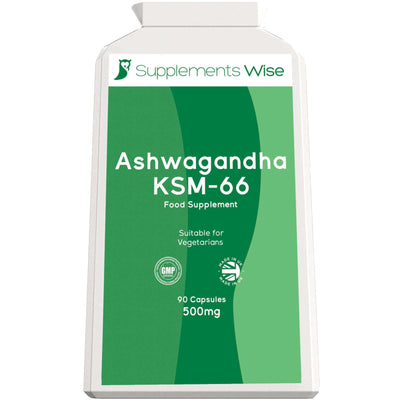
Ashwagandha KSM-66 500mg, 90 Capsules
The most clinically studied ashwagandha extract at 500 mg per capsule, standardised to at least 5 per cent withanolides. One capsule a day, 90-day supply.
UK GMP-certified · Vegetarian · 30-day returns · Free UK shipping
£15.95
Add to CartWhich one is better for mental fatigue and burnout?
Rhodiola is the stronger choice here. Trials in adults with stress-related fatigue have shown improvements in concentration, tiredness and general wellbeing within the first week or two at doses of around 400 to 576 mg of standardised extract daily.
Ashwagandha can reduce the cortisol-driven exhaustion that comes with chronic stress, but it does not act on the mental fatigue pathway the same way. If you feel mentally flat, depleted or hollowed out by a busy stretch, rhodiola is the more direct option.
Burnt-out periods often respond inside two weeks on rhodiola, taken in the morning. If the fatigue is also driven by poor sleep, ashwagandha at night is a useful add-on rather than a replacement.
Which one is better for sleep?
Ashwagandha is the better pick for sleep, with direct evidence for sleep onset and quality in adults with insomnia. Lowering evening cortisol is part of why it helps people wind down rather than lie awake.
Rhodiola has no meaningful sleep evidence and is stimulating by design. Taken in the afternoon or evening, it can make it harder to fall asleep, which is the most common mistake people make with it.
For sleep specifically, ashwagandha at 300 to 600 mg of KSM-66 about an hour before bed is the standard approach. The NHS sleep guidance is a sensible companion read for anyone whose insomnia has lasted more than a few weeks.
Which one is better for focus and energy?
For same-day focus, rhodiola is the more practical option. It tends to improve attention and reaction time within hours of dosing, which is why it is common before exams, long shifts or demanding work blocks.
Ashwagandha shows gradual improvements in memory and executive function over weeks rather than hours. If you want a longer-term cognitive lift as part of stress management, ashwagandha is a better fit than rhodiola.
For low daytime energy that is tied to stress, rhodiola in the morning is the most direct option. For low energy that is tied to poor sleep, fixing sleep with ashwagandha at night often does more.
Can you take ashwagandha and rhodiola together?
Yes, they can be taken together safely and many people do. Because they act on different systems, the effects complement rather than overlap.
The standard pattern is rhodiola in the morning for daytime energy and focus, and ashwagandha in the evening for calm and sleep. This is the cleanest way to cover both the daytime fatigue side and the night-time stress side.
If you would rather not stack two separate products, our Shilajit Complex combines ashwagandha, rhodiola rosea and purified shilajit in one daily capsule. A standalone rhodiola SKU is on our roadmap but not yet on the UK shelf.
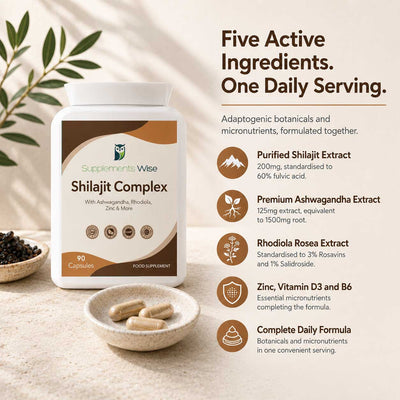
Shilajit Complex with Ashwagandha & Rhodiola, 90 Capsules
Both adaptogens in one daily formula: 250 mg KSM-66 ashwagandha and 250 mg rhodiola rosea alongside 400 mg purified shilajit at two capsules a day. 45-day supply.
UK GMP-certified · Vegetarian · 30-day returns · Free UK shipping
£16.95
Add to CartWho should avoid each of them?
Both adaptogens have a strong safety record at usual doses, but they are not for everyone. The contraindications differ, which matters when you are deciding which one fits your situation.
Ashwagandha should be avoided, or only used after speaking to a GP, if you are pregnant, breastfeeding, taking thyroid medication, or have an active autoimmune condition. Our ashwagandha side effects guide covers the detail.
Rhodiola should be avoided, or used only with medical advice, if you are taking antidepressants, particularly SSRIs or MAOIs, due to a theoretical risk of serotonergic interaction. The MHRA publishes guidance on herbal medicine interactions worth checking if you take prescription medication.
Worth Knowing
Start at the lower end of the dose range for either adaptogen. Take rhodiola earlier in the day to avoid sleep disruption, and take ashwagandha with food if you find it sits heavily on an empty stomach. Persistent low mood, anxiety or insomnia should be discussed with a GP rather than self-managed with supplements.
How do you pick a quality UK product?
The UK adaptogen shelf is crowded and quality varies. For ashwagandha, the main marker of a serious product is a named, standardised extract such as KSM-66 or Sensoril at a meaningful dose, not just generic root powder.
Look for at least 300 mg of KSM-66 per capsule, standardised to a minimum of 5 per cent withanolides, made in a UK GMP-certified facility. Avoid proprietary blends that hide the extract dose behind a total-blend weight.
For rhodiola, look for a root extract standardised to at least 3 per cent rosavins and 1 per cent salidroside, dosed at 200 to 600 mg per day. Gummies are a legitimate alternative to capsules for adults who genuinely will not swallow a capsule, but check the delivered withanolide milligrams per gummy rather than only the total root-extract weight.
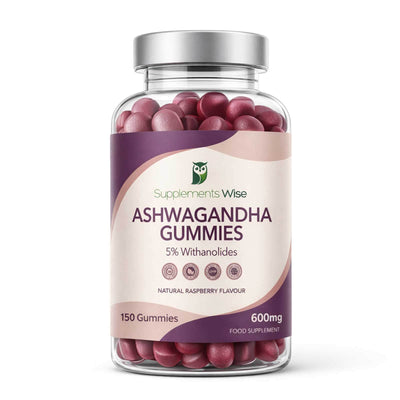
Ashwagandha Gummies 600mg, 150 Gummies
Alternative to capsules at 1,200 mg 30:1 root extract per 2-gummy serving (60 mg withanolides), natural raspberry flavour. 75-day supply.
UK GMP-certified · Vegetarian · 30-day returns · Free UK shipping
£16.95
Add to CartIf you are comparing ashwagandha with a mineral-resin adaptogen, our shilajit vs ashwagandha guide covers that head to head, and the shilajit UK honest evidence guide covers dose and heavy-metal sourcing.
Which adaptogen should you actually try first?
The quickest way to pick is to match the herb to the loudest symptom you would like to change first. The table below maps common UK stress patterns to the sensible first move.
| Loudest symptom | Start here | Sensible daily dose | Timing |
|---|---|---|---|
| Wired-but-tired, racing thoughts at night | Ashwagandha KSM-66 | 300 to 600 mg | Evening with food |
| Broken sleep and morning grogginess | Ashwagandha KSM-66 or gummies | 300 to 600 mg (or 2 gummies) | Evening, 1 hour before bed |
| Mental flatness, exam or deadline burnout | Rhodiola (in Shilajit Complex) | 250 to 400 mg rhodiola | Morning |
| Chronic stress with daytime fatigue | Shilajit Complex (both adaptogens) | 2 capsules | Morning |
| Fussy about swallowing capsules | Ashwagandha Gummies | 2 gummies (1,200 mg root) | Evening |
Key Takeaway
Use ashwagandha for chronic stress, anxiety and sleep, taken in the evening over 4 to 8 weeks. Use rhodiola for mental fatigue, burnout and same-day focus, taken in the morning, with effects often inside 2 weeks. Stack both safely if you have daytime fatigue and night-time stress, or use Shilajit Complex to cover both in one capsule.
Frequently asked questions
Is ashwagandha or rhodiola better for stress?
Ashwagandha is better for chronic, long-term stress because it lowers cortisol through HPA axis modulation. Rhodiola is better for short, high-pressure periods because it acts faster on energy and alertness. Pick ashwagandha if you feel wound up and cannot switch off, and rhodiola if you feel flat, drained and under acute pressure.
Can you take ashwagandha and rhodiola together?
Yes, they can be taken together safely because they act on different systems. The standard pattern is rhodiola in the morning for daytime energy and ashwagandha in the evening for calm and sleep. Combined formulas such as Shilajit Complex deliver both in a single capsule.
Which works faster, ashwagandha or rhodiola?
Rhodiola usually works faster, with effects on mental fatigue and alertness often felt within 1 to 2 weeks. Ashwagandha typically takes 4 to 8 weeks to reach its full effect on cortisol, anxiety and sleep. Rhodiola suits short, demanding periods, while ashwagandha suits longer-term stress.
Is rhodiola good for sleep?
Rhodiola is not a good choice for sleep and can interfere with it. It is a stimulating adaptogen, so taking it in the afternoon or evening can make falling asleep harder. If sleep is your main concern, ashwagandha has direct evidence for sleep onset and quality and is the better fit.
What is the best time of day to take each?
Take ashwagandha in the evening, ideally with food, to support calm and sleep. Take rhodiola in the morning or early afternoon, ideally before midday, to avoid sleep disruption. If you stack both, separate them by at least 6 to 8 hours.
Are ashwagandha gummies as effective as capsules?
Gummies work well if you actually take them, and adults who avoid capsules are more likely to stay consistent with a gummy. The trade-off is that most gummies use a generic root extract rather than a named standardised extract like KSM-66. If you can swallow a capsule, KSM-66 caps have the deeper trial evidence; if you cannot, a 1,200 mg two-gummy dose still delivers a meaningful amount of withanolides.
Do Supplements Wise sell a standalone rhodiola product?
Not yet as a single ingredient. Rhodiola rosea is currently available inside our Shilajit Complex formula, which combines it with ashwagandha and purified shilajit in one daily capsule. A standalone rhodiola SKU is on the roadmap for the UK store.
Both adaptogens earn their place on the UK shelf, but they solve different problems. Match the herb to the issue and the dose to the trial range, and you will get more from either one than you will from chasing the louder marketing.
Try the UK's Most-Studied Ashwagandha
Ashwagandha KSM-66 at 500 mg per capsule, the extract used in most published cortisol trials. One capsule a day, 90 in a bottle, made to UK GMP standards.
Shop KSM-66 AshwagandhaUK GMP-certified · Vegetarian · 30-day returns · Free UK shipping
This article is for information only and is not medical advice. Food supplements should not replace a varied diet or a healthy lifestyle. Speak to your GP or pharmacist before starting any new supplement, especially if you are pregnant, breastfeeding, taking medication or managing a health condition.