Best Time to Take Ashwagandha: A UK Guide for Stress, Sleep and Energy

Ashwagandha works on a slow timer. Most clinical trials run for eight to twelve weeks of daily use, so the question is less "what hour is best" and more "what time will I actually stick to". The honest answer is that consistency matters more than the clock, but morning, evening and split-dose schedules each have a specific use case worth knowing about.
This guide covers what the studies actually used, which schedule fits common goals like stress, sleep and energy, and how to pair ashwagandha with food and other supplements without cancelling out the benefits.
Key Takeaway
Take ashwagandha with food, at the same time each day, for at least eight weeks. Morning suits stress and energy goals, evening suits sleep, and a split morning-plus-evening dose mirrors the schedule most clinical trials used for both.
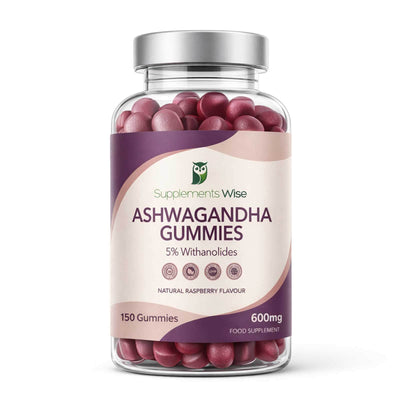
Made in the UK · GMP certified
150 · 2 per day
- 600mg per gummy
- Natural raspberry flavour
- No added sugar
Vegetarian · 30-day returns · Free UK shipping
Does the Time of Day Actually Matter?
Ashwagandha is an adaptogen that builds up gradually rather than a stimulant or sedative you feel within minutes. The withanolides, its main active compounds, modulate the body's stress response through the hypothalamic-pituitary-adrenal axis over weeks of daily intake.
That means missing the "optimal" hour by a few hours will not undo the benefits. The bigger errors are skipping days, taking it on an empty stomach if it upsets you, or expecting overnight changes.
Time of day still matters at the margins. Morning doses tend to feel slightly more energising, evening doses can feel calming, and goal-specific trials have used specific schedules that are worth copying.
The Case for Taking Ashwagandha in the Morning
Cortisol naturally peaks within the first thirty minutes of waking, then tapers throughout the day. Taking ashwagandha in the morning aligns it with the body's natural stress curve, which suits people using it to handle a high-pressure workday or to feel more even-keeled by mid-afternoon.
The Chandrasekhar 2012 trial, one of the most-cited ashwagandha studies, used 300mg of KSM-66 twice daily and reported a 27.9% drop in serum cortisol versus placebo. Many morning-only users base their schedule on the first dose from this protocol.
A morning routine also makes it easy to stack ashwagandha with other daily supplements. Pairing it with breakfast helps absorption and reduces the small risk of stomach upset that some people experience on an empty stomach.
Pick the Morning If
You want help with daytime stress, focus under pressure, or post-workout recovery, and you already take other supplements with breakfast. You do not notice any sedative effect from ashwagandha and want it to feel slightly steadying rather than sleep-promoting. Bundling it with your other morning capsules also means you are less likely to forget the dose.
This is the schedule we recommend in our UK daily supplement timing guide for anyone using ashwagandha mostly for stress and energy rather than sleep.
The Case for Taking Ashwagandha in the Evening
Evening dosing has the most research behind it for sleep. The Langade 2019 trial gave participants 300mg of ashwagandha root extract twice daily for ten weeks and found significant improvements in sleep onset latency and overall sleep quality, measured both subjectively and by actigraphy.
For people who notice a mild calming effect from ashwagandha, taking it sixty to ninety minutes before bed can make winding down easier without leaving the morning grogginess that conventional sleep aids cause. Pairing it with a magnesium-rich evening snack or supplement is a common stack, and our magnesium timing guide covers how to align the two doses.
Evening dosing also suits anyone whose morning is already busy with caffeine, breakfast and other supplements, where one more capsule is easy to skip.
Pick the Evening If
Sleep onset, racing thoughts at bedtime, or low-grade anxiety are your main reasons for trying ashwagandha. You already take magnesium glycinate or a sleep supplement at night and want to add ashwagandha into that routine. You feel a mild calm or drowsy effect from it and want to lean into that.
The Split-Dose Approach (Morning Plus Evening)
Most published ashwagandha trials actually used two daily doses, not one. The Chandrasekhar cortisol trial, the Langade sleep trial and several Salve 2019 protocols all split the daily total across morning and evening, typically 300mg with breakfast and 300mg with dinner, for a 600mg per day total.
Split dosing keeps blood levels more stable and arguably mirrors the trial conditions most closely. The trade-off is remembering two doses a day, which is the main reason single morning or evening schedules are popular outside of research. For a deeper look at the herb's full benefit profile, see our ashwagandha benefits guide.
A simple way to start is to use the morning dose for stress and the evening dose for sleep, both at the same times each day. Most KSM-66 capsules contain around 500 to 600mg, so one capsule with breakfast and one with dinner is a sensible adaptation.
Try Split Dosing If
You want both stress and sleep benefits, or you are following a clinical-trial-style protocol. You handle reminders well and a twice-daily schedule fits your life. You feel slightly more even-keeled when supplements are split rather than front-loaded into one dose.
Best Time by Goal
The most practical way to choose a schedule is by working backwards from your main reason for taking ashwagandha. The decision matrix below summarises what the strongest trials used for each goal.
| Your Goal | Best Time to Take | Why |
|---|---|---|
| Lower daytime stress and cortisol | Morning with breakfast | Aligns with the natural cortisol peak; matches Chandrasekhar 2012 morning dose |
| Better sleep and quicker sleep onset | Evening, 60 to 90 minutes before bed | Matches Langade 2019 evening dose; calming effect peaks closer to bedtime |
| General stress and anxiety support | Split: morning and evening | Closest to most clinical trial protocols; steadier blood levels |
| Training, recovery and gym performance | Morning or pre-workout with food | Supports daytime stress and recovery window; avoids confusion with evening cool-down |
| Low energy and fatigue | Morning with breakfast | Lets the gentle adaptogenic lift coincide with the day, not bedtime |
| Hormonal or perimenopausal balance | Split or evening | Many trials in this group used twice-daily dosing; evening also helps related sleep disruption |

Made in the UK · GMP certified
Ashwagandha KSM-66 Capsules 500mg
90 capsules · one with breakfast, or split morning and evening
- 500mg of the most-researched ashwagandha root extract per capsule
- Standardised withanolide content, the form used in the timing trials
- Take at the start of a meal to avoid stomach upset
Vegetarian · 30-day returns · Free UK shipping
With or Without Food?
Ashwagandha is best taken with food. The herb can sit heavily on an empty stomach for a minority of users, who report mild nausea, reflux or stomach upset, especially at the start of a course.
Taking it with breakfast, dinner or a snack buffers that effect and improves day-to-day adherence. Withanolides do not need a high-fat meal in the way that fat-soluble vitamins like vitamin D do, so any meal will work.
Gummies are a gentler delivery format because they contain sugar and pectin or gelatin, so they rarely cause stomach issues even between meals. Capsules are best taken right at the start of a meal rather than mid-bite.
Pairing Ashwagandha with Other Supplements
Ashwagandha plays well with most stacks but a few combinations are worth thinking through. The table below covers the most common pairings UK shoppers ask about.
| Pairing | Recommended | Notes |
|---|---|---|
| Ashwagandha + magnesium glycinate | Evening, with dinner | Common sleep stack; magnesium supports muscle relaxation and ashwagandha supports onset |
| Ashwagandha + caffeine or pre-workout | Space by 30 to 60 minutes | Not contraindicated but the calm and the buzz can blunt each other if taken together |
| Ashwagandha + rhodiola (see our comparison) | Morning only | Rhodiola is more stimulating; combining at night can disrupt sleep |
| Ashwagandha + zinc and a B complex | With breakfast | Solid daily stack; take with food to avoid nausea from zinc on an empty stomach |
| Ashwagandha + sedatives or sleep medication | Ask your GP first | Additive calming effects possible; review with a clinician before stacking |
How Long Until You Feel Anything?
Most users start to notice subtle changes around two to three weeks of consistent daily use, with stress and sleep effects becoming clearer between weeks four and eight. The published trials report their strongest results at the eight to twelve week mark.
If you have taken it for less than three weeks and feel nothing, that is normal. Ashwagandha is not a sleep aid you feel that night or a stress pill you feel that afternoon, which is the most common source of disappointment in early reviews.
What the Research Says
In a randomised double-blind trial of 64 chronically stressed adults, KSM-66 ashwagandha at 300mg twice daily reduced serum cortisol by 27.9% and lowered Perceived Stress Scale scores by 44% over 60 days, versus placebo (Chandrasekhar et al., 2012, DOI: 10.4103/0253-7176.106022).
Common Timing Mistakes
The biggest mistake is expecting acute effects. Ashwagandha is not a one-off calmer; missing the first two weeks of consistent use is usually what fails, not the wrong hour.
Cycling on and off every few days is the second mistake. Trials use steady daily dosing, and stopping for the weekend resets the build-up effect without much gain.
Taking it only when stressed is a third common pattern. By the time stress hits, the herb has not had time to act, which leads to the false conclusion that it does not work.
Stacking it with caffeine at the exact same moment can also mute either effect, so spacing them by half an hour is a small fix with a clear payoff.
Worth Knowing
Ashwagandha is not recommended during pregnancy, while breastfeeding, or for anyone with an active autoimmune condition or thyroid medication adjustment without GP guidance. Withanolides can interact with thyroid hormone levels and immune-modulating drugs.
The Bottom Line
If you only remember one thing, take it daily with food for at least eight weeks. For stress and energy, take it in the morning; for sleep, take it in the evening; for both, split the dose.
A clinically-studied form like KSM-66 at 500 to 600mg per day is what almost every trial above used, so matching that as closely as possible is the simplest way to copy what worked in research.
Key Takeaway
Pick the schedule you will actually stick to. Morning with breakfast suits stress, focus and energy. Evening sixty to ninety minutes before bed suits sleep. Split morning-plus-evening mirrors clinical trials and supports both at once.
Frequently Asked Questions
Is it better to take ashwagandha in the morning or at night?
Morning suits daytime stress, energy and focus goals because it aligns with the natural cortisol peak. Evening suits sleep and bedtime anxiety because the calming effect lands closer to wind-down. Many clinical trials split the daily dose across both, so a morning-plus-evening schedule is the closest match to research conditions.
Should I take ashwagandha with food or on an empty stomach?
Take it with food. Withanolides do not require a high-fat meal, but capsules can cause mild stomach upset on an empty stomach in a minority of users. Taking it with breakfast or dinner makes adherence easier and reduces nausea risk at the start of a course.
How long does ashwagandha take to start working?
Most people notice subtle changes in stress or sleep around two to three weeks of consistent daily use. Clinical trials report their strongest effects at the eight to twelve week mark. It is not a one-off calmer, so dosing only on stressful days will not work.
What dose of ashwagandha is best in the UK?
The most studied dose is 300 to 600mg per day of a standardised KSM-66 or root extract, taken with food. UK products typically come in 500mg or 600mg servings, which fits this range comfortably. Starting at the lower end for a week is a sensible way to check tolerance.
Can I take ashwagandha and magnesium together?
Yes, and they are a popular evening pairing for sleep. Magnesium glycinate supports muscle relaxation while ashwagandha supports a calmer wind-down. Take them with dinner or a small snack rather than on an empty stomach.
Will ashwagandha make me drowsy if I take it in the morning?
It is uncommon. Ashwagandha is not a sedative; most people describe a steadier, less anxious feeling rather than drowsiness. If you do feel drowsy after morning doses, switching to an evening schedule is a sensible response.
Is it safe to take ashwagandha every day long-term?
Daily use up to three months has been studied and is generally well tolerated in healthy adults. Beyond that, evidence is more limited, and most users either continue or take a one to two week break each quarter. Speak to your GP first if you take thyroid, sedative, or immune-modulating medication.
Pick your time and stick to it
Morning for stress, evening for sleep. The timing that works is the one you can keep up for eight weeks, taken with a meal.
Shop Ashwagandha KSM-66UK GMP-certified · Vegetarian · 30-day returns · Free UK shipping
References
Chandrasekhar K et al. A prospective, randomized double-blind, placebo-controlled study of safety and efficacy of a high-concentration full-spectrum extract of ashwagandha root in reducing stress and anxiety in adults. Indian Journal of Psychological Medicine 2012 (DOI: 10.4103/0253-7176.106022).
Langade D et al. Efficacy and safety of ashwagandha (Withania somnifera) root extract in insomnia and anxiety: a double-blind, randomized, placebo-controlled study. Cureus 2019 (DOI: 10.7759/cureus.5797).
Salve J et al. Adaptogenic and anxiolytic effects of ashwagandha root extract in healthy adults: a double-blind, randomized, placebo-controlled clinical study. Cureus 2019 (DOI: 10.7759/cureus.6466).
Lopresti AL et al. An investigation into the stress-relieving and pharmacological actions of an ashwagandha extract. Medicine (Baltimore) 2019 (DOI: 10.1097/MD.0000000000017186).
This article is for information only and is not medical advice. Food supplements should not replace a varied diet or a healthy lifestyle. Speak to your GP or pharmacist before starting any new supplement, especially if you are pregnant, breastfeeding, taking medication or managing a health condition.