Creatine for Women: 6 Evidence-Backed Benefits Beyond the Gym

Creatine for women has the strongest evidence of almost any supplement on the shelf, and it is no longer a "men only" gym powder. A 3 to 5g daily dose of creatine monohydrate can help women build and hold lean muscle, lift heavier in fewer sessions, support bone density alongside resistance training, improve mood and short-term memory under sleep stress, and steady the loss of strength that perimenopause and menopause can accelerate. Women carry roughly 70 to 80 percent lower natural creatine stores than men, so the benefit per gram is often larger, not smaller, whether you choose creatine tablets or creatine powder, and there is no need to "load" or cycle.
This UK evidence guide is written for women aged 25 to 65 who are training, lifting, walking, running, perimenopausal, postmenopausal, or simply trying to stay strong into their fifties and sixties. It covers what creatine actually does in a female body, how it interacts with hormones, what the dose looks like in real life, and when tablets beat powder. Every recommendation here is set against the 2021 Smith-Ryan lifespan review, the Chilibeck 12-month bone trial in postmenopausal women, and current International Society of Sports Nutrition guidance.
Key Takeaway
Creatine monohydrate at 3 to 5g per day is one of the most studied, safest, and most cost-effective supplements a woman can take. It helps strength, lean mass, recovery, mood, and (with resistance training) bone density. Tablets and powder give the same result. Loading is optional, never required.
In this article
- Does creatine work the same way in women as in men?
- Why might women need creatine more than men?
- Is creatine safe for women?
- What are the 6 evidence-backed benefits for women?
- Can creatine help during perimenopause and menopause?
- Does creatine help with brain fog and mood?
- Will creatine make women bulky or cause weight gain?
- How much creatine should a woman take?
- Tablets or powder, which should you choose?
- When should you take creatine and how soon will you feel it?
- Who should not take creatine?
- Frequently asked questions
Does creatine work the same way in women as in men?
Yes, the mechanism is identical. Creatine combines with phosphate inside muscle and brain cells to form phosphocreatine, which is the body's fastest way to regenerate ATP during short bursts of effort. More phosphocreatine means a few more reps before failure, slightly faster recovery between sets, and more total training volume across a week.
What differs in women is the starting point. Females carry roughly 70 to 80 percent lower endogenous creatine stores than males, partly because dietary intake from red meat tends to be lower (Smith-Ryan et al., 2021, DOI: 10.3390/nu13030877). That gap is part of why the relative benefit per gram of supplementation is often larger in women than in men.
The training response is also the same. A woman who lifts twice a week and adds creatine will, on average, build a little more lean tissue and recover a little faster than the same woman lifting twice a week without it. The supplement is a multiplier on the training, not a replacement for it.
Why might women need creatine more than men?
Three reasons sit behind the growing recommendation. The lower baseline stores mean a higher percentage uplift from the same 3 to 5g dose, and women tend to lose lean muscle faster after the menopause transition, so a tool that helps preserve and rebuild that tissue carries extra value in midlife. Female depression rates are also roughly twice those of men, and the brain-energy pathway creatine supports has signal in mood trials.
None of this means men do not benefit. It means the case for women is at least as strong as the case for men, even though the marketing has historically pointed elsewhere. The 2021 lifespan review explicitly frames creatine as relevant from menstruation through pregnancy and into menopause, not just during competitive sport.
UK women are also lifting more than ever. Sport England's Active Lives data shows a steady rise in strength training participation among women aged 35 to 64. Creatine is the supplement that pairs best with that habit, and the price is low enough that it does not crowd out a multivitamin or vitamin D.
Is creatine safe for women?
The creatine for women benefits outlined here-lean muscle, bone density, mood, memory, and sustained strength - are backed by solid trials, making a 3 to 5g daily dose a sensible choice.
Taken together, the creatine benefits for women extend well beyond the gym, supporting muscle, bone, mood and memory in ways that matter more with each passing decade.
Creatine monohydrate has one of the strongest safety records in sports nutrition. Decades of trials at 3 to 5g per day, and short loading phases at 20g per day, show no consistent harm to kidney function, liver, hair, or hormones in healthy adults. The NHS guidance on supplements classes creatine as a low-risk option for healthy people when used at sensible doses.
The International Society of Sports Nutrition position stand, and the 2021 Smith-Ryan review, both conclude that long-term creatine use is well tolerated in women across the lifespan. Reported side effects are typically mild stomach discomfort if a large dose is taken on an empty stomach, which is easy to fix by splitting the dose or taking it with food.
If you have chronic kidney disease, are pregnant or breastfeeding, or take prescription medication that affects kidney function, speak to your GP before starting. Everyone else can start at 3 to 5g per day with confidence.
What are the 6 evidence-backed benefits for women?
The benefits below are the ones with the strongest, most replicated data in female participants or in mixed-sex trials where women were well represented. Marketing claims around "fat burning", "cellulite", or "anti-ageing skin" are not on this list because the evidence does not support them.
| Benefit | What the evidence shows | Time to notice |
|---|---|---|
| Strength and reps | Moderate to strong evidence in resistance-trained and untrained women | 4 to 8 weeks |
| Lean muscle mass | Modest but reliable gains when paired with twice-weekly lifting | 8 to 12 weeks |
| Bone density preservation | Chilibeck 2015, 12 months, femoral neck BMD preserved with creatine plus lifting | 12 months |
| Recovery and reduced soreness | Lower markers of muscle damage after heavy sessions | 2 to 4 weeks |
| Mood under sleep stress | Small trials show better mood scores after poor sleep with creatine | 2 to 6 weeks |
| Short-term memory and focus | Modest cognitive benefit under fatigue, mainly at higher doses | 4 to 8 weeks |
Notice that none of these are "in a week" promises. Creatine works by saturating the muscle and brain phosphocreatine pool, which takes around three to four weeks at 5g per day. A short loading phase at 20g daily for five to seven days can speed that up, but it is not required.
What the Research Says
Smith-Ryan, Cabre, Eckerson and Candow's 2021 review in Nutrients framed creatine across the female lifespan and found pre-menopausal women see strength and exercise performance gains, while post-menopausal women may see preserved muscle size, function and bone with higher doses combined with resistance training. The review explicitly noted that lower endogenous stores in females mean the per-gram response can exceed the male response (Smith-Ryan et al., 2021, DOI: 10.3390/nu13030877).
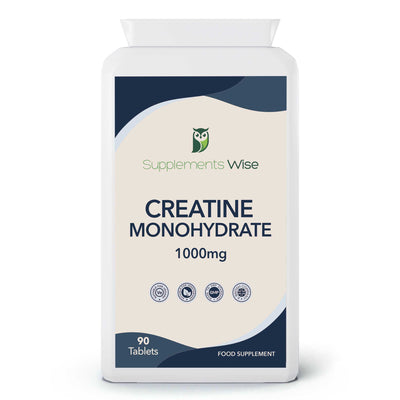 |
Creatine Monohydrate Tablets 1000mg, 90 Vegan Tablets 3 tablets give a clean 3g daily dose. No mixing, no taste, letterbox-friendly. Made in the UK to GMP standards. UK GMP-certified · Vegan · 30-day returns · Free UK shipping
|
Can creatine help during perimenopause and menopause?
This is the question pulling thousands of UK women to creatine for the first time, and the evidence is more encouraging than for almost any other supplement at this life stage. Falling oestrogen accelerates loss of lean muscle, slows recovery, and weakens bone. Creatine plus resistance training pushes back on all three.
The Chilibeck 2015 trial randomised postmenopausal women to 12 months of supervised resistance training with either creatine or placebo. The creatine group preserved femoral neck bone mineral density and increased femoral shaft width, both predictors of bone bending strength (Chilibeck et al., 2015, DOI: 10.1249/MSS.0000000000000571). The placebo group lost more density over the same year.
If you are perimenopausal or postmenopausal and not yet lifting, the lifting itself is the bigger lever. Adding creatine at 5g per day to two strength sessions a week is the simplest, cheapest stack you can build for muscle and bone. Pair with adequate vitamin D and a sensible protein target, ideally 1.2 to 1.6g per kg per day.
Does creatine help with brain fog and mood?
The brain uses creatine, too. Phosphocreatine acts as a fast energy buffer in neurons, which is why sleep deprivation, low mood, and high cognitive load all stress the same pathway that supplementation supports. The evidence here is younger and noisier than the muscle data, but it is moving in a consistent direction.
Roschel and colleagues reviewed the evidence in older adults and reported plausible cognitive and mood benefits when creatine was used at sensible doses, especially under stress (Roschel et al., 2021, DOI: 10.3390/nu13020586). Small trials in younger women have shown improved mood scores after a poor night's sleep, and short-term memory benefits when cognitive demand is high.
Do not expect creatine to replace sleep, sunlight, or talking treatment. Expect it to take the worst edge off a tired Tuesday, particularly if you are training hard, sleeping less than usual, or in the menopause transition. If brain fog is your loudest symptom, also rule out low vitamin B12, iron and thyroid issues with your GP first.
Will creatine make women bulky or cause weight gain?
No. Creatine does not turn anyone bulky, and the small early-week scale change is water, not fat. Creatine pulls water into the muscle, which is exactly where you want it, and that intracellular water makes muscle look fuller and perform better, not puffy.
The typical scale shift in the first two to four weeks is around 0.5 to 1.5kg of mostly muscle water. Clothes usually fit the same or better. There is no evidence creatine increases fat mass, bloating outside the muscle, or breast tenderness.
Visible muscle gain in women comes from years of progressive lifting and adequate protein, not from a 5g scoop. Creatine just lets that lifting do a bit more per session. If you are not lifting at all, the benefit is real but smaller, and it concentrates on the brain and recovery side rather than dramatic body composition change.
How much creatine should a woman take?
The right dose for almost every adult woman is 3 to 5g of creatine monohydrate per day, every day. There is no need to size-match by bodyweight, no need to load, no need to cycle on and off. Consistency beats clever timing.
| Goal | Daily dose | Loading |
|---|---|---|
| General strength and lean mass | 3 to 5g | Optional, not required |
| Perimenopause and menopause | 5g (some clinicians use up to 8 to 10g) | Optional |
| Brain or mood support under stress | 5g, sometimes higher in trials | Skip |
| Speed up the first month | 20g per day split into 4 doses for 5 to 7 days, then 3 to 5g | Yes, optional |
If you choose to load, expect mild stomach discomfort if you take the full 5g serving in one go. Splitting into two or three smaller doses with meals fixes that. After saturation, daily 3 to 5g is enough to hold the benefit.
Worth Knowing
If you have any kidney condition, are pregnant or trying to conceive, are breastfeeding, or take prescription medication that affects kidney function, speak to your GP before starting creatine. Otherwise, 3 to 5g per day is the standard adult dose for women across the lifespan and does not need to be cycled.
Tablets or powder, which should you choose?
Both work. Pick the format you will actually take every day, because consistency is the whole game. Tablets travel well, taste of nothing, and remove the spoon-and-shaker step. Powder is cheaper per gram and is easier when you already make a daily smoothie or post-training drink.
If you train at a gym, travel for work, or struggle to remember a scoop, tablets win. If you prefer to dial the dose up to 5g exactly, or to stack creatine with electrolytes or protein in the same drink, powder wins. Either way, look for micronised creatine monohydrate, which mixes better and absorbs predictably.
Avoid "creatine HCl", "buffered creatine", or "creatine ethyl ester" products that charge a premium for a worse-studied ingredient. The cheap, plain, micronised monohydrate is the form every position stand recommends.
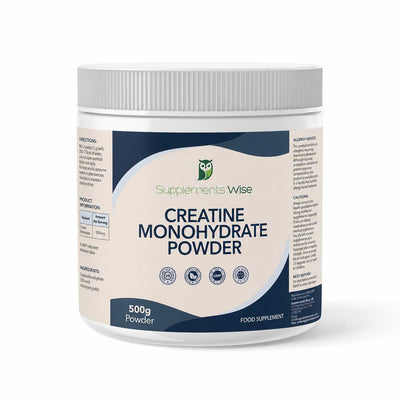 |
Creatine Monohydrate Powder, 500g Micronised 200 Mesh 5g per serving, 100 servings per tub. Ultra-fine 200 mesh, no fillers or sweeteners. Stack with water, juice, or a daily protein shake. UK GMP-certified · Vegan · 30-day returns · Free UK shipping
|
For a full side-by-side, see our creatine powder vs tablets UK guide, which covers cost per gram, travel friendliness, and stacking with other supplements.
When should you take creatine and how soon will you feel it?
Timing matters less than total daily intake. The most-studied approach is to take it at any consistent time, with or without food. Many women take it post-workout because they are already mixing a drink, but morning, evening, or with lunch all work.
You will not feel creatine the way you feel caffeine. Most women notice their last set is easier, or they shave a minute off a hill walk, around weeks three to six. The mood and brain benefits, if you get them, also build over weeks rather than the same day.
If you train on an empty stomach and find a 5g scoop sits oddly, try splitting into 2.5g morning and 2.5g evening. On rest days, take the dose the same as a training day. Skipping a day is fine, missing a fortnight will let the muscle pool drift back down.
Who should not take creatine?
Creatine has a wide safety margin, but it is not a free choice for everyone. Speak to your GP first if any of the following apply, and do not start on the assumption that "natural" means risk-free.
| Group | Why caution applies |
|---|---|
| Pregnancy or trying to conceive | Long-term safety data in pregnancy is limited, defer to your midwife or GP |
| Breastfeeding | Same limited-data caution, GP first |
| Chronic kidney disease | Creatinine metabolism can affect lab results and clinical monitoring |
| Diuretic or lithium use | Interactions and hydration status need clinical review |
| Under 18 | Most position stands defer to parental and clinician guidance |
Everyone outside those groups can usually start at 3 to 5g per day with no concern. Hydration is the only common practical note, drink as you normally would and you will be fine.
Key Takeaway
If you are a healthy adult woman, lifting twice a week, in or approaching perimenopause, or just trying to stay strong into your fifties and sixties, creatine monohydrate at 3 to 5g per day is one of the highest-value supplements you can take. Tablets or powder work equally well. Give it 8 to 12 weeks and judge by your lifts, your recovery, and your energy, not by the scale.
Frequently asked questions
Is creatine safe for women long term?
Yes. Long-term trials up to 5 years at 3 to 5g daily, and shorter trials at higher doses, show no consistent harm to kidney, liver, or hormone health in healthy women. If you have a kidney condition, are pregnant, or take prescription medication that affects kidney function, check with your GP first.
Will creatine make me retain water or look puffy?
Creatine pulls water into muscle cells, not under the skin. The typical 0.5 to 1.5kg shift in the first weeks is intracellular muscle water, which makes muscle look fuller and perform better, not puffy. Most women see no visible change in clothes fit.
Do I need to load with creatine?
No. Loading at 20g per day for 5 to 7 days saturates the muscle pool faster, but the same end point is reached in 3 to 4 weeks at 3 to 5g per day. Most women skip loading because the steady dose causes no stomach issues and the result is identical by week four.
Can I take creatine while breastfeeding or pregnant?
Long-term safety data in pregnancy and breastfeeding is limited, so most clinicians advise pausing or checking with your GP or midwife before continuing. Many women restart after weaning. Existing trials in these groups are small and not enough for a confident green light.
Does creatine work without exercise?
The muscle benefits are smaller without training, but creatine still saturates the brain pool and can help mood, recovery from poor sleep, and short-term memory under stress. The biggest gains in strength and lean mass need at least twice-weekly resistance training. Walking, yoga, and pilates count as a baseline, but lifting amplifies the return.
Will creatine cause hair loss or acne?
The hair-loss claim comes from a single 2009 rugby player study that showed a small shift in a hormone marker, not actual hair loss. Larger follow-up reviews have not shown a consistent effect on hair, scalp, or skin in women. Acne is not a reported common side effect.
Can I take creatine with coffee?
Yes. The early caffeine-blocks-creatine claim came from one small 1996 trial and has not been replicated at sensible doses. Most women take their morning coffee and a 3 to 5g creatine serving together with no measurable downside.
Creatine for women is one of the rare supplement stories where the science, the cost, and the safety all line up. Lift twice a week, take your 3 to 5g, drink water, give it 8 to 12 weeks, and judge by what your body can do, not what the scale says.
For more on training-paired stacks, see our best time to take magnesium UK guide for the recovery side, and our perimenopause supplements UK evidence guide for the wider midlife stack. BHF guidance on staying active is a sensible companion to any supplement plan.
Start your 12-week creatine trial today
UK-made, vegan, 3 to 5g per day. Strength, recovery, mood and bone support in one of the cheapest, best-studied supplements you can buy.
Start the Creatine TrialUK GMP-certified · Vegan options · 30-day returns · Free UK shipping
This article is for information only and is not medical advice. Food supplements should not replace a varied diet or a healthy lifestyle. Speak to your GP or pharmacist before starting any new supplement, especially if you are pregnant, breastfeeding, taking medication or managing a health condition.