Glucosamine for Joint Pain: Does It Work? A Look at the Evidence

Glucosamine is one of the most studied joint supplements in the world, and the evidence is genuinely mixed. Older large trials found no benefit over placebo, while more recent reviews, particularly of glucosamine paired with chondroitin, show modest but real improvements in knee pain and function. This guide pulls the evidence together so you can decide whether glucosamine fits your joint support plan.
We cover what glucosamine is, how it is thought to work, what the research shows for arthritis, why chondroitin changes the picture, and how it compares with alternatives like green-lipped mussel, turmeric, and omega 3. You will also find dosage, safety, and timelines based on the clinical studies.
Key Takeaway
Glucosamine sulphate at 1500mg daily, ideally combined with chondroitin, has moderate evidence for reducing knee osteoarthritis pain and slowing cartilage loss over 2 to 3 years. Results take 8 to 12 weeks. Evidence is strongest for the sulphate form, not glucosamine hydrochloride.
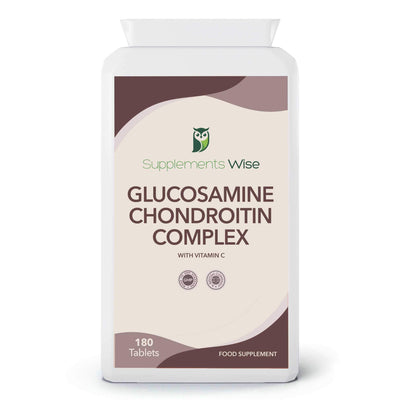
Made in the UK · GMP certified
Glucosamine Chondroitin Complex with Vitamin C
180 tablets · 3-month supply at 2 tablets daily
- 1,000mg glucosamine sulphate 2KCl per serving, the sulphate form used in trials
- 800mg chondroitin sulphate for the trial-matched paired dose
- Plus 130mg vitamin C (163% NRV) for normal collagen formation
Contains shellfish · 30-day returns · Free UK shipping
What Is Glucosamine and Where Does It Come From?
Glucosamine is an amino sugar your body makes naturally as a building block for cartilage, tendons, and the fluid that cushions your joints. As you age, natural production drops and cartilage repair slows, which is part of why osteoarthritis risk rises after 50.
Supplemental glucosamine is usually extracted from the shells of shellfish, although vegan versions from fermented corn are available. The two common forms are glucosamine sulphate and glucosamine hydrochloride, and most clinical trials showing benefit have used the sulphate form.
UK supplement regulation treats glucosamine as a food supplement rather than a medicine. This means no product can legally claim to treat arthritis, but daily use is well established and safety data is reassuring for healthy adults.
How Glucosamine Is Thought to Work
The mechanism is not fully settled, but glucosamine appears to act in a few ways. It supplies raw material for glycosaminoglycans and proteoglycans, the molecules that keep cartilage springy and resilient.
Laboratory studies also suggest glucosamine has mild anti-inflammatory effects in joint tissue, blunting signalling pathways like NF-kB that drive cartilage breakdown. This anti-inflammatory action may explain why some people notice stiffness improving before any structural change would be possible.
Unlike ibuprofen, glucosamine is not a fast-acting painkiller. It is a slow-build supplement where the expected benefit, if any, emerges over weeks and months of daily use.
What the Research Actually Shows
The evidence landscape splits into three eras. Early industry-funded European trials in the 1990s showed strong pain and function benefits. The large NIH-funded GAIT trial in 2006 then dampened enthusiasm, finding no overall benefit for glucosamine or chondroitin over placebo in 1,583 knee osteoarthritis patients.
More recent systematic reviews tell a more nuanced story. A 2018 network meta-analysis in the British Journal of Sports Medicine found glucosamine sulphate produced small but statistically significant improvements in pain and function compared with placebo (Liu et al., 2018, DOI: 10.1136/bjsports-2016-097333).
A 2023 umbrella review confirmed that glucosamine plus chondroitin outperforms either alone, with effect sizes close to those seen with low-dose NSAIDs but without the gastric risk.
What the Research Says
A 3-year randomised trial of 622 knee osteoarthritis patients found glucosamine sulphate 1500mg daily reduced joint space narrowing by around 50% versus placebo and improved WOMAC pain scores over the trial period (Pavelka et al., Archives of Internal Medicine, DOI: 10.1001/archinte.162.18.2113).
Why Chondroitin Changes the Picture
Chondroitin sulphate is another cartilage building block and appears to work alongside glucosamine rather than in place of it. The combination dominates modern clinical trials and most UK joint formulas pair the two for good reason.
A 2015 trial in the Annals of the Rheumatic Diseases compared glucosamine plus chondroitin against celecoxib (a prescription anti-inflammatory) in 606 people with moderate to severe knee osteoarthritis. Both treatments reduced pain by similar amounts after six months, with fewer side effects in the supplement group (Hochberg et al., 2016, DOI: 10.1136/annrheumdis-2014-206792).
Chondroitin also seems to slow cartilage loss on imaging, and some reviews suggest the combination may preserve joint structure better than either component alone. This is why evidence-based formulas use both.
Typical Combination Doses Used in Trials
| Ingredient | Clinical Trial Dose | What It Does |
|---|---|---|
| Glucosamine sulphate | 1500mg per day | Supplies cartilage building blocks |
| Chondroitin sulphate | 800 to 1200mg per day | Reduces cartilage breakdown |
| Vitamin C | 60 to 130mg per day | Cofactor for collagen synthesis |
Who Is Most Likely to Benefit?
Research points to a responder profile. People with mild to moderate knee osteoarthritis, body mass index under 30, and pain that is not yet disabling seem to see the clearest improvements.
People with severe late-stage arthritis, badly damaged cartilage, or who are awaiting joint replacement usually see less benefit from glucosamine. By that stage structural damage is beyond what a supplement can meaningfully influence.
Active adults in their 40s to 60s using glucosamine as preventive joint nutrition also report good outcomes anecdotally, although the evidence here is softer because trials mostly recruit people already diagnosed with osteoarthritis.
Daily Joint Support with Glucosamine and Chondroitin
Our Glucosamine Chondroitin Complex delivers the trial-based doses of both ingredients plus vitamin C, for 90 days of cover per bottle.
Shop Glucosamine Chondroitin ComplexDosage, Timelines, and How to Take It
The clinical trial standard is 1500mg of glucosamine sulphate per day, either as a single dose or split across the day. When combined with chondroitin, the paired dose is usually 1200mg glucosamine plus 800 to 1000mg chondroitin.
Take it with food to reduce the chance of mild stomach upset, and consistency matters more than timing. Missing occasional doses is fine, but skipping for weeks at a time will slow any benefit.
When to Expect Results
- Weeks 1 to 4: Usually no noticeable change. Some people report slightly less morning stiffness.
- Weeks 8 to 12: The first meaningful reductions in pain and stiffness appear in most trials at this point.
- Month 6 onwards: Maximum symptomatic benefit, plus emerging evidence of slower cartilage loss.
If you have seen no change after 12 consistent weeks at the trial dose, glucosamine may simply not be working for your joint profile. Trying a different formulation, adding an anti-inflammatory ingredient, or exploring alternatives is sensible.
Safety, Side Effects, and Who Should Avoid It
Glucosamine has an excellent safety record in trials lasting up to three years. The most common side effects are mild digestive issues like nausea, heartburn, or loose stools, usually resolved by taking it with food.
Worth Knowing
Speak to your GP before starting glucosamine if you take warfarin or another blood thinner, have a shellfish allergy, are pregnant or breastfeeding, or have poorly controlled diabetes. Most people can take glucosamine safely, but these groups need individual advice.
Concerns that glucosamine might raise blood sugar in people with diabetes have not been confirmed in well-controlled trials, but anyone with diabetes should still monitor levels when starting. Shellfish-allergic individuals should choose a vegan glucosamine product from fermented corn to avoid cross-reactivity.
Glucosamine vs Other Joint Supplements
Glucosamine is not the only evidence-backed joint ingredient, and many UK shoppers quite reasonably wonder how it compares with alternatives. The table below summarises the evidence and typical use case.
| Ingredient | Primary Benefit | Evidence Strength |
|---|---|---|
| Glucosamine + chondroitin | Knee osteoarthritis pain, cartilage preservation | Moderate, multiple RCTs |
| Green-lipped mussel | Anti-inflammatory, omega 3 profile for joint pain | Moderate, growing evidence |
| Turmeric (curcumin) | Inflammation-driven stiffness and pain | Moderate, best with bioavailable forms |
| Omega 3 fish oil | General anti-inflammatory support | Moderate for rheumatoid, mixed for osteoarthritis |
| Vitamin D3 | Bone health, deficiency-related joint pain | Strong for deficiency correction |
These are complementary rather than competing ingredients. Glucosamine provides the structural building blocks, while turmeric and green-lipped mussel focus on the inflammatory side. Many people stack two approaches for broader support.
If you want to read the evidence for a broader joint stack, our guide to natural arthritis pain relief supplements compares the main options side by side. The green-lipped mussel deep dive covers that alternative in detail.
Glucosamine for Dogs: A Quick Note
Glucosamine is one of the most widely used joint ingredients in dog supplements in the UK, particularly for older or large breeds. Canine trials are smaller than human ones but show reasonably consistent improvements in mobility scores.
Most dog formulas combine glucosamine with chondroitin, green-lipped mussel, and sometimes collagen. If you are researching for your dog, see our detailed guide to the best joint supplements for dogs and the science of dog supplement ingredients.
What to Look For in a Glucosamine Supplement
Not all glucosamine products are equal. A handful of formulation details make a real difference to whether you will get the dose the trials used.
- Glucosamine sulphate, not hydrochloride, because the strongest evidence is for the sulphate form.
- 1500mg daily of glucosamine (usually 2 tablets), matching the clinical trial dose.
- Chondroitin sulphate included at 800mg or more, because the combination outperforms either alone.
- Vitamin C as a cofactor for natural collagen synthesis in cartilage.
- UK manufacture to GMP standards for purity and label accuracy.
Avoid products that underdose glucosamine to fit it into a single tablet, and be cautious of multi-ingredient formulas where each active is included at a fraction of the trial dose. Dose matters as much as the label claim.
Key Takeaway
If you are going to trial glucosamine, give it a proper 12-week run at the trial dose of 1500mg glucosamine sulphate combined with around 800mg chondroitin. If symptoms have not improved by then, switch or stack with green-lipped mussel, turmeric, or omega 3 for a different mechanism.
Frequently Asked Questions
Does glucosamine really work for joint pain?
The evidence is moderate and clearest for glucosamine sulphate at 1500mg daily, especially when combined with chondroitin, for mild to moderate knee osteoarthritis. Large modern reviews report small but real improvements in pain and function, comparable to low-dose NSAIDs without the gastric risk.
How long does glucosamine take to work?
Most clinical trials show the first meaningful improvements in pain and stiffness between 8 and 12 weeks of daily use at 1500mg glucosamine sulphate. Maximum benefit typically builds through 6 months, and cartilage-preserving effects are measured over 2 to 3 years.
Is glucosamine sulphate better than hydrochloride?
The majority of clinical trials showing benefit have used glucosamine sulphate, not hydrochloride. The sulphate form appears to be better absorbed and is the form recommended by the European League Against Rheumatism for knee osteoarthritis.
Should I take glucosamine with chondroitin?
Yes, the combination has stronger evidence than either alone. Clinical trials pair 1200 to 1500mg glucosamine sulphate with 800 to 1200mg chondroitin sulphate, and a head-to-head trial found the combination matched celecoxib for knee pain relief with fewer side effects.
Can glucosamine damage the liver or kidneys?
Trials of up to 3 years have not shown meaningful liver or kidney problems in healthy adults taking 1500mg daily. People with existing liver or kidney disease, or those on warfarin, should check with their GP first because of rare interactions and the lack of data in those groups.
Is glucosamine safe for people with diabetes?
Current clinical evidence does not support earlier concerns that glucosamine raises blood glucose in people with type 2 diabetes. People with poorly controlled diabetes should still monitor glucose when starting a new supplement and speak with their GP.
Can vegans or vegetarians take glucosamine?
Yes, vegan glucosamine from fermented corn gives the same molecule without any shellfish source. This also suits people with shellfish allergies, because standard glucosamine is extracted from crustacean shells.
Browse All Joint and Bone Supplements
From glucosamine and green-lipped mussel to turmeric and omega 3, our UK-made range covers every evidence-backed joint ingredient.
Shop All Joint SupportThis article is for information only and is not medical advice. Food supplements should not replace a varied diet or a healthy lifestyle. Speak to your GP or pharmacist before starting any new supplement, especially if you are pregnant, breastfeeding, taking medication or managing a health condition.