Best Supplements for Fibromyalgia UK: 5 Backed by Real Trial Data

Fibromyalgia turns ordinary movement into a full-body ache, wrecks sleep, and leaves the brain feeling wrapped in cotton wool. Roughly 1 in 20 UK adults meet the criteria for fibromyalgia, and around 80% of them are women. When medication options are limited (duloxetine and pregabalin are used off-license in the UK) and NHS pain-clinic waits stretch to a year or more, a lot of people quietly try their way through the supplement aisle.
Five supplements have actual trial data behind them for fibromyalgia symptoms: Coenzyme Q10 (the strongest single-ingredient evidence, particularly for pain and fatigue), magnesium (blood levels are consistently low in fibromyalgia patients and citrate has been trialled), vitamin D (helps when a real deficiency is present), tryptophan or 5-HTP (mostly via sleep and mood pathways), and a food-first anti-inflammatory pattern that includes omega-3.
None of them replace pacing, graded exercise, cognitive behavioural therapy or the medication route your GP or pain team may recommend. This UK evidence guide walks through what the research actually shows in 2026, the doses that appear in the trials, the products in the Supplements Wise range that fit, and the marketing that is safe to ignore.
Key Takeaway
Fibromyalgia responds best to a package of pacing, sleep repair, gentle graded movement and (where prescribed) medication. Within that package, CoQ10, magnesium and vitamin D have the strongest trial data for reducing pain, tender points and fatigue. Aim for an eight to twelve-week trial of any single supplement before deciding it does not work for you.
In this article
- Why is fibromyalgia different from ordinary muscle pain?
- Can supplements actually reduce fibromyalgia pain and fatigue?
- Which five supplements have the strongest UK-relevant evidence?
- How does CoQ10 help fibromyalgia symptoms?
- Why is magnesium so consistently linked to fibromyalgia flare-ups?
- Does vitamin D really matter for fibromyalgia pain?
- What about tryptophan, 5-HTP and sleep support?
- Do turmeric and omega-3 help fibromyalgia?
- Which supplements should you skip?
- What is the simplest UK stack to try first?
- When should you see your GP about fibromyalgia symptoms?
- Frequently asked questions
Why is fibromyalgia different from ordinary muscle pain?
Fibromyalgia is best described as a disorder of pain processing rather than a disorder of the muscles themselves. When a healthy person and a fibromyalgia patient are given the same mild pressure on a tender point, both feel it, but the fibromyalgia brain amplifies the signal several times over. This is called central sensitisation, and it explains why a light hug or the seam of a bra can feel unreasonably painful.
On top of the pain amplification, most people with fibromyalgia have non-restorative sleep (they wake tired even after eight hours), cognitive fog often called "fibro fog", and a background sense of fatigue that is not fixed by a good night. The 2016 American College of Rheumatology criteria and the 2022 UK clinical guidelines both anchor the diagnosis on widespread pain plus this cluster of symptoms rather than on a single blood test or scan.
Because muscle tissue itself is not diseased, no supplement can "fix" fibromyalgia in the way that iron fixes iron-deficiency anaemia. What supplements can do is target the biological patterns that show up consistently in fibromyalgia patients (mitochondrial dysfunction, low magnesium, low 25(OH)D, disturbed sleep architecture) and give the nervous system less noise to amplify.
Can supplements actually reduce fibromyalgia pain and fatigue?
Yes, in the sense that several small randomised trials show meaningful reductions in Fibromyalgia Impact Questionnaire (FIQ) scores, tender-point counts, pain visual analogue scales and fatigue when specific supplements are added to standard care. No, in the sense that no supplement performs like a drug and none of the trials are large enough to change NICE guidance on their own.
The most important thing to understand before starting anything is that fibromyalgia responds to consistency, not intensity. Big loading doses of anything usually worsen sleep or trigger a flare. Eight to twelve weeks of a sensible daily dose, with a symptom diary, tells you far more than a two-week burst at a heroic dose. If your GP has prescribed duloxetine, pregabalin or amitriptyline, keep taking them while you trial supplements. None of the products on this page are a substitute for those medicines.
The other guardrail is to trial one supplement at a time. If you add CoQ10, magnesium, vitamin D and 5-HTP on the same Monday, you will have no idea which one helped, which one caused stomach upset, and which one interacted with your existing prescriptions.
Which five supplements have the strongest UK-relevant evidence?
If you're comparing options, the top five vitamins for fibromyalgia worth trialling on current evidence are Coenzyme Q10, magnesium, vitamin D, tryptophan or 5-HTP, and omega-3.
The table below groups the five with the most trial data. Evidence grade reflects the size and consistency of randomised trials, not the size of the marketing budget.
| Supplement | Evidence grade | Sensible daily dose | Trial length before judging |
|---|---|---|---|
| Coenzyme Q10 | Strongest single-ingredient | 200 to 300 mg with food | 8 to 12 weeks |
| Magnesium (citrate or bisglycinate) | Moderate, backed by low blood levels | 300 mg elemental | 4 to 8 weeks |
| Vitamin D3 | Strong if deficient, weak if replete | 1000 to 4000 IU | 8 to 12 weeks (blood levels) |
| Tryptophan or 5-HTP (via sleep and mood) | Small combination trials | 50 to 100 mg 5-HTP, nights only | 4 to 6 weeks |
| Omega-3 (EPA + DHA) | Indirect, via inflammation and mood | 1.5 to 2 g EPA + DHA | 8 to 12 weeks |
How does CoQ10 help fibromyalgia symptoms?
Muscle biopsies from fibromyalgia patients consistently show mitochondrial dysfunction and low tissue CoQ10 levels, often at 40 to 50% of the levels seen in healthy controls. Mitochondria are the tiny energy factories inside every cell, and when they underperform, the muscle uses more oxygen for less work, which fits the everyday reality of fibromyalgia (little effort, disproportionate soreness).
The best clinical evidence is Cordero and colleagues' 2013 double-blind, placebo-controlled trial published in Antioxidants and Redox Signaling. Twenty patients took 300 mg of CoQ10 per day for 40 days alongside standard care. The CoQ10 arm showed a significant fall in FIQ score, pain visual analogue score, tender-point count and morning tiredness, plus a partial recovery of antioxidant enzyme activity and mitochondrial biogenesis markers (Cordero et al., 2013, DOI: 10.1089/ars.2013.5260).
What the Research Says
In the Cordero 2013 trial, 300 mg of CoQ10 per day for 40 days produced a clinically meaningful reduction in FIQ score and tender-point count in fibromyalgia patients versus placebo, alongside recovery of antioxidant enzyme activity, AMPK signalling and mitochondrial biogenesis markers in blood mononuclear cells. Larger phase III trials are still needed, but for a single supplement in a hard-to-treat condition this is unusually clean data (DOI: 10.1089/ars.2013.5260).
A more recent 2025 randomised trial in 89 patients combined CoQ10 with tryptophan and magnesium and reported a significant improvement in sleep quality, though results on daytime pain were mixed (Alcocer-Gomez et al., 2025, DOI: 10.1080/19390211.2025.2483269). The pattern across small trials is that CoQ10 helps with fatigue, pain and, in combination products, sleep, most reliably in patients who are also taking a magnesium supplement.
For a practical UK dose, look for 200 to 300 mg per day of CoQ10 with a fatty meal, ideally with a small amount of vitamin B1 (thiamine) for cellular energy metabolism. Give it eight to twelve weeks before deciding. Our dedicated Coenzyme Q10 300mg UK evidence guide covers dosing and safety in more depth.
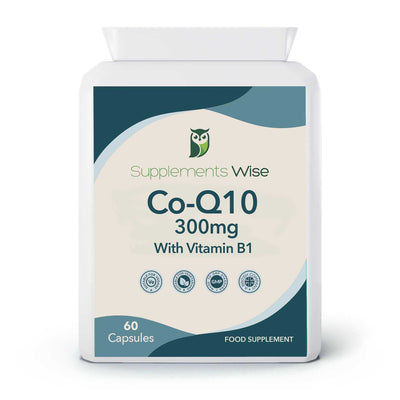
Co-Enzyme Q10 300mg (60 Capsules with Vitamin B1)
The trial-matched 300 mg CoQ10 dose in a single capsule, paired with thiamine (Vitamin B1) for cellular energy. Two-month supply, vegetarian, UK-made.
UK GMP-certified · Vegetarian · 30-day returns · Free UK shipping
£22.95
Add to CartWhy is magnesium so consistently linked to fibromyalgia flare-ups?
Multiple observational studies report lower serum, intracellular and red blood cell magnesium in fibromyalgia patients compared with healthy controls. Magnesium is a co-factor in more than 300 enzyme reactions, several of which sit right in the pain, sleep and muscle-relaxation pathways that fibromyalgia disrupts. Low magnesium also amplifies NMDA receptor activity, which is the same receptor that pain amplification runs through.
The clearest randomised trial in fibromyalgia is Bagis and colleagues' 2013 study in Rheumatology International. Sixty women with fibromyalgia were randomised across three groups: magnesium citrate 300 mg per day, amitriptyline 10 mg per night, or both. Magnesium citrate significantly improved the FIQ score and tender-point count. The combination of magnesium plus amitriptyline outperformed either alone on multiple pain outcomes (Bagis et al., 2013, DOI: 10.1007/s00296-011-2334-8).
Bisglycinate and citrate forms are the practical choices for daily use because they are the best absorbed and least likely to trigger the loose stools that a magnesium oxide product will. For fibromyalgia, a triple-form product covers absorption and sleep support in one capsule, and a citrate-forward blend is usually gentler than magnesium oxide-based sports formulas.
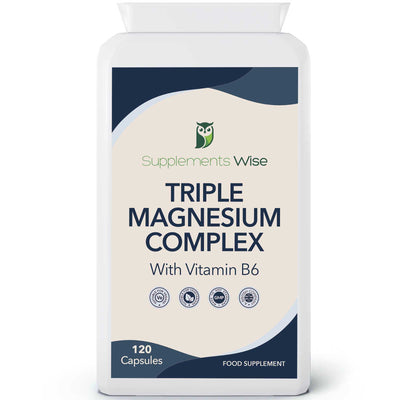
Triple Magnesium Complex (120 Capsules with B6)
375 mg elemental magnesium from bisglycinate, malate and taurate, plus B6. Gentle on the stomach, no laxative effect at three capsules a day.
UK GMP-certified · Vegan · 30-day returns · Free UK shipping
£14.95
Add to CartSplit the dose across the day if possible, and take the last one 30 to 60 minutes before bed. Read our magnesium citrate vs glycinate vs complex UK guide if you want a deeper comparison of the forms.
Does vitamin D really matter for fibromyalgia pain?
Vitamin D deficiency is common in the general UK population and is even more common in people with chronic pain, partly because pain and low mood reduce time spent outdoors. A 2025 systematic review and meta-analysis of vitamin D supplementation in fibromyalgia found that correcting a deficiency produces a meaningful reduction in pain scores (Yao et al., 2025, DOI: 10.3390/nu17203232). The effect size is much smaller when baseline 25(OH)D is already in the sufficient range.
The practical UK plan is to ask your GP for a 25(OH)D blood test if you have never had one, and then top up according to the result. If a blood test is not easily available, following the NHS recommendation of a 10 microgram (400 IU) daily supplement from October to March is a sensible floor. Adults with confirmed deficiency often need 2000 to 4000 IU a day for a few months to normalise levels, then a maintenance dose.
Vitamin D on its own does not treat fibromyalgia. It removes one variable that reliably worsens musculoskeletal pain, low mood and fatigue if it is missing. If you are not sure whether you are deficient, our vitamin D deficiency signs UK guide covers the symptoms and testing route in more detail. A high-strength daily like the Vitamin D3 Gummies 4000 IU is a fair choice for adults with confirmed low levels who dislike swallowing tablets.
What about tryptophan, 5-HTP and sleep support?
Non-restorative sleep is one of the most treatable levers in fibromyalgia. Even a modest gain in deep-sleep time reduces next-day pain reports and cognitive fog. Two nutrient routes have modest supporting evidence: tryptophan and its more direct downstream product 5-HTP, which the brain uses to make serotonin and then melatonin.
Small trials in fibromyalgia have used 100 mg of 5-HTP three times a day and reported improvements in tender points and mood. In practice a more cautious UK dose is 50 to 100 mg at night, on its own, especially if you are already taking an SSRI or SNRI, because combining serotonergic supplements with those drugs raises the risk of serotonin syndrome. Always ask a pharmacist or your GP before adding 5-HTP or tryptophan to any antidepressant.
Beyond nutrients, the highest-yield sleep interventions for fibromyalgia are the boring ones: consistent wake time seven days a week, morning outdoor light within an hour of waking, caffeine cut-off by early afternoon, and a cool bedroom. Magnesium at night contributes here too, which is why the same triple magnesium complex earns its place across both the pain and sleep sections.
Do turmeric and omega-3 help fibromyalgia?
Turmeric and its active ingredient curcumin have a plausible mechanism (they down-regulate inflammatory pathways that are mildly elevated in fibromyalgia) but the trial data specific to fibromyalgia is thin. Where turmeric earns its place is when a fibromyalgia patient also has co-existing joint pain, IBS-type digestive flare-ups, or morning stiffness. Piperine or a phytosome formulation improves absorption significantly. Read our anti-inflammatory supplements UK evidence guide for the wider anti-inflammatory picture.
Omega-3 (EPA and DHA from fish or algal oil) is more useful for the depression and low-grade inflammation that so often ride alongside fibromyalgia. A pragmatic UK dose is 1.5 to 2 g of combined EPA plus DHA daily, taken with the main meal of the day. Expect the effect on mood to show up around eight to twelve weeks, and expect the effect on pain to be modest and indirect.
Neither turmeric nor omega-3 should be prioritised above CoQ10, magnesium and vitamin D for symptom relief. They are quality-of-life supplements that pair well with the core three.
Which supplements should you skip?
Fibromyalgia is a magnet for high-margin, thin-evidence products. The list below covers the most common ones we get asked about at Supplements Wise.
| Product type | Why to skip for fibromyalgia |
|---|---|
| Kratom or unregulated pain "botanicals" | Withdrawal, dependence risk, and no reliable UK quality control. |
| 15-ingredient "fibro relief" blends | Every ingredient is under-dosed. Buy the two or three with evidence separately. |
| Homeopathic pain remedies | No plausible mechanism and no reproducible clinical benefit versus placebo. |
| Very high-dose D-ribose (5 g plus, several times a day) | Small early trials looked hopeful, but replication has not held up. Expensive per week. |
| Detox teas, cleanses, "alkaline" waters | No mechanism against central pain sensitisation and often gastrointestinal irritants. |
Worth Knowing
Fibromyalgia has no cure, and any supplement or clinic promising one is a red flag. NICE-relevant UK guidance still recommends a combined approach of graded exercise, cognitive behavioural therapy, sleep repair and (where appropriate) duloxetine, pregabalin or amitriptyline off-license. Supplements sit alongside that framework, not instead of it.
What is the simplest UK stack to try first?
If you are new to supplementing for fibromyalgia, start with one supplement at a time, keep a two-line pain diary each evening, and give each trial a full eight weeks. The order below is based on the strength of the trial data and the ease of noticing an effect.
| Loudest symptom | Start here | Add at week 8 if partial response |
|---|---|---|
| Deep aching pain and fatigue | CoQ10 300 mg with breakfast | Triple magnesium complex, split dose |
| Muscle tightness and poor sleep | Triple magnesium complex (with last dose at bedtime) | Vitamin D3 4000 IU (after blood test) |
| Non-restorative sleep, wake unrefreshed | Magnesium at bedtime, sleep hygiene rebuild | 5-HTP 50 mg at night (only if no SSRI/SNRI) |
| Low mood and cognitive fog | Vitamin D3 (after blood test) + omega-3 | CoQ10 300 mg for mitochondrial energy |
| Joint stiffness alongside widespread pain | Omega-3 EPA + DHA 2 g | Turmeric with piperine, then CoQ10 |
Two other habits earn their place alongside any supplement stack. Rebuild sleep first (fixed wake time, morning light, cool bedroom) because supplements cannot outrun a shredded sleep pattern. And pair the stack with the graded, low-impact movement that the NHS recommends for fibromyalgia, even if the starting point is a five-minute walk twice a day. Read our brain fog supplements UK guide if fibro fog is the loudest symptom for you today.
When should you see your GP about fibromyalgia symptoms?
Fibromyalgia is a diagnosis of exclusion, which means a GP needs to rule out conditions that can mimic it. Book a GP appointment if any of the following applies.
- You have never had a formal fibromyalgia diagnosis but pain has been widespread for more than three months
- Symptoms have suddenly worsened, or are affecting your ability to work or care for children
- You have new joint swelling, morning stiffness lasting more than an hour, or a rash
- You have unexplained weight loss, fevers, night sweats or persistent fatigue that food and sleep do not fix
- You suspect a thyroid problem, low B12, low ferritin, coeliac disease or vitamin D deficiency
- You are considering starting 5-HTP or St John's Wort while taking an SSRI, SNRI or MAOI
- You feel your mood is deteriorating and you have thoughts of self-harm (contact 111 or a Samaritans line urgently)
Your GP can arrange blood tests, refer you to a rheumatology clinic if the picture is unclear, and offer a discussion about duloxetine, pregabalin or amitriptyline. Two useful UK resources for the wider picture are the NHS fibromyalgia information page and the charity Fibromyalgia Action UK, which runs UK support groups and a helpline.
Key Takeaway
CoQ10, magnesium and vitamin D3 are the three supplements with the cleanest trial data for fibromyalgia symptom relief. Trial one at a time for at least eight weeks, alongside pacing, sleep repair and (if your GP recommends it) duloxetine or pregabalin. Skip the 15-ingredient "fibro relief" blends and any product that promises a cure.
Frequently asked questions
Can supplements cure fibromyalgia?
No. Fibromyalgia has no cure. Supplements can reduce specific symptoms (pain, fatigue, tender-point sensitivity, poor sleep) in some people, but they are one part of a wider plan that also includes pacing, graded movement, sleep repair and, where appropriate, prescribed medication.
How long does CoQ10 take to work for fibromyalgia?
The Cordero 2013 trial showed clinically meaningful changes at 40 days on 300 mg per day. A sensible UK trial length is 8 to 12 weeks at 200 to 300 mg with food, tracking pain and fatigue in a simple daily diary before deciding.
Which form of magnesium is best for fibromyalgia?
Citrate and bisglycinate are the most useful daily forms because they are well absorbed and gentle on the stomach. A triple-form product that combines bisglycinate, malate and taurate covers absorption, muscle relaxation and sleep support in one capsule. Avoid magnesium oxide as your only source, since it triggers loose stools in many people.
Is 5-HTP safe if I am on an antidepressant?
Not without your GP's approval. Combining 5-HTP with an SSRI, SNRI or MAOI raises the risk of serotonin syndrome. Ask your GP or pharmacist before starting 5-HTP if you take any prescribed medication for mood, sleep or migraine.
Do vitamin D supplements really reduce fibromyalgia pain?
They reduce pain reliably when a real deficiency is present (25(OH)D below the NHS threshold). If your blood level is already sufficient, the effect on pain is small. A GP blood test is the best way to know which category you are in before spending on a high-strength D3.
Can I take CoQ10, magnesium and vitamin D together?
Yes. The three work on different systems (mitochondrial energy, nerve and muscle relaxation, immune and pain modulation) and have no known interactions at sensible daily doses. To keep your symptom diary useful, start them one week apart so you can see which one is doing the work.
Should I stop my duloxetine or pregabalin if a supplement helps?
No. Never stop or reduce a prescribed medication without talking to your GP or pain team first. Supplements are additive. If your symptoms improve on CoQ10 or magnesium, that is useful information to bring to your next GP review, not a reason to change your prescription unilaterally.
Fibromyalgia is one of the most under-recognised chronic conditions in the UK, and progress usually comes from a package of small, boring wins rather than a single miracle product. Pair CoQ10, magnesium and (where deficient) vitamin D with pacing, sleep repair and the graded movement that the NHS recommends, and give the plan at least eight to twelve weeks before you decide it has failed. Small, consistent inputs beat heroic ones every time in fibromyalgia.
Start the sensible 8-week fibromyalgia trial
Co-Enzyme Q10 300mg with Vitamin B1 is the trial-matched dose used in Cordero's 2013 fibromyalgia study. One capsule a day with breakfast, sixty capsules per bottle, and a two-month window to see how your symptoms respond.
Shop Co-Enzyme Q10 300mgUK GMP-certified · Vegetarian · 30-day returns · Free UK shipping
This article is for information only and is not medical advice. Food supplements should not replace a varied diet or a healthy lifestyle. Speak to your GP or pharmacist before starting any new supplement, especially if you are pregnant, breastfeeding, taking medication or managing a health condition.