Best Supplements for Men Over 50 UK: The 2026 Evidence Stack

Turning 50 is not a cliff, but the body does start playing by different rules. Testosterone drifts down by about 1% a year from your forties, lean muscle drops by roughly 3% to 5% per decade, prostate tissue quietly enlarges in more than half of men by 60, and blood pressure and cholesterol both tend to creep up.
The supplement aisle has an answer for every one of those changes, and most of them are noise. The short list that has actually been tested in men your age is much smaller than the shelves suggest.
This 2026 UK guide walks through the supplements with real trial data behind them for the four things men over 50 actually ask about: energy and testosterone, prostate comfort, muscle preservation and heart health. It also names what to skip and when to book a GP visit instead of adding another capsule.
Key Takeaway
For most UK men over 50, the sensible daily stack is a purified shilajit and adaptogen blend for testosterone and energy, an amino acid complex to protect ageing muscle, a joint support like rosehip, and a vitamin D3 top-up through winter. Prostate support with plant sterols and zinc has moderate trial evidence; saw palmetto on its own does not. Book a GP blood test before you spend a penny on testosterone-boosting supplements.
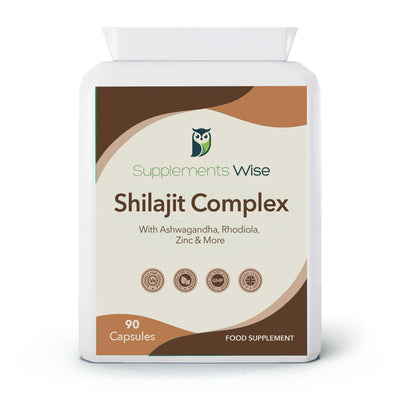
Top pickMade in the UK · GMP certified
Shilajit Complex 90 Capsules with KSM-66 and Rhodiola
90 vegetarian capsules · 45-day supply at 2 caps
- 400mg purified shilajit at 60% fulvic acid, above the Pandit 2016 trial dose
- Stacks with 250mg KSM-66 ashwagandha for cortisol and 250mg Rhodiola for fatigue
- Includes zinc, vitamin D3 and B6 for hormone and energy metabolism
Vegetarian · 30-day returns · Free UK shipping
In this article
- What actually changes in your body after 50
- Which supplements should be top of the list
- Does shilajit really move testosterone?
- How to think about prostate support
- Protein and amino acids for ageing muscle
- Joint support: what actually works over 50
- Do you still need vitamin D and magnesium?
- CoQ10, statins and heart health
- What to skip entirely
- Building a sensible daily stack
- Frequently asked questions
Transparency note: Supplements Wise makes and sells some of the products featured in this guide. Product picks are based on the trial evidence cited throughout, and each study reference links to the original source.
What actually changes in your body after 50?
Testosterone declines slowly from about your mid-thirties, roughly 1% each year, so by 55 the average British man is running around 20% below his peak level. That does not mean deficiency, but it does explain lower morning energy, slower gym recovery, softer erections and a shorter fuse.
Muscle mass drops 3% to 5% per decade after 40, and the loss accelerates unless you lift weights. Prostate tissue enlarges in more than 50% of men by 60 and 90% by 85, which is why weak stream and getting up twice a night start showing up in this decade.
Bone density, blood pressure, LDL cholesterol and fasting glucose all quietly drift the wrong way, often without symptoms. The supplements below target the specific mechanisms behind those changes, and the ones that actually have UK-relevant trial data are named individually.
Which supplements should every man over 50 consider first?
A sensible starting stack is short: something for testosterone and energy, something for muscle, a joint support, and a vitamin D3 top-up if you are UK-based and not on regular sun exposure. You do not need eight bottles.
Below is the daily framework this article walks through in evidence order. Add one supplement at a time, give it 8 to 12 weeks, and keep the ones that measurably help.
| Priority | Supplement | Sensible daily dose | Time to notice |
|---|---|---|---|
| Energy and testosterone | Purified shilajit blend | 500mg (or 400mg with adaptogens) | 4-12 weeks |
| Muscle preservation | Full spectrum amino acids | 2 caps daily, alongside protein-first meals | 6-12 weeks |
| Joint comfort | Rosehip extract with vitamin C | 5000mg equivalent (1-2 caps) | 4-8 weeks |
| Prostate comfort | Plant sterols with zinc and pumpkin seed | 2 caps (multi-ingredient) | 8-12 weeks |
| Vitamin D3 (October to March) | D3 capsules or gummies | 1000-4000 IU (NHS 10mcg minimum) | 6-12 weeks |
None of these are a replacement for the actual heavy lifters at 50: three protein-forward meals, two resistance sessions a week, seven hours of sleep and controlled alcohol. Supplements are the top-up, not the plan.
Does shilajit really move testosterone?
Shilajit is a purified mineral pitch from Himalayan rock and has become the most talked-about testosterone supplement of the last three years. The evidence is genuinely good for men in your bracket, but you need the standardised extract, not the raw resin sold online with no certificate.
In a randomised placebo-controlled trial, healthy men aged 45 to 55 took 250mg purified shilajit twice a day for 90 days. Total testosterone rose by roughly 20% and free testosterone by around 10% versus placebo, alongside a rise in DHEAS, the adrenal precursor to sex hormones (Pandit et al., 2016, DOI: 10.1111/and.12482).
What the Research Says
In the Pandit 2016 trial of 96 healthy volunteers aged 45-55, purified shilajit at 250mg twice daily for 90 days significantly raised total testosterone (about +20%), free testosterone (about +10%) and DHEAS versus placebo. That study is the one every honest shilajit article cites, and it is the reason to look for a standardised extract at that dose or above.
Purified shilajit also has separate evidence for exercise recovery and muscle strength retention, thanks to fulvic acid's role in mitochondrial energy transport. The pairing with KSM-66 ashwagandha and rhodiola is not for extra testosterone but to blunt the cortisol response that drags testosterone down in men who sleep poorly or work long hours.
Made in the UK · GMP certified
Shilajit Complex 90 Capsules with KSM-66 and Rhodiola
90 vegetarian capsules · 45-day supply at 2 caps
- 400mg standardised shilajit extract, above the 500mg Pandit total daily dose
- KSM-66 and rhodiola dosed at 250mg each to blunt daily cortisol drag
- Third-party heavy metal tested, UK GMP manufactured
Vegetarian · 30-day returns · Free UK shipping
If your energy problem is really a sleep problem, or you have never had bloods checked, a shilajit capsule is not the answer. Book a GP visit and ask for a morning testosterone test, thyroid panel and full blood count first, then supplement into a known baseline.
How should you approach prostate support after 50?
Roughly half of UK men in their fifties have some benign prostatic enlargement, and by their seventies it is close to universal. The supplement aisle is dominated by two ingredients, saw palmetto and plant sterols, but the trial evidence on those two ingredients could not be more different.
Saw palmetto on its own has been through multiple large placebo-controlled trials and the definitive Cochrane review of 32 randomised studies found no meaningful improvement in urinary symptoms or flow rates versus placebo (Tacklind et al., 2012, DOI: 10.1002/14651858.CD001423.pub3). If the label only shouts about saw palmetto, expect very little.
Beta-sitosterol, one of the plant sterols found in pumpkin seed and phytosterol extracts, has better evidence. The German BPH-Phyto trial gave 200 men either 20mg beta-sitosterol three times daily or placebo, and after six months symptom scores improved by 7.4 points against 2.1 for placebo, with peak urinary flow rising from 9.9 to 15.2 mL/s (Berges et al., 1995, DOI: 10.1016/S0140-6736(95)91085-9).
| Approach | Evidence grade | Typical UK dose |
|---|---|---|
| Saw palmetto alone | Weak (no benefit vs placebo, Cochrane 2012) | 320mg lipophilic extract |
| Beta-sitosterol / plant sterols | Moderate (positive IPSS + flow trials) | 60-130mg free sterols |
| Multi-ingredient prostate blends (sterols + zinc + pumpkin + saw palmetto) | Moderate (largely driven by sterol content) | Follow label |
| GP-prescribed alpha-blocker (tamsulosin) or 5-ARI (finasteride) | Strong (first-line NHS treatment for symptomatic BPH) | GP dosed and monitored |
The Supplements Wise Prostate Support Capsules combine 540mg plant sterols with 20mg zinc, 800mg pumpkin equivalent, saw palmetto and vitamin D, which lines up with the multi-ingredient formulas that have moderate supportive data. Stock has been running through fast and the SKU is often on backorder, so time your order.
Worth Knowing
Never treat a weak stream, blood in urine, incontinence or unexplained weight loss with a supplement. Those need a GP appointment, a PSA test and, if needed, an ultrasound. Supplements are for background support alongside NHS assessment, not instead of it.
How much protein and which amino acids preserve muscle after 50?
Sarcopenia, the age-related loss of muscle, is the single most modifiable predictor of falls, frailty and independence in later decades. From 50 onwards the muscle cell becomes less responsive to a given amount of protein, an effect called anabolic resistance, so you need more, not less, than a younger man.
The PROT-AGE international expert consensus recommends 1.0 to 1.2 grams of protein per kilogram body weight per day for healthy older adults, rising to 1.2 to 1.5 g/kg for anyone with active disease or in recovery (Bauer et al., 2013, DOI: 10.1016/j.jamda.2013.05.021). For an 80kg man that is roughly 80 to 96 grams a day, spread across three meals with at least 25 to 30g at each sitting.
Amino acid capsules are not a substitute for that food-first target, but they help two situations well. They top up mornings when appetite is low, and they cover training days when you push a session while under-fed. Look for a full spectrum blend that includes all nine essential amino acids, not just the branched-chain three, because leucine on its own does not build muscle without valine, isoleucine, lysine and methionine present.
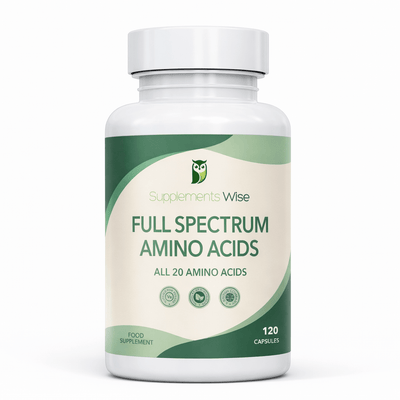
Made in the UK · GMP certified
Full Spectrum Amino Acid Complex 120 Vegan Capsules
120 vegan capsules · 60-day supply at 2 caps
- All 20 amino acids including the full nine essentials, not just BCAAs
- 60mg leucine per cap for the muscle-protein synthesis trigger
- Plant-fermented, no fillers, letterbox-friendly bottle
Vegan · 30-day returns · Free UK shipping
If you already train and eat enough, consider creatine monohydrate too. It is one of the most-studied supplements on the planet and older men respond better to it than younger men, with meta-analyses showing 1 to 1.5kg extra lean mass and 5 to 10% strength gains when paired with resistance training. See our muscle loss after 40 UK evidence guide for the full breakdown.
What actually works for joints and everyday stiffness?
Most men over 50 have some degree of osteoarthritis by their late fifties, usually knee, hip or lumbar spine, and by 65 it is showing up on scans in about 80% of us. The supplement evidence is genuinely mixed: glucosamine chondroitin has weak-to-modest data, turmeric and ginger have moderate anti-inflammatory data, and rosehip has the surprise winner status of a Cochrane-cited effect size.
Rosehip contains a specific galactolipid (GOPO) that inhibits neutrophil migration into inflamed joint tissue. A Cochrane-cited meta-analysis of three randomised trials in knee and hip OA found rosehip powder produced a moderate reduction in pain scores versus placebo over three to four months, with a very low side-effect profile.
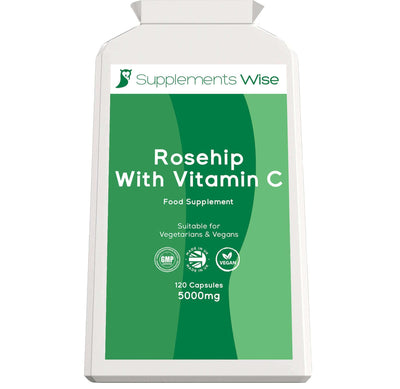
Made in the UK · GMP certified
Rosehip Extract 5000mg with Vitamin C 120 Vegan Capsules
120 vegan capsules · 60-day supply at 2 caps
- 5000mg rosehip whole-fruit equivalent per 2-cap dose
- Added vitamin C for collagen synthesis and antioxidant cover
- Gentle daily option, well tolerated in long joint trials
Vegan · 30-day returns · Free UK shipping
If your joint discomfort is more inflammatory-feeling, morning stiffness that eases with movement, a curcumin-ginger combination gives good short-term relief in trials, and our full rosehip evidence guide compares them head to head.
Do you actually need extra vitamin D and magnesium after 50?
Vitamin D is not optional in the UK past 50. The NHS recommends 10 micrograms (400 IU) daily for every adult from October to March because British sunlight makes no meaningful vitamin D outside those months, and skin synthesis becomes less efficient with age.
Over 50 you can safely go higher, and most falls-prevention trials in older adults used 1000 to 4000 IU daily. That range corrects deficiency in about eight to twelve weeks, supports bone density and reduces falls risk in the deficient population by around 19%. See our UK vitamin D3 strength guide for how to pick 1000, 2000 or 4000 IU.
Magnesium tends to run low in ageing British men because proton-pump inhibitors, diuretics and metformin all deplete it. If you have restless legs, night cramps, occasional constipation or poor sleep, a magnesium glycinate at 300 to 400mg elemental in the evening is a cheap first move (see our best time to take magnesium UK guide).
What about CoQ10, statins and heart health?
By the time you are 50, your body produces roughly half the CoQ10 it did at 25, and statins block a shared production pathway, dropping levels a further 40% within a month of starting. This is the single most common reason older men get muscle aches and fatigue on their prescribed statin.
Supplementing 100 to 300mg CoQ10 daily reliably restores blood levels and, in trials of statin users, reduces the muscle-pain flare (statin myopathy) in a large proportion of responders. Our CoQ10 300mg UK evidence guide and the recent CoQ10 onset timeline break down which use case needs what dose and how long to wait.
For blood pressure and cholesterol themselves, the biggest movers are still lifestyle, plus omega-3 EPA and DHA from oily fish two to three times a week. Do not swap a prescribed statin for red yeast rice off Amazon: the active compound is a natural lovastatin with the same risks and no NHS monitoring.
What should you skip entirely?
The over-50 supplement aisle is a graveyard of products that sell well and do nothing. This short skip-list will save you £30 to £40 a month.
| Skip this | Try this instead |
|---|---|
| Tribulus terrestris and fenugreek "testosterone boosters" | Purified shilajit, sleep and a GP testosterone blood test |
| Saw palmetto on its own | Multi-ingredient prostate blend with plant sterols and zinc |
| Deer antler IGF-1 sprays and "growth hormone releasers" | Full-spectrum amino acids plus resistance training |
| Red yeast rice bought online in place of a statin | CoQ10 alongside your prescribed statin, discussed with your GP |
| 15-ingredient "men over 50" multivitamins with rounding-error doses | Two or three targeted supplements at trial-matched doses |
The other common trap is a pricey greens powder marketed as a full nutrition replacement. A daily portion of tinned mackerel, a bag of frozen berries and a bowl of oats beats every greens powder on price, evidence and pleasure.
How do you build a sensible daily stack?
Start with one supplement at a time. Give it eight to twelve weeks, keep a note of energy, sleep, gym recovery and any prostate or joint symptoms, and only add the next one if the first is clearly helping. Stacking five supplements on day one gives you no data.
Here is a reasonable order for the average UK man over 50 who is not deficient in anything obvious and wants to build up gradually.
| Week | Add | Why now |
|---|---|---|
| Week 1 | Vitamin D3 1000-4000 IU | Cheapest, biggest deficiency risk in the UK, foundational |
| Week 3 | Shilajit complex | Testosterone and energy, best trial-backed pick for this decade |
| Week 6 | Amino acid complex on training days | Muscle preservation once resistance training is a habit |
| Week 8 | Rosehip or curcumin-ginger | Only if joint niggles are limiting the training |
| Week 10 | Prostate support blend | Only if symptoms show up, and after a GP PSA discussion |
Key Takeaway
Build the stack around vitamin D3, purified shilajit, an amino acid complex and a joint supplement, in that order, adding one at a time over ten weeks. Treat prostate blends as an add-on if symptoms appear, and never skip the GP visit for a supplement you saw on TikTok.
Frequently asked questions
What is the single most important supplement for men over 50 in the UK?
Vitamin D3 is the most important daily supplement for most UK men over 50, because British sunlight cannot make vitamin D from October to March and older skin synthesises less efficiently. The NHS recommended baseline is 10 micrograms (400 IU) daily. If you have not tested, 1000 to 2000 IU is a safe correction range for most men.
Can supplements really raise testosterone in men over 50?
A small number of supplements have modest trial evidence for raising testosterone in men aged 45 to 55, with purified shilajit at 500mg daily the best documented (about a 20% total testosterone rise over 90 days in Pandit 2016). Most other "testosterone boosters" including tribulus and fenugreek do not have credible trial support. If low libido or fatigue are affecting daily life, ask your GP for a morning testosterone blood test before spending money.
Does saw palmetto actually help prostate symptoms?
Saw palmetto on its own does not consistently outperform placebo for BPH symptoms, according to the 2012 Cochrane review of 32 randomised trials. Multi-ingredient prostate formulas that combine plant sterols, zinc and pumpkin seed have moderate supporting data, and beta-sitosterol has one of the strongest single-ingredient trials in this space. See your GP for any change in urinary flow, blood in urine or nocturia lasting more than a fortnight.
How much protein do I need after 50?
The PROT-AGE international consensus recommends 1.0 to 1.2 grams of protein per kilogram body weight per day for healthy older adults, rising to 1.2 to 1.5 g/kg if recovering from illness or surgery. For an 80kg man that is 80 to 96 grams a day, ideally split into three meals with 25 to 30 grams at each sitting. Amino acid capsules top up mornings when appetite is low but are not a substitute for food.
Should I take CoQ10 if I am on a statin?
CoQ10 is worth trying if you started a statin and developed muscle aches or unusual fatigue within the first month, because statins block a shared production pathway and drop CoQ10 levels by around 40%. Typical trial doses in statin users range from 100 to 300mg daily. Talk to your GP or pharmacist before adding it, and never stop your statin without medical advice.
Are multivitamins for men over 50 worth it?
Most 15-ingredient "men over 50" multivitamins deliver rounding-error doses of everything and a meaningful dose of nothing. You are better off with two or three targeted supplements at trial-matched levels: vitamin D3, an amino acid complex and a purified shilajit or prostate blend depending on your priorities. Save the multivitamin budget for higher-quality single-purpose formulas.
When should I see my GP instead of trying supplements?
See your GP promptly for unexplained weight loss, blood in urine, ongoing weak urinary stream, chest pain on exertion, new erectile dysfunction, persistent fatigue, low mood lasting more than two weeks, or any lump. Get a routine check-in with morning testosterone, PSA, HbA1c, cholesterol panel, thyroid and full blood count at least every two years past 50, and use those numbers to guide supplement choices.
Start a sensible 12-week stack
Shilajit Complex is the highest-evidence starting point for testosterone, energy and recovery in men over 50. UK GMP-certified · Vegetarian · 30-day returns · Free UK shipping.
Shop Shilajit ComplexThis article is for information only and is not medical advice. Food supplements should not replace a varied diet or a healthy lifestyle. Speak to your GP or pharmacist before starting any new supplement, especially if you are pregnant, breastfeeding, taking medication or managing a health condition.