Muscle Loss After 40 UK Guide: 5 Supplements That Actually Help

If you are over 40 and lifting the same weights feels harder, or the number on the scale is stable but your clothes fit softer, that is age-related muscle loss starting quietly in the background. The condition is called sarcopenia, and UK adults lose roughly 3 to 8% of muscle mass per decade after 30, and closer to 5 to 10% per decade after 60. Five supplements have real evidence for slowing it: creatine monohydrate (the best-studied and most reliable), vitamin D3 (fixes a deficiency that saps strength and increases falls), a full essential amino acid complex or extra protein (older adults have blunted muscle response to food, called anabolic resistance), leucine or HMB in the frailest cases, and omega-3 fish oil where blood levels are low.
None of these work on their own, and all of them work better with two or three resistance sessions a week and 1.0 to 1.2 grams of protein per kilogram of body weight per day.
This UK evidence guide walks through what the research actually shows for adults 40 and up, the doses that appear in the trials, the products in the Supplements Wise range that fit, and the marketing claims that are safe to ignore. Written for men and women in midlife who want to keep the muscle they already have, not build a bodybuilder physique.
Key Takeaway
Muscle loss after 40 is normal and largely preventable. Two to three resistance sessions a week plus a protein floor of 1.0 to 1.2 grams per kilogram of body weight will do most of the work. Creatine monohydrate, vitamin D3 and a full amino acid complex are the three supplements with the strongest evidence for adults preserving muscle in midlife.
In this article
- Why does muscle start disappearing after 40?
- What is sarcopenia and when does it become a problem?
- Can supplements actually slow age-related muscle loss?
- Which supplement has the strongest evidence for older adults?
- Why is vitamin D so important for muscle strength after 40?
- How does creatine help preserve muscle after 40?
- Do you need extra amino acids or protein after 40?
- What about HMB, leucine and omega-3?
- Which supplements should you skip?
- What is the simplest UK stack for preserving muscle?
- When should you see your GP about muscle loss?
- Frequently asked questions
Why does muscle start disappearing after 40?
Adults lose skeletal muscle gradually from around age 30, and the rate speeds up after 40. Total muscle mass falls by roughly 3 to 8% per decade in midlife, and by 5 to 10% per decade after 60. What people notice first is not the mirror, but the everyday tasks that start feeling harder, like carrying shopping upstairs, getting out of a low sofa, or opening a jar.
Three things drive the decline. Motor neurons that fire fast-twitch muscle fibres die off, so the body relies more on slow-twitch fibres and generates less power, and anabolic hormones like testosterone, growth hormone and IGF-1 fall gradually with age. Most importantly, ageing muscle becomes less responsive to the amino acids in food, an effect called anabolic resistance.
Layer on top of that the ordinary reasons UK adults become less active in midlife, like sedentary desk work, an injury that never quite resolved, or a decade of steady 5,000-step days, and the losses compound. The good news is that most of the decline is reversible with the right stimulus and the right nutrients.
What is sarcopenia and when does it become a problem?
Sarcopenia is the clinical term for age-related loss of muscle mass and strength. The European Working Group on Sarcopenia in Older People (EWGSOP2) updated the diagnostic criteria in 2019 to prioritise low muscle strength over low muscle mass, because strength predicts everyday function better (Cruz-Jentoft et al., 2019, DOI: 10.1093/ageing/afy169).
Doctors typically do not diagnose sarcopenia until it starts to affect physical function, usually from around age 60 to 65, but the biological changes that lead to it start in your 40s. The muscle you carry into your 60s is largely built from what you did between 40 and 60, so waiting for a diagnosis is waiting far too long.
UK screening tests you can do at home are simple. Can you rise from a chair five times without using your hands, in under 12 seconds, and can you grip a jam-jar lid tightly enough to open it on the first try? If either of those has quietly become a struggle, it is worth acting now.
Can supplements actually slow age-related muscle loss?
Yes, but only in the company of resistance training and adequate protein. The consistent message across UK, European and international sarcopenia guidance is that supplements are additive, not a substitute for the exercise stimulus or the food that carries the amino acids.
The National Health Service is explicit that regular strength activity two or more days a week is a core recommendation for adults, not an optional extra. Read the NHS physical activity guidelines for adults if you need to see the specific target in writing.
Once the training and protein floor is in place, the supplement stack for muscle preservation is short and evidence-heavy. Anything longer than five ingredients is usually a marketing exercise. The next four sections cover the three that actually earn their place, and one that does in specific cases.
Which supplement has the strongest evidence for older adults?
Creatine monohydrate has by far the strongest evidence base for preserving muscle mass and strength in adults over 40. The International Society of Sports Nutrition (ISSN) position stand describes it as safe, effective and one of the most-studied ergogenic aids in the world (Kreider et al., 2017, DOI: 10.1186/s12970-017-0173-z).
For sarcopenia specifically, a 2017 meta-analysis of 22 randomised trials in older adults found that creatine combined with resistance training added roughly 1.4 kg of lean tissue mass compared with resistance training alone (Chilibeck et al., 2017, DOI: 10.2147/OAJSM.S123529). That is a meaningful, real-world difference at an age where the baseline trajectory is downward.
What the Research Says
The Chilibeck 2017 meta-analysis pooled 22 randomised trials, 721 older adults averaging 64 years old, following resistance-training programmes of 7 to 52 weeks. Creatine plus training beat training alone by 1.37 kg for lean tissue mass and 5 to 10% on chest press and leg press strength. No adverse effects on kidney or liver markers were reported at 3 to 5 g per day (DOI: 10.2147/OAJSM.S123529).
Why is vitamin D so important for muscle strength after 40?
Vitamin D deficiency is one of the few nutrient shortfalls that reliably drags muscle strength downwards. UK adults are particularly vulnerable because our latitude gives us almost no useful UVB from October to March, and the NHS advises everyone in the UK to consider a 10 microgram (400 IU) daily vitamin D supplement during autumn and winter.
The evidence for falls prevention in older adults is strongest. A landmark BMJ meta-analysis of eight double-blind trials found that 700 to 1,000 IU of vitamin D daily reduced the risk of falls in adults over 65 by roughly 19% (Bischoff-Ferrari et al., 2009, DOI: 10.1136/bmj.b3692). Fewer falls means fewer weeks of bed rest, which means less muscle lost to disuse.
Direct effects on muscle strength are more modest but real, particularly in adults who were deficient at baseline. The pragmatic UK plan is to top up daily through autumn and winter, get a 25(OH)D blood test if you have symptoms, and treat vitamin D as insurance rather than a strength-boosting drug.

Vitamin D3 Gummies 4000 IU (150 Orange)
Higher-strength winter daily for UK adults over 40. 150-day supply, natural orange flavour, no chalky tablets.
UK GMP-certified · Vegetarian · 30-day returns · Free UK shipping
£16.95
Add to CartHow does creatine help preserve muscle after 40?
Creatine monohydrate saturates a small energy pool in the muscle that gets called on during short, high-effort work like the last two reps of a set of squats or standing up quickly from a low chair. Saturating that pool means the muscle can do a fraction more work per session, and over months that adds up to real gains in lean tissue.
The mechanism is straightforward but the effect size for adults over 40 is what makes it stand out. Compared with expensive nootropics or fancy protein blends, creatine adds 1 to 2 kg of lean tissue mass in the average older adult on a sensible resistance-training programme, at a cost of around 15p per day. No other supplement in this article comes close on cost-per-outcome.
The standard dose is 3 to 5 g per day, taken any time, with or without food. No loading phase is needed unless you want a faster onset, and it works best when taken consistently over 8 to 12 weeks alongside two to three resistance-training sessions per week. Our creatine monohydrate UK guide covers the tablet vs powder decision if you are unsure which format suits you.
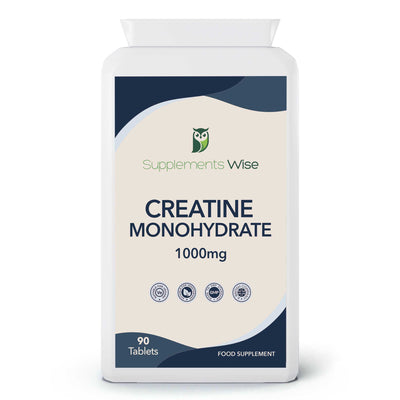
Creatine Monohydrate Tablets 1000mg (90 Vegan)
3 g daily dose in 3 tablets, 30-day supply, letterbox-friendly. No loading, no cycling, no fillers.
UK GMP-certified · Vegan · 30-day returns · Free UK shipping
£9.95
Add to CartDo you need extra amino acids or protein after 40?
Probably yes, if you are relying on typical UK protein intakes. The PROT-AGE international consensus recommends 1.0 to 1.2 g of protein per kilogram of body weight per day for healthy adults over 65, and 1.2 to 1.5 g/kg for those with acute or chronic disease (Bauer et al., 2013, DOI: 10.1016/j.jamda.2013.05.021). A 70 kg adult needs 70 to 84 g of protein, spread across three to four meals.
The trickier issue is anabolic resistance. Ageing muscle needs a bigger amino acid signal to switch on protein synthesis, and the amino acid that switches it on hardest is leucine. Food comes first (three to four eggs, a chicken breast, a tin of tuna, or a bowl of Greek yoghurt all sail past the leucine threshold), but for adults who struggle to hit the protein target through food, a full essential amino acid complex is a legitimate top-up.
A full-spectrum EAA complex is different from a BCAA product. BCAAs skip the other essential amino acids the body needs for the whole muscle-building process, whereas an EAA blend covers the full toolkit. Read our amino acids and muscle recovery guide for the mechanism in more detail.
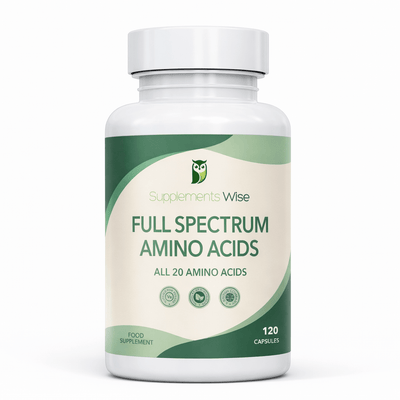
Full Spectrum Amino Acid Complex (120 Vegan)
All 20 amino acids in one capsule, including a leucine-led EAA profile. 60 to 120 day supply.
UK GMP-certified · Vegan · 30-day returns · Free UK shipping
£17.95
Add to CartWhat about HMB, leucine and omega-3?
HMB (beta-hydroxy-beta-methylbutyrate) is a leucine metabolite that shows most benefit in frailer older adults and during periods of bed rest or immobilisation, where it appears to blunt muscle loss. In healthy midlife adults who are training and eating enough protein, the evidence for extra benefit over creatine and protein alone is thin.
Leucine as a standalone supplement is worth considering only for adults who struggle to reach the leucine threshold in every meal (roughly 2.5 to 3 g). Most people who eat animal protein or a well-planned plant protein blend do not need it separately.
Omega-3 fish oil is more interesting. Modest evidence suggests EPA plus DHA at 2 g per day may enhance the muscle-building response to protein in older adults, especially those with lower baseline blood levels. Whether this shifts the needle on real-world sarcopenia is still being worked out, but the general health case for omega-3 in midlife is well established.
Which supplements should you skip?
The muscle-supplement aisle is loud, and much of it is aimed at 25-year-olds in the gym, not adults preserving muscle in midlife. The following are not worth your money for sarcopenia prevention.
| Supplement | Why to skip for muscle preservation |
|---|---|
| BCAAs (isolated) | Miss the other essential amino acids. A full EAA complex or food protein is better value. |
| Testosterone boosters (tribulus, fenugreek) | No consistent effect on serum testosterone or lean mass in adults with normal T levels. |
| Deer antler / IGF-1 sprays | No credible clinical evidence in humans and often on banned-substance lists. |
| Fat burners or "recomp" blends | Caffeine and stimulants that do nothing for muscle protein synthesis in midlife. |
| Multi-ingredient "anti-ageing" powders | Under-dosed on the ingredients that work. Buy the two or three that earn their place separately. |
Worth Knowing
No supplement replaces resistance training. If you take creatine and protein but skip strength work, the ceiling on your gains is close to what training alone would have produced without any supplement at all. Two to three sessions a week is the non-negotiable input.
What is the simplest UK stack for preserving muscle?
Skip the 12-ingredient combos. For adults over 40 with no clinical deficiencies, the stack below covers the strongest evidence at a reasonable weekly cost.
| Layer | Supplement | Sensible daily dose | When to expect the effect |
|---|---|---|---|
| Foundation | Creatine monohydrate | 3 to 5 g, any time of day | 8 to 12 weeks |
| Foundation | Vitamin D3 | 1000 to 4000 IU, autumn/winter minimum | 4 to 12 weeks (blood levels) |
| Top-up | Full spectrum amino acid complex | 2 to 4 caps around a training session | Session by session |
| Optional | Omega-3 (EPA + DHA) | 1.5 to 2 g combined EPA and DHA | 8 to 12 weeks |
| Situational | HMB or extra leucine | 3 g HMB or 2.5 g leucine per meal | Frail, recovering, or on bed rest |
Two other habits earn their place alongside this stack. Prioritise protein at breakfast, because most UK adults eat carb-heavy mornings and back-load protein at dinner. And add a walking or cycling routine for cardiovascular fitness, since VO2 max and muscle preservation move together after 40.
When should you see your GP about muscle loss?
Some muscle loss in midlife is normal. Fast, unexplained, or one-sided loss is not. Book a GP appointment if any of the following applies.
- Unintentional weight loss of more than 5% of body weight over 6 to 12 months
- New weakness in one arm or leg, or a noticeable difference between sides
- Muscle wasting alongside persistent fatigue, low mood, or reduced appetite
- Chair-rise or grip strength that has changed sharply in less than a year
- Muscle loss after a hospital admission, extended bed rest, or a long course of steroids
- Any symptoms suggesting thyroid problems, diabetes, or coeliac disease alongside the muscle change
Your GP can arrange blood tests (thyroid function, HbA1c, vitamin D, ferritin, testosterone in men where relevant), a basic strength assessment, and referral to a physiotherapist or dietitian. The NHS frailty information page is a useful UK reference for the wider picture in adults over 65.
Key Takeaway
Muscle you carry into your 60s and 70s is largely built between 40 and 60. Two or three resistance sessions a week, 1.0 to 1.2 g of protein per kilogram of body weight, plus creatine, vitamin D and a full amino acid complex when the food falls short, gives you the strongest evidence base for a small daily spend.
Frequently asked questions
Is muscle loss after 40 really unavoidable?
No. Some biological changes are age-related, but the drop in physical activity that most UK adults make in midlife is not. Adults who lift weights two to three times a week and hit their protein target lose muscle at a fraction of the sedentary rate.
How much protein do I actually need per day at 45?
The PROT-AGE consensus target for healthy adults in midlife and beyond is 1.0 to 1.2 g per kilogram of body weight per day. For a 70 kg adult that is 70 to 84 g of protein, spread across three to four meals with 20 to 40 g at each.
Is creatine safe for adults over 50?
Yes, in healthy adults with normal kidney function. The ISSN position stand describes creatine monohydrate at 3 to 5 g per day as one of the safest and most-studied ergogenic aids. Adults with kidney disease, or on medications that affect kidney function, should check with their GP first.
Do women need a different stack from men to preserve muscle?
The evidence base is very similar for both sexes. Postmenopausal women in particular respond well to creatine plus resistance training for lean mass and bone density. Our creatine for women UK guide covers the female-specific evidence in more detail.
Will supplements build muscle if I do not train?
No. The training stimulus is what tells the muscle to grow. Supplements enhance the response but do not replace it. Creatine without training in older adults shows little to no benefit for muscle mass or strength.
Can I take creatine and vitamin D together?
Yes, they act on different systems and are commonly taken together. Creatine works on the muscle energy pool, vitamin D on strength and fall risk. There are no known interactions between them at sensible daily doses.
How quickly should I expect to notice a difference?
Creatine strength effects are usually noticeable within 4 to 8 weeks of consistent training. Body composition changes take 8 to 12 weeks to become obvious. Vitamin D blood levels normalise in 8 to 12 weeks of daily dosing in autumn and winter.
Muscle loss after 40 is one of the most preventable health issues you will face in midlife, but it demands you do something now rather than in 20 years. Pair two to three resistance sessions a week with a protein floor of 1.0 to 1.2 g/kg, then let creatine, vitamin D and a full amino acid complex take the strain off the edges. The compounding effect over a decade is enormous.
Start the 12-week muscle-preservation trial
Creatine Monohydrate Tablets are the cheapest, best-evidenced entry point for adults over 40 who want to keep the muscle they have. Three tablets a day, no loading, no cycling, no complicated stack.
Shop Creatine Monohydrate TabletsUK GMP-certified · Vegan options · 30-day returns · Free UK shipping
This article is for information only and is not medical advice. Food supplements should not replace a varied diet or a healthy lifestyle. Speak to your GP or pharmacist before starting any new supplement, especially if you are pregnant, breastfeeding, taking medication or managing a health condition.