Longevity Supplements UK: What the Evidence Says (and What It Doesn't)

For adults over 40 in the UK, the longevity supplements with the most credible trial data are NMN as a NAD+ precursor, CoQ10 for cardiovascular protection, omega-3 and vitamin D as foundational nutrients, and a smaller honest case for resveratrol and antioxidant mushrooms. NMN has the cleanest dose-dependent NAD+ data in middle-aged adults, and CoQ10 carries the strongest mortality signal in any single longevity-adjacent trial. Resveratrol shows small cardiometabolic improvements but no human lifespan data, and the antioxidant mushroom case rests mostly on mechanism, not outcome trials.
None of these adds years on its own. Sleep, movement, blood pressure control, not smoking, and a Mediterranean-style diet still outperform every capsule in the longevity literature. The honest pitch for a longevity stack is healthspan, not lifespan, and only after the lifestyle floor is in place.
This guide is written for UK adults aged 40 to 70 who are seeing the first changes in energy, recovery and cardiometabolic markers, and who want a short, evidence-graded list rather than a 20-bottle Sinclair-style stack. It covers what each supplement does, the dose with trial backing, how long to give it, and when to put the bottle down and talk to your GP first.
Key Takeaway
Healthspan over lifespan. Get the lifestyle floor right first (sleep, movement, BP, no smoking, fish or omega-3, vitamin D). Layer in one or two evidence-graded supplements at a time, give each a fair 12-week trial, and judge it on bloods, energy, and how you actually feel rather than on hype.
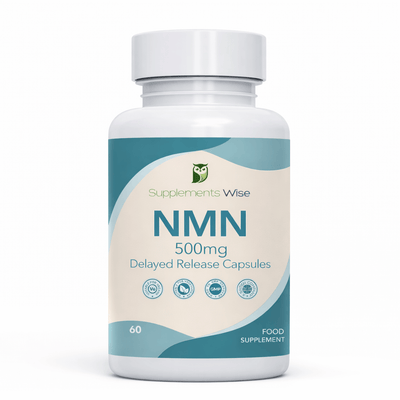
Made in the UK · GMP certified
NMN 500mg Delayed Release Capsules
60 vegan capsules · 2-month supply
- 500mg beta-NMN per delayed-release capsule
- The single morning dose used in the Yi 2023 and Igarashi 2022 trials
- Small-intestine release for the Slc12a8 transporter
Vegan · 30-day returns · Free UK shipping
In this article
- Do longevity supplements actually extend healthspan?
- What does longevity actually mean in 2026?
- Why does the lifestyle floor matter more than any capsule?
- Is NMN the most evidence-graded NAD+ precursor for adults over 40?
- Does resveratrol still earn its place in a longevity stack?
- Is there a single-capsule NMN stack instead of buying each ingredient?
- Why does CoQ10 keep showing up in mortality data?
- Where do reishi, cordyceps and other antioxidant mushrooms fit in?
- Are magnesium, omega-3 and vitamin D still the boring basics?
- Senolytics, fisetin, urolithin A and spermidine: hype or earned?
- How do you build a longevity stack without overspending?
- What red flags should send you to your GP first?
- What does a sensible 12-week longevity starter look like?
- Frequently asked questions
Do longevity supplements actually extend healthspan?
Yes, but only at the margins, and only when the basics are already in place. No randomised controlled trial of any supplement in healthy adults has shown a measurable extension of human lifespan. What several supplements have shown is a real improvement in markers that predict healthier ageing: NAD+ levels, walking distance, cardiovascular outcomes, insulin sensitivity, oxidative stress, inflammation.
These are the building blocks of healthspan, the years you live in good health rather than just alive. WHO healthy ageing guidance frames the goal in the same way: maintaining functional ability rather than chasing chronological age.
Treat the rest of this article as an honest map of what is worth trying, what the trial data really shows, and what to ignore until the science catches up.
What does longevity actually mean in 2026?
Two terms get confused in supplement marketing. Lifespan is how long you live, while healthspan is how long you stay independent, mobile, cognitively sharp and free of major disease. The supplements with the strongest case affect healthspan, not lifespan.
The signals that matter for a UK adult in their 40s, 50s or 60s are roughly: resting blood pressure, blood lipids, HbA1c, waist circumference, grip strength, walking speed, sleep quality, vitamin D status, and how quickly you recover from exertion. A supplement that nudges two or three of those is doing useful work. A supplement marketed on cellular mechanism without any human outcome data is doing less useful work, no matter how good the YouTube thumbnail is.
That framing is also why the Sinclair-Attia-Huberman style 20-bottle stacks read so loud. Most of those compounds are stacked on mechanism alone, not on outcome trials in middle-aged humans.
Why does the lifestyle floor matter more than any capsule?
Because the effect sizes are not close. UK and international cohort data give a consistent ranking: not smoking, regular moderate exercise, healthy weight, moderate alcohol and a Mediterranean-style diet are each associated with several years of added life expectancy when modelled against their absence.
The best supplement in this guide is plausibly worth a few months of healthspan if it works as advertised. That is real, but it is rounding error compared with a daily walk, a clean BP reading, and a smoke-free decade. BHF heart health guidance still puts diet and movement at the top of the pyramid for a reason.
Build the floor before the stack. A blood pressure under 135/85, seven hours of sleep, two strength sessions a week, and fish or omega-3 most days will move your healthspan more than any capsule in the rest of this article.
Worth Knowing
Speak to your GP before starting any longevity supplement if you are on blood thinners, blood pressure medication, statins, diabetes medication, immunosuppressants, or are pregnant, breastfeeding, under 18, or have active liver or kidney disease. Several compounds in this guide interact with common UK prescriptions.
Is NMN the most evidence-graded NAD+ precursor for adults over 40?
In the current 2026 evidence base, yes. NMN (beta-nicotinamide mononucleotide) is the precursor that converts to NAD+, a coenzyme central to mitochondrial energy, DNA repair via sirtuins and PARPs, and cellular stress response. NAD+ levels fall measurably from around the mid-30s onwards, and that decline tracks with the same markers that worsen with age.
The most relevant human trial to date randomised 80 healthy middle-aged adults to placebo, 300mg, 600mg or 900mg NMN supplement once daily for 60 days. All three NMN doses raised blood NAD+ in a dose-dependent way without serious adverse events. The 600mg and 900mg groups also showed a statistically significant improvement in the six-minute walk test and in SF-36 quality-of-life score (Yi et al., 2023, GeroScience, DOI: 10.1007/s11357-022-00705-1).
A second 12-week trial in older Japanese men found NMN raised whole-blood NAD+ and altered muscle function on grip and gait tests (Igarashi et al., 2022, NPJ Aging, DOI: 10.1038/s41514-022-00084-z). The benefits are modest, real, and currently the strongest of any longevity-marketed compound on the UK market.
Dose with the most consistent positive data is 500 to 600mg once daily, taken in the morning. Delayed-release capsules are designed to bypass stomach acid and release NMN in the small intestine, where the Slc12a8 transporter is concentrated. See our NMN UK guide for the full dose and benefits breakdown.
One detail most NMN pages skip: converting NMN to NAD+ and clearing its downstream metabolite nicotinamide uses methyl groups. Higher NMN doses over months can quietly draw down the body's methyl pool, which is why serious biohackers pair NMN with a methyl-donor like trimethylglycine (TMG). If you plan to stay on NMN long-term, a formula that bundles TMG into the same capsule is a more complete way to run the stack than dosing them separately.
What the Research Says
Yi et al., 2023 randomised, multicenter, double-blind, placebo-controlled trial. 80 healthy adults aged 40 to 65, dosed at 300mg, 600mg or 900mg NMN daily for 60 days. All doses raised blood NAD+. The 600mg and 900mg groups improved six-minute walk test distance and SF-36 quality-of-life score versus placebo. No serious adverse events (DOI: 10.1007/s11357-022-00705-1).
Does resveratrol still earn its place in a longevity stack?
Honest answer: maybe, but with a much weaker case than the marketing suggests. David Sinclair popularised pairing NMN with trans-resveratrol on the basis that resveratrol activates the sirtuins that consume NAD+. The mechanism is real, but the human outcome data is thin.
A 2024 meta-analysis of six randomised trials and 533 patients with type-2 diabetes found resveratrol produced small but measurable reductions in C-reactive protein, lipid peroxidation and 8-isoprostane markers, with increases in antioxidant enzymes (Frontiers in Endocrinology, 2024, DOI: 10.3389/fendo.2024.1463027). Larger pooled analyses of cardiometabolic markers also show modest improvements in blood pressure, total cholesterol, triglycerides and insulin resistance.
What it has not shown in any RCT is a hard outcome. No lifespan signal, no mortality signal, no cognitive endpoint in healthy adults. Bioavailability is also notoriously poor, with most of an oral dose metabolised before it reaches tissues.
If you choose to add it, take it with a fat-containing meal to improve absorption, and do not let it become an excuse to underdose NMN, magnesium or omega-3. We use trans-resveratrol from a 98% standardised Japanese Knotweed extract, the only bioavailable form, so a single daily capsule is enough to test it fairly.
Some newer formulas pair trans-resveratrol with pterostilbene, its more bioavailable cousin found in blueberries. Pterostilbene resists the rapid liver metabolism that limits standalone resveratrol, and small human trials suggest it improves the same cardiovascular and cognitive markers at lower doses. Combined into a single capsule alongside NMN it saves both bottles and swallow burden, and the next section covers that route.
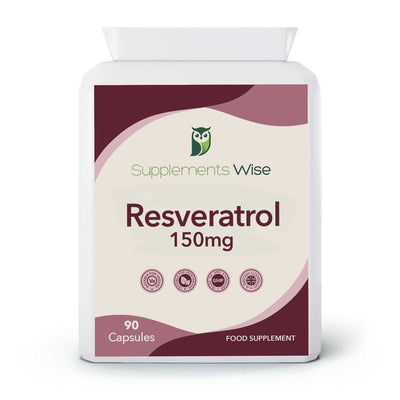
Made in the UK · GMP certified
Resveratrol Capsules 150mg, Trans-Resveratrol
90 vegan capsules · 3-month supply
- 150mg trans-resveratrol per capsule
- 98% standardised Japanese Knotweed extract, the bioavailable trans form
- Take with a fat-containing meal for absorption
Vegan · 30-day returns · Free UK shipping
Is there a single-capsule NMN stack instead of buying each ingredient?
Yes, and for a lot of UK buyers this is now the sensible route. A standalone NMN capsule, a standalone resveratrol capsule and a separate TMG powder cover the mechanism, but they also mean three bottles, three timings and three shipping costs. A well-designed complex bundles NMN, a bioavailable stilbene (pterostilbene), trans-resveratrol, a methyl donor (TMG), an antioxidant flavonoid (quercetin) and active B12 into a single delayed-release capsule taken once to three times a day.
The pattern behind that ingredient list is not random. NMN raises NAD+ but taxes the body's methyl pool, so pairing it with TMG closes the loop.
Trans-resveratrol activates the sirtuins that consume NAD+, and pterostilbene provides the same signalling with better bioavailability. Quercetin adds antioxidant coverage and is one of the flavonoids repeatedly named in the senolytic literature. Methyl B12 sits inside the methylation cycle and directly supports normal energy metabolism and nervous-system function.
The trade-off is cost per gram. Buying NMN, resveratrol and TMG separately can be marginally cheaper if you already have preferred single-ingredient brands. Our best NMN supplement UK guide works through the price per 500mg dose so the comparison is like for like.
A single-capsule complex costs more per NMN milligram but you get the co-factors thrown in, the delayed-release shell, and no juggling of three schedules. For adults who want a comprehensive NMN routine without turning the kitchen counter into a supplement lab, this is the cleanest starting point.
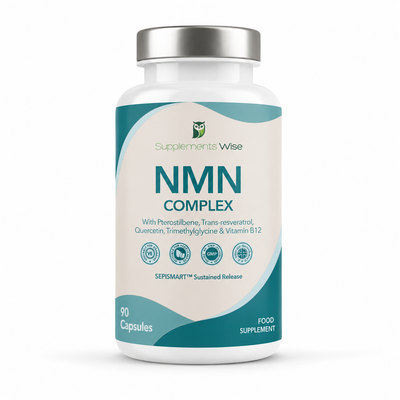
Made in the UK · GMP certified
NMN Complex with Resveratrol, Delayed Release
90 vegan capsules · 30 to 90-day supply
- 500mg NMN plus 600mg TMG at the full 3-capsule serving
- Trans-resveratrol, pterostilbene, quercetin and methyl B12 in the same capsule
- Replaces three bottles and closes the methyl loop
Vegan · 30-day returns · Free UK shipping
Why does CoQ10 keep showing up in mortality data?
Because of one of the better mortality trials in the entire supplement literature. The Q-SYMBIO trial randomised 420 patients with moderate-to-severe chronic heart failure to either CoQ10 100mg three times daily or placebo, on top of standard care, for two years. The CoQ10 group had a 50 per cent lower rate of all-cause mortality (21 versus 39, HR 0.51, 95% CI 0.30 to 0.89) and 50 per cent lower cardiovascular mortality than placebo (Mortensen et al., 2014, JACC Heart Failure, DOI: 10.1016/j.jchf.2014.06.008).
That trial was in people who already had heart failure, not healthy adults, so the result cannot be cleanly transferred. The mechanism, however, is general: CoQ10 sits inside the mitochondrial electron transport chain, the engine room of cellular energy, and tissue levels fall with age and with statin use.
Practical UK angle: if you are over 60, are on a statin, or have a confirmed cardiovascular risk profile, CoQ10 is one of the few supplements with a real cardiovascular outcome trial behind it. Typical doses in research range from 100mg to 300mg daily, so our 300mg dose sits at the top of that research range, paired with Vitamin B1 for a more complete cellular-energy approach.
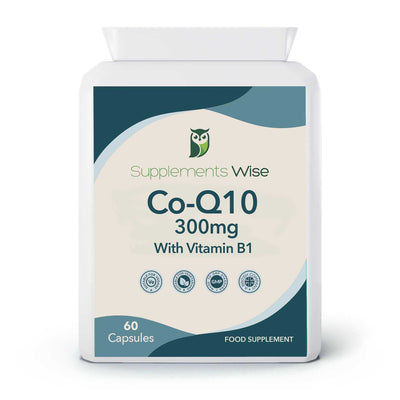
Made in the UK · GMP certified
Co-Enzyme Q10 300mg with Vitamin B1
60 vegan capsules · 2-month supply
- 300mg CoQ10 per capsule, top of the research dose range
- Anchors the Q-SYMBIO mortality-signal dose range
- Take with a fat-containing meal for absorption
Vegan · 30-day returns · Free UK shipping
Where do reishi, cordyceps and other antioxidant mushrooms fit in?
Antioxidant mushrooms are the oldest entry in the longevity supplement story. Reishi has been used in traditional Chinese medicine as a "spirit mushroom" for over 2,000 years, with claims that read very much like modern healthspan goals: better sleep, calmer immunity, less fatigue, longer life.
Modern human evidence is more modest. Reishi shows immunomodulatory effects and modest blood pressure and fatigue improvements in small trials, and cordyceps has small RCTs in older adults showing improvements in exercise tolerance and VO2 max.
Lion's mane has the strongest cognitive data of any mushroom and is most useful as a healthspan-of-the-brain supplement rather than a lifespan one. Chaga and shiitake bring high antioxidant capacity and beta-glucans.
A complex blend pulls these together at a lower per-mushroom dose. That is not the same as a clinical-trial-grade single-mushroom extract, but for most UK adults building a long-term healthspan stack the breadth and cost profile is sensible. See our mushroom complex vs single-strain comparison for when to step up.
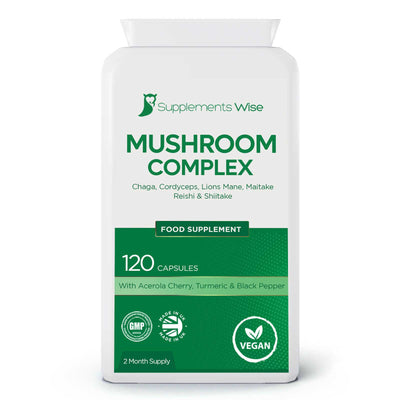
Made in the UK · GMP certified
120 vegan capsules · 2-month supply
- Six functional mushrooms: Lion's Mane, Reishi, Chaga, Cordyceps, Shiitake, Maitake
- 1000mg total blend per 2-capsule serving
- Acerola, turmeric and black pepper for absorption
Vegan · 30-day returns · Free UK shipping
Are magnesium, omega-3 and vitamin D still the boring basics?
Yes, and they probably deserve more attention than the headline longevity compounds. UK adults are routinely low on all three, and each has a meaningful evidence base for healthy ageing.
Vitamin D: long-term supplementation (over three years) is associated with a small but statistically significant reduction in all-cause mortality in pooled analyses. The NHS recommends 10 micrograms (400 IU) daily in the UK from October through March, and year-round for adults with limited sun exposure or darker skin. See our vitamin D deficiency signs guide for the symptom checklist.
Magnesium: cohort data consistently link higher dietary and supplement intake with lower risk of cardiovascular events, type-2 diabetes and all-cause mortality. Triple magnesium complexes that combine bisglycinate, malate and taurate cover sleep, muscle and energy use cases at once.
Omega-3 EPA and DHA: well-supported for cardiovascular outcomes, joint health and brain ageing. Two oily fish meals a week meets the UK target; otherwise a high-EPA / high-DHA fish oil is the cheapest healthspan move on the market.
| Supplement | Evidence grade | Typical daily dose | Trial length to judge |
|---|---|---|---|
| NMN | Moderate (NAD+, 6MWT, QoL) | 500 to 600mg, mornings | 8 to 12 weeks |
| CoQ10 | Strong in heart failure, moderate elsewhere | 100 to 300mg, with fat | 12 weeks |
| Resveratrol | Weak to moderate (cardiometabolic markers) | 150 to 500mg, with fat | 12 weeks |
| Antioxidant mushrooms | Mostly mechanism, some small RCTs | 1g blend, daily | 12 weeks |
| Vitamin D3 | Strong (mortality signal over 3 years) | 400 to 2000 IU | Year-round, retest at 6 months |
| Magnesium | Strong (cohort: CVD, T2D, mortality) | 300 to 400mg elemental | 6 to 8 weeks for sleep / cramps |
| Omega-3 (EPA + DHA) | Strong (CVD, joints, brain) | 1 to 2g combined | 12 weeks for lipids |
Senolytics, fisetin, urolithin A and spermidine: hype or earned?
This is where current longevity content runs furthest ahead of the trial data. Each compound has a real mechanism and at least one preclinical paper that justifies interest. None of them yet has the human outcome evidence to justify the price tag many UK brands are asking.
Fisetin: a flavonoid that clears senescent (zombie) cells in mice. Human trials are still small and short. Worth watching, not yet worth a £40-a-month commitment.
Its better-studied cousin quercetin shows up in the same senolytic literature, usually paired with dasatinib in the mouse work, and quercetin is already inside our NMN Complex at 300mg per serving as a practical way to get flavonoid coverage without adding a separate bottle.
Urolithin A: a postbiotic produced from pomegranate ellagitannins. Small RCTs in older adults show modest muscle endurance and mitochondrial improvements. Promising, expensive, and only a fraction of people make urolithin A from food on their own.
Spermidine: a polyamine linked to autophagy. Some encouraging cohort data on cognition and cardiovascular outcomes. Wheat germ extract is a cheap dietary source.
These are not currently on the Supplements Wise range and we will not pretend the case is settled. If you want to experiment, do so with eyes open and not at the expense of the basics.
How do you build a longevity stack without overspending?
Start cheap, start small, and add only after a fair trial. A reasonable UK starter spends well under £30 a month and looks like this:
- Fix the basics first: vitamin D3 daily October to March, omega-3 most days, magnesium evenings if sleep or cramps are an issue.
- Add one healthspan compound: NMN at 500mg morning, for 12 weeks, judged on energy, recovery, and a six-minute walk benchmark.
- Layer a second only after the first is doing visible work: a mushroom complex for antioxidant breadth, or a CoQ10 if cardiovascular risk markers are the priority.
- Skip the high-priced novelty compounds (fisetin, urolithin A, NR megadoses) until the basics and headline compounds have been given a fair run.
If you would rather run one bottle than four, the NMN Complex with Resveratrol covers steps 2 and part of 3 in a single delayed-release capsule (NMN, TMG, trans-resveratrol, pterostilbene, quercetin and methyl B12), leaving you to add only the vitamin D, omega-3 and magnesium basics from step 1.
The goal is durability. A £20-a-month routine you stay on for five years will outperform a £200-a-month routine you give up after six weeks.
What red flags should send you to your GP first?
Longevity supplements should never replace a GP review when something concerning is happening. Book an appointment, do not start a stack, if you have any of the following:
- Unexplained chest pain, shortness of breath at rest, or palpitations.
- Sudden one-sided weakness, facial droop, speech change, or vision change (call 999).
- Unintentional weight loss of more than 5 per cent in three months.
- Persistent fatigue that is not explained by sleep or workload.
- New abdominal pain, change in bowel habit lasting over six weeks, or blood in stool.
- Blood pressure readings consistently above 140/90 at home.
- Known liver, kidney, thyroid or autoimmune disease, or you are on warfarin, apixaban, statins, blood pressure medication or diabetes medication.
Your GP can order the simple bloods (full blood count, ferritin, B12, vitamin D, HbA1c, lipid panel, U+Es, LFTs, TFTs) that turn guessing into a real baseline.
What does a sensible 12-week longevity starter look like?
Honest, cheap, and judged on something you can measure. Pick a single supplement to test, write down two simple before-and-after metrics, and review at week 12. If NMN is your first test, our when to take NMN guide covers the morning timing that gets the most from each dose.
| Goal | First supplement | Week 12 add-on if partial response |
|---|---|---|
| More energy, better recovery from exertion | NMN 500mg, morning | Mushroom complex, daily |
| Cardiovascular protection, statin user | Omega-3 (1 to 2g EPA+DHA) | CoQ10 300mg with B1 |
| Sleep, cramp, stress baseline | Triple magnesium complex, evening | Add vitamin D3 if low |
| Brain ageing, focus, mood | Lion's mane or mushroom complex | NMN morning, omega-3 daily |
| General healthspan, no specific complaint | Vitamin D3 + omega-3 | NMN 500mg from week 8 |
Track two anchor metrics: resting morning heart rate and a six-minute walking distance on the same route. If those move in the right direction by week 12, you have a real signal. If they do not, change the supplement, not just the dose.
Key Takeaway
No supplement adds years on its own. NMN, CoQ10, omega-3 and vitamin D have the most useful trial data. Resveratrol and antioxidant mushrooms are reasonable add-ons but not core. Build the lifestyle floor first, run one new supplement at a time for a full 12 weeks, and let bloods and walking distance be your judge.
Frequently asked questions
What is the single best longevity supplement for a UK adult over 40?
There is no single best, but the most evidence-graded single choice for a healthy UK adult over 40 is NMN at 500mg taken in the morning. It is the precursor with the cleanest dose-dependent NAD+ trial data in middle-aged adults and shows improvements in walking distance and quality of life at 60 days.
How long does NMN take to work?
Blood NAD+ levels rise within days of starting NMN. Subjective changes in energy, recovery and sleep are usually noticed in 4 to 8 weeks, and the cleaner trial endpoints (six-minute walk distance, SF-36 quality-of-life score) take 8 to 12 weeks. Judge any NMN trial on a full 12 weeks, not on the first fortnight.
Should I take NMN and resveratrol together?
The mechanistic case for stacking is real but the human trial data does not yet show stacking outperforms NMN alone. Most NMN human trials have not used resveratrol. If you choose to stack, take resveratrol with a fat-containing meal to improve absorption, and do not let it become an excuse to underdose NMN.
Is CoQ10 worth taking if I am on a statin?
Possibly. Statins lower endogenous CoQ10 production and some patients report muscle aches that improve with CoQ10 supplementation, although the controlled-trial evidence is mixed. The Q-SYMBIO trial showed a 50 per cent reduction in all-cause mortality with CoQ10 in moderate-to-severe heart failure. Discuss CoQ10 with your GP before adding it on top of your statin.
What about a multivitamin? Is it enough on its own?
A multivitamin covers small daily gaps but does not deliver any of the longevity-grade compounds at trial-grade doses. Vitamin D in a multivitamin is rarely above 400 IU, and NMN, CoQ10 and omega-3 are never in a multivitamin at meaningful doses. Treat a multivitamin as your insurance policy, not your longevity stack.
Are there any side effects to NMN or CoQ10?
Both are very well tolerated in trial data, with the Yi 2023 NMN trial reporting no serious adverse events up to 900mg daily. CoQ10 is generally well tolerated but can interact with warfarin and blood pressure medication. Speak to your GP first if you are on prescription medication, pregnant, breastfeeding or under 18.
What is the difference between healthspan and lifespan?
Lifespan is how long you live. Healthspan is how long you live in good health, independent, mobile, cognitively sharp and free of major chronic disease. Longevity supplements with the strongest case affect healthspan, not lifespan, and the lifestyle floor (sleep, movement, BP, no smoking, Mediterranean-style diet) still does more for both than any single capsule.
The honest bottom line for longevity supplements in 2026 is small but real. NMN, CoQ10, omega-3 and vitamin D earn their place on the trial data, while resveratrol and antioxidant mushrooms are reasonable add-ons rather than headline players. Senolytics and the newer compounds are interesting science but not yet a sensible spend for most UK adults.
Start your 12-week NAD+ trial today
One 500mg delayed-release capsule each morning. Track resting heart rate and a six-minute walk benchmark, and judge it at week 12.
Start the NMN TrialUK GMP-certified · Vegan options · 30-day returns · Free UK shipping
This article is for information only and is not medical advice. Food supplements should not replace a varied diet or a healthy lifestyle. Speak to your GP or pharmacist before starting any new supplement, especially if you are pregnant, breastfeeding, taking medication or managing a health condition.