David Sinclair's Longevity Stack: An Honest UK Buyer's 2026 Guide

Harvard geneticist David Sinclair popularised the modern longevity stack, and half the NAD+ and resveratrol sold in the UK today traces back to a single Joe Rogan appearance and a New York Times bestseller called Lifespan. His public daily protocol includes NMN, trans-resveratrol, metformin, vitamin D3, vitamin K2, omega-3, an occasional statin, low-dose aspirin, and increasingly quercetin. It reads like a shopping list but the underlying logic is straightforward: raise NAD+, activate the sirtuins, protect the cardiovascular system, and remove the boring nutrient deficits.
A lot of the online chatter treats this stack as an all-or-nothing package. It isn't. Some of it is prescription only in the UK (metformin, statins), some of it is cheap grocery food if you know where to look (K2 from Dutch cheese, omega-3 from oily fish), and some of it is where a UK supplement retailer like Supplements Wise can save you both money and juggle-time. This guide walks through what Sinclair actually takes, what the trial evidence says, what a UK adult can realistically source in 2026, and where the honest skip list starts.
Key Takeaway
You do not need to buy all eight or ten ingredients on Sinclair's public stack to run a serious UK longevity routine. NMN plus trans-resveratrol (or better, a delayed-release complex that bundles NMN, TMG, pterostilbene, resveratrol, quercetin and B12 in one capsule), plus vitamin D3, plus omega-3 through food, does most of the heavy lifting. Metformin, statins and aspirin are prescription-only conversations to have with your GP, not high-street purchases.

Top pickMade in the UK · GMP certified
NMN 500mg Capsules, 60 Delayed Release Vegan Capsules
60 delayed-release vegan capsules · 2-month supply at 1/day
- 500mg beta-NMN per capsule — the exact dose Sinclair takes as two capsules for 1g/day
- Delayed-release HPMC shell to bypass stomach acid and reach the small-intestine Slc12a8 transporter
- Three ingredients only: beta-NMN, HPMC and capsule shell — no fillers, made in the UK
Vegan · 30-day returns · Free UK shipping
In this article
- Who is David Sinclair and why does his stack get so much attention?
- What exactly is on David Sinclair's daily stack?
- Does the NMN plus resveratrol pairing actually work?
- Why does Sinclair pair NMN and resveratrol with yoghurt or a fatty meal?
- Is metformin part of the stack you can get in the UK?
- Are vitamin D3, K2 and omega-3 still the boring basics?
- Where do quercetin, statins and aspirin fit in?
- Which parts of the Sinclair Stack would you actually skip in 2026?
- What does a realistic UK version of the Sinclair Stack look like?
- How much does a UK-priced Sinclair-style stack actually cost?
- When should you speak to your GP before starting?
- Frequently asked questions
Who is David Sinclair and why does his stack get so much attention?
David Sinclair is a professor of genetics at Harvard Medical School, co-director of the Paul F. Glenn Center for Biology of Aging Research, and one of the most-cited scientists in the ageing field. His lab's work on sirtuins, resveratrol and NAD+ in mice fed much of the current longevity supplement conversation. His 2019 book Lifespan: Why We Age and Why We Don't Have To made the case for treating ageing as a treatable condition and put his personal protocol into millions of hands.
Two things are worth being honest about. First, Sinclair has never claimed his protocol will extend human lifespan on the basis of proof. He is running an n-of-1 experiment on himself and reporting it openly. Second, he holds commercial relationships with a number of longevity companies, which does not disqualify his advice but does mean UK buyers should treat his stack as a starting hypothesis, not as a doctor's prescription.
What exactly is on David Sinclair's daily stack?
Across his book, podcast appearances and his own Twitter and blog posts, Sinclair's publicly discussed daily and weekly stack has included:
- NMN at roughly 1 gram in the morning
- Trans-resveratrol at roughly 1 gram in the morning, taken with a fat source like yoghurt
- Metformin 800mg to 1 gram most evenings (prescription only)
- Vitamin D3 around 4000 IU daily
- Vitamin K2 daily, with the D3
- Omega-3 fish oil at approximately 2g of combined EPA and DHA
- A statin, on his GP's recommendation, for cholesterol
- Low-dose aspirin around 83mg most days
- Alpha-lipoic acid occasionally, and coenzyme Q10 occasionally
- Quercetin, a flavonoid he has more recently added
He also stresses the boring parts: seven to eight hours of sleep, resistance training two to three times a week, time-restricted eating, cold exposure and a mostly plant-forward diet. Those levers do more of the work than any capsule.
Does the NMN plus resveratrol pairing actually work?
The mechanism is real. NMN raises NAD+, and resveratrol activates the sirtuins that consume NAD+ to do their DNA-repair and metabolic work. If you raise NAD+ without the sirtuin activator, you get more fuel but nothing pulling the trigger. If you activate sirtuins without NAD+ available, you get a trigger with no fuel. Sinclair's argument is that pairing the two closes the loop.
The human trial data supports the individual pieces. The 2023 GeroScience trial by Yi and colleagues gave 80 healthy adults aged 40 to 65 either placebo or NMN at 300mg, 600mg or 900mg daily for 60 days. The 600mg and 900mg groups showed statistically significant gains in the six-minute walk test and SF-36 quality-of-life score (Yi et al., 2023, DOI: 10.1007/s11357-022-00705-1). A 2024 meta-analysis of six randomised trials in 533 patients found trans-resveratrol produced small but measurable reductions in C-reactive protein and lipid peroxidation (Frontiers in Endocrinology, 2024, DOI: 10.3389/fendo.2024.1463027).
What has not been proven is a direct human lifespan or hard mortality benefit from the pair. The January 2026 head-to-head trial in Nature Metabolism also showed that raising NAD+ is achievable with either NMN or NR at 1 gram a day, so the "which precursor" question is largely settled (Christen et al., 2026, DOI: 10.1038/s42255-025-01421-8). The remaining honest question is whether pairing with resveratrol changes long-term outcomes, and the trials to answer that are still years away.
Why does Sinclair pair NMN and resveratrol with yoghurt or a fatty meal?
Resveratrol is fat-soluble and notoriously badly absorbed on its own. Taking it with a fat source (yoghurt, olive oil, avocado, oily fish, whole eggs) increases absorption several-fold. Sinclair specifically mentions yoghurt because it also delivers a mild lipid vehicle without the calorie hit of a full breakfast.
NMN itself is more water-soluble but the trend is toward delayed-release capsules that protect NMN from stomach acid and release it in the small intestine where the Slc12a8 transporter sits. If you buy a plain NMN powder or a non-enteric capsule, taking it with food is still sensible to slow the stomach transit and preserve more of the intact molecule.
The takeaway is that timing and pairing matter. A once-daily morning routine with breakfast is close to what Sinclair does and what the trial data used. Splitting doses across the day is not needed for either NMN or resveratrol and complicates adherence.
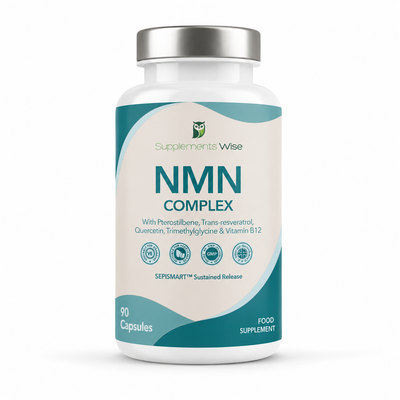
NMN Complex with Resveratrol, 90 Delayed Release Capsules
The single-capsule Sinclair-style stack: 500mg NMN + 600mg TMG + 300mg quercetin + 120mg pterostilbene + 120mg trans-resveratrol + 150mcg methyl B12 per full serving. One bottle covers four of the compounds Sinclair takes daily.
UK GMP-certified · Vegan · 30-day returns · Free UK shipping
Is metformin part of the stack you can get in the UK?
Not without a prescription. Metformin is a first-line type-2 diabetes drug that has drawn longevity interest because of its effects on AMPK, mitochondrial signalling and glucose control. Sinclair takes it on his own doctor's recommendation and is careful to describe it as an experimental part of his personal protocol.
The UK reality is that metformin is prescription only. GPs will typically prescribe it for pre-diabetes or diabetes, not for healthy adults who have read a longevity book. Some private clinics will consider it off-label for metabolic-syndrome adjacent presentations, but the terrain is uneven and expensive.
A pragmatic UK substitute is the food and movement side of what metformin does: a slower morning glucose curve, better insulin sensitivity, and a lower fasting insulin over time. Time-restricted eating (a 10-hour eating window, not extreme fasting), a daily walk after your largest meal, and resistance training two to three times a week move the same dials without a prescription. Berberine is often marketed as a "natural metformin" but the evidence is weaker and the UK regulatory status is patchy, so it is not a straight substitute.
Are vitamin D3, K2 and omega-3 still the boring basics?
Yes, and this is arguably where a UK adult gets the fastest visible payoff. UK latitudes give almost no useful UVB from October through March, so a daily vitamin D3 supplement in the autumn and winter is straightforward NHS-endorsed advice. Sinclair takes around 4000 IU daily, which sits at the upper end of the safe range for adults with a confirmed sufficient blood level.
Vitamin K2 (as MK-7) directs calcium away from arteries and into bone, and Sinclair takes it alongside D3 for that reason. In the UK you can hit useful K2 intakes from Dutch and Norwegian cheeses (Gouda, Edam, Jarlsberg, Brie), egg yolks, and fermented foods, so a K2 capsule is not the only route. If you eat little dairy or fermented food, a K2 supplement earns its place.
Omega-3 (EPA and DHA) is on almost every serious longevity stack. Two portions of oily fish a week (salmon, sardines, mackerel, anchovies) meets the UK dietary target and beats most fish oil capsules on cost and freshness. If your diet is short on oily fish, a high-EPA / high-DHA supplement at around 1.5 to 2 g combined is the cheapest healthspan move on the market.
Our Vitamin D3 Gummies 4000 IU match the Sinclair D3 dose, and our vitamin D3 and K2 UK evidence guide covers the pairing case in more detail. K2 in capsule form is temporarily out of stock as we source the next batch, so the food route is the sensible interim.
Where do quercetin, statins and aspirin fit in?
Quercetin is a plant flavonoid with genuine antioxidant and mild senolytic activity in the mouse literature. Sinclair added it to his stack in the last few years and pairs it conceptually with fisetin. In UK adults, quercetin is easy to eat (apples, red onions, capers, green tea) but the doses shown to matter in trials are usually 200 to 500mg a day, which food alone struggles to deliver. Our NMN Complex includes 300mg of quercetin per full three-capsule serving for exactly this reason.
Statins and low-dose aspirin are prescription and pharmacy questions in the UK. Sinclair's use of both reflects his personal cardiovascular risk profile and his GP's advice, not a general recommendation. Adults over 40 with meaningful cholesterol or family-history risk should have that conversation with their own GP. Do not self-medicate with pharmacy aspirin as a longevity move, because the bleeding risk in adults over 60 is now considered to offset the cardiovascular benefit in primary prevention.
Alpha-lipoic acid and CoQ10 are the two occasional additions Sinclair mentions. CoQ10 is easy to justify: the Q-SYMBIO trial showed a 50% reduction in all-cause mortality in chronic heart failure patients over 2 years at 100mg three times daily (Mortensen et al., 2014, JACC Heart Failure, DOI: 10.1016/j.jchf.2014.06.008). Adults over 60, on a statin, or with a cardiovascular risk profile have the best case for a daily CoQ10 at 100 to 300mg. See our CoQ10 300mg with Vitamin B1 for the top-of-research dose.
Which parts of the Sinclair Stack would you actually skip in 2026?
Not every ingredient still earns the price tag it did five years ago, and a UK buyer with a sensible budget should be clear-eyed about the skip list.
| Ingredient | Honest 2026 verdict |
|---|---|
| Aspirin 83mg daily | Skip for primary prevention over 60 unless your GP advises otherwise. Bleeding risk offsets benefit. |
| Alpha-lipoic acid | Skip unless you have a specific reason (diabetic neuropathy). Weak general-longevity data. |
| Metformin (without a prescription) | Skip. Not available OTC in the UK. Replace with food, movement and sleep gains. |
| 15-ingredient "longevity" powders | Skip. Every ingredient is under-dosed. Buy the two or three with evidence separately. |
| NR at 3 to 5x the NMN price | Skip. The 2026 head-to-head trial showed NMN and NR are essentially tied on NAD+ elevation. |
Worth Knowing
David Sinclair's stack is not a doctor's prescription for you. It reflects his personal risk profile, his family history, his research access and his sleep and training defaults. If you take the parts with the strongest human trial data (NMN, resveratrol, D3, omega-3, occasional CoQ10) and leave the parts that need a prescription (metformin, statin, aspirin) to a GP conversation, you have captured most of the honest longevity signal without the risk of self-medicating.
What does a realistic UK version of the Sinclair Stack look like?
For a UK adult in their 40s, 50s or 60s with no diagnosed cardiovascular disease, a defensible daily stack looks like this.
| Layer | What Sinclair takes | Sensible UK equivalent |
|---|---|---|
| NAD+ + sirtuin activation | NMN 1g + trans-resveratrol 1g | NMN Complex (bundles both plus TMG, quercetin, pterostilbene, B12) |
| Bone and immune floor | D3 4000 IU + K2 MK-7 | Vitamin D3 Gummies 4000 IU + K2 from Gouda / eggs |
| Cardiovascular + brain | Omega-3 EPA + DHA 2g | Two portions of oily fish a week |
| Mitochondrial energy (optional) | CoQ10 occasional | CoQ10 300mg daily if over 60 or on a statin |
| Metabolic support | Metformin 800mg to 1g | Time-restricted eating + resistance training + post-meal walk |
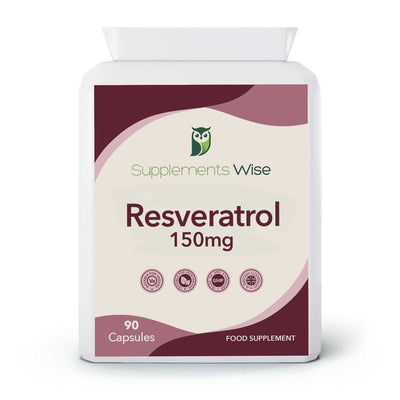
Resveratrol Capsules 150mg, 90 Capsules, Trans-Resveratrol
150mg trans-resveratrol per capsule from a 98% standardised Japanese Knotweed extract, the bioavailable trans form used in cardiometabolic trials. Take with a fat-containing meal. 90-day supply.
UK GMP-certified · Vegan · 30-day returns · Free UK shipping
How much does a UK-priced Sinclair-style stack actually cost?
Buying the ingredients Sinclair takes at UK retail prices, on a monthly basis, works out roughly as follows. The bundled route via the NMN Complex saves both money and daily juggling.
| Route | What it includes | Approx. UK monthly cost |
|---|---|---|
| Separate bottles route | NMN 500mg + Resveratrol 150mg + D3 4000 IU + omega-3 fish oil + CoQ10 300mg | £60 to £75 |
| Bundled complex route | NMN Complex (NMN + resveratrol + TMG + quercetin + pterostilbene + B12) + D3 4000 IU + CoQ10 300mg + oily fish twice a week | £45 to £55 |
| Basics-only route | D3 4000 IU + magnesium + oily fish twice a week + NMN 500mg | £25 to £35 |
Two more habits earn their place at every price point. First, food K2 from Dutch and Norwegian cheeses or egg yolks is the easiest free upgrade to the whole stack. Second, if you are already running any of the pieces, our NMN vs NR UK honest guide and longevity supplements UK evidence guide cover the trade-offs in more detail.
When should you speak to your GP before starting?
Longevity supplements should not go on top of a medical situation you have not properly investigated. Book a GP appointment before starting any Sinclair-style stack if any of the following applies.
- You are on a blood-thinner (warfarin, apixaban, rivaroxaban) or blood-pressure medication
- You have an active or historical cancer, particularly one previously described as fed by NAD+ metabolism (talk to your oncologist first)
- You are pregnant, trying to conceive, breastfeeding, or under 18
- You have liver or kidney disease, or persistent unexplained fatigue that has not yet been investigated
- You are on a statin (some ingredients change absorption or serum enzyme activity)
- You are considering aspirin as a longevity move (the primary-prevention case has weakened, especially in adults over 60)
Two useful UK references: the NHS vitamins and minerals guidance for the boring but important floor, and the WHO Decade of Healthy Ageing for the healthspan framing that underlies most of Sinclair's work.
Key Takeaway
The realistic UK version of the Sinclair Stack is: NMN (or the NMN Complex if you want TMG, pterostilbene and quercetin thrown in), trans-resveratrol with a fatty meal, vitamin D3 daily, omega-3 through oily fish, and CoQ10 if you are over 60 or on a statin. Everything else in Sinclair's public protocol is a GP conversation or a food swap. Start with the two or three with the strongest trial data, give the stack eight to twelve weeks, and measure something specific before you decide it works.
Frequently asked questions
Does David Sinclair really take everything he says he takes?
He has been consistent about his stack across his book, podcast appearances and his own social media. The doses shift slightly between interviews (particularly NMN, which he has described at 500mg and at 1g in different years) but the ingredient list has been stable. Treat it as an informed personal experiment, not as a prescription.
Can I run the Sinclair Stack without metformin?
Yes, and most UK adults will. Metformin is prescription-only and GPs will not prescribe it for healthy adults simply on the basis of a longevity interest. Time-restricted eating, resistance training and a walk after your largest meal capture much of the metabolic signal metformin is targeting.
Is 1 gram of NMN a day safe?
In the Yi 2023 trial doses up to 900mg were well tolerated in healthy adults for 60 days, and the Christen 2026 head-to-head trial ran 1g for 14 days without significant adverse events. Long-term high-dose safety data is still limited, so most UK buyers can start at 500mg and consider a step up to 1g only after a fair trial.
Should I take resveratrol on its own or as part of a complex?
Either works. Standalone trans-resveratrol at 150mg with a fatty meal is a legitimate low-cost option if you already have NMN sorted. A complex that bundles NMN, resveratrol, pterostilbene, TMG, quercetin and methyl B12 saves both money and daily juggling if you are running the full Sinclair-style routine.
Do I need to fast to make the Sinclair Stack work?
You do not need extreme fasting. Sinclair uses a time-restricted eating window (usually around 10 to 12 hours of eating, 12 to 14 hours off food) that is compatible with normal work and family life. That kind of pattern is enough to nudge insulin sensitivity and AMPK signalling in the same direction Sinclair is aiming at with metformin.
Is the Sinclair Stack safe for women?
The NMN, resveratrol, D3 and omega-3 legs of the stack have trial data across both sexes. Women in perimenopause and postmenopause often report particular benefit from creatine plus resistance training on top of the stack. Pregnancy, breastfeeding and hormone-sensitive cancer histories are hard contraindications. Talk to your GP before starting.
How long before I notice anything?
Blood NAD+ rises within days. Functional markers (walking distance, sleep quality, self-reported energy) usually take 8 to 12 weeks to shift. Vitamin D blood levels normalise in 8 to 12 weeks of daily dosing. Track two or three specific markers at the start and re-measure at 12 weeks rather than relying on how you feel on any given morning.
David Sinclair's stack is a useful starting hypothesis for a UK adult who wants to take healthspan seriously, but it is not a recipe you should copy piece for piece. Take the parts with real trial evidence (NMN, resveratrol, vitamin D3, omega-3, occasional CoQ10), lean on food where you can (K2 from cheese, omega-3 from oily fish), talk to your GP about the prescription-only elements, and give any protocol at least eight to twelve weeks before deciding it does not work for you.
Run the one-capsule Sinclair-style routine
NMN Complex with Resveratrol bundles NMN, TMG, pterostilbene, trans-resveratrol, quercetin and methyl B12 into a single delayed-release capsule. One bottle covers four of the compounds Sinclair takes daily.
Shop NMN Complex with ResveratrolUK GMP-certified · Vegan · 30-day returns · Free UK shipping
This article is for information only and is not medical advice. Food supplements should not replace a varied diet or a healthy lifestyle. Speak to your GP or pharmacist before starting any new supplement, especially if you are pregnant, breastfeeding, taking medication or managing a health condition.