NMN vs NR UK: The 2026 Head-to-Head Verdict for NAD+ Buyers

NMN and NR are the two most-searched longevity supplements in the UK, and buyers are rightly confused about which one to spend on. Both are precursors that raise NAD+, the coenzyme that falls with age and sits behind mitochondrial energy, DNA repair and sirtuin signalling. Both have real human trial data, and both have loud, well-funded, mutually exclusive marketing camps online.
Until January 2026, most of the "NMN vs NR" content on the web was educated guesswork. That changed with a Swiss head-to-head randomised trial in Nature Metabolism that gave 65 healthy adults 1000mg of NMN, NR, nicotinamide or placebo for 14 days and measured circulating NAD+ side by side. The result surprised both camps: NMN and NR raised NAD+ by almost the same amount, with no statistically significant difference between them (Christen et al., 2026, Nature Metabolism, DOI: 10.1038/s42255-025-01421-8).
That single result reframes the whole comparison. This UK guide walks through what NMN and NR actually are, where each still has an edge, what a fair 2026 price comparison looks like, and how the picture changes if you also want the sirtuin-support and methylation-support ingredients that David Sinclair and Peter Attia have made mainstream.
Key Takeaway
On raw NAD+ elevation, NMN and NR are effectively tied at 1000mg / day. NR has a longer human safety track record and one strong cardiovascular pilot, while NMN has a cleaner walking-distance and quality-of-life trial in adults over 40 and a lower UK price per gram. For most UK buyers the deciding factor is not chemistry but price, format and whether you want the co-ingredients (TMG, pterostilbene, quercetin) that only come in a complex.
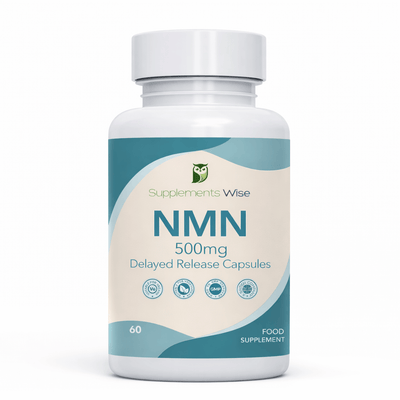
Made in the UK · GMP certified
NMN 500mg Delayed Release Capsules
60 vegan capsules · 2-month supply
- 500mg beta-NMN per delayed-release capsule
- Matches the dose used in the Christen 2026 head-to-head trial
- Small-intestine release for the Slc12a8 transporter
Vegan · 30-day returns · Free UK shipping
In this article
- Why does the NMN vs NR argument get so heated online?
- What is the actual biochemical difference between NMN and NR?
- Does one enter cells better than the other?
- What does the 2026 head-to-head trial actually show?
- Where does the NR side of the argument still win?
- Where does the NMN side still win?
- Which is cheaper per raised NAD+ molecule in the UK?
- Are NMN and NR both legal to buy in the UK?
- Can you take both together, or is that overkill?
- Which one should you pick for your goal?
- Which red flags mean you should skip both?
- Frequently asked questions
Why does the NMN vs NR argument get so heated online?
Because there is real money behind both molecules. NR is patented under the brand name Niagen by ChromaDex, a US-listed company with an entire content operation devoted to the case for NR. NMN has no single patent owner and is manufactured by a growing number of Asian and European suppliers, which is exactly why the price per gram has fallen faster on the NMN side.
David Sinclair, one of the most-cited longevity scientists, publicly takes NMN himself, which drove a huge wave of NMN sales from 2019 onward.
The result is that a lot of the "NMN vs NR" content you will find online is written by parties with a strong commercial preference for one answer. Cutting through that requires anchoring back to the actual randomised trials and the mechanisms behind them, both of which we cover below.
What is the actual biochemical difference between NMN and NR?
NAD+ is built from a nicotinamide base plus a ribose sugar and a phosphate group. NR (nicotinamide riboside) is nicotinamide joined to ribose, with no phosphate, and NMN (nicotinamide mononucleotide) is NR plus a phosphate group. Chemically NMN is one enzymatic step further down the road to NAD+ than NR.
Inside a cell the pathway is: NR is phosphorylated to NMN by the enzyme NRK1, and NMN is then converted to NAD+ by NMNAT enzymes. Because NMN is one step closer to NAD+, some marketing implies it must therefore be superior. In practice both molecules feed the same NAD+ salvage pathway, and the rate-limiting step in most tissues is not the NR-to-NMN conversion.
The other detail that matters is what happens in the gut. Both NMN and NR are extensively broken down in the small intestine, mostly to nicotinamide (Nam) and to nicotinic acid (NA) by resident gut bacteria. A meaningful share of the NAD+ rise you get from either supplement is actually driven by these downstream metabolites reaching the liver and other tissues, not by intact NMN or NR arriving in the bloodstream.
Does one enter cells better than the other?
This is where the historic NR marketing case sat. NR is smaller and, at the time of the 2019 patent literature, was thought to be the only NAD+ precursor with dedicated transporters into cells. The discovery of the Slc12a8 NMN transporter in the small intestine in 2019 partially answered that claim: intact NMN does have a direct route in, at least at the gut wall.
In the bloodstream and at the muscle or brain, the picture is still fuzzy. Both molecules can be de-phosphorylated at the cell surface to Nam or NR before entry, and both can enter as Nam via well-established transporters. What the 2026 Christen trial made clear is that at the practical outcome that matters, whole-blood NAD+ level, the two are close to equivalent at 1000mg per day.
What does the 2026 head-to-head trial actually show?
The Christen study is the first randomised, blinded, human trial to compare NMN, NR and Nam head to head under identical conditions. Sixty-five healthy adults were randomised to 1000mg per day of NMN, NR, Nam or placebo for 14 days. Circulating NAD+, gut microbial metabolites and homocysteine were measured at multiple time points.
What the Research Says
Christen et al., 2026, Nature Metabolism. 65 healthy adults, 1000mg / day of NMN, NR, nicotinamide or placebo for 14 days. NMN and NR each approximately doubled circulating NAD+ over 14 days with no statistically significant difference between them. Nicotinamide raised NAD+ acutely at 4 hours but did not sustain the elevation and also raised homocysteine, a cardiovascular risk marker. Both NMN and NR increased short-chain fatty acids via gut bacteria (DOI: 10.1038/s42255-025-01421-8).
Three practical conclusions fall out of that trial. First, NMN and NR are essentially interchangeable for raising NAD+ at similar doses. Second, standard nicotinamide (Nam) is a poor substitute for either because it does not sustain the elevation and raises homocysteine.
Third, part of the benefit of both NMN and NR appears to be routed through the gut microbiome and short-chain fatty acid production, not just through intact molecules reaching the tissues.
What the trial did not do is measure the longer-term outcomes people actually care about: walking distance, cardiovascular markers, cognitive scores, muscle function. For those we need the longer standalone trials of each molecule, which we cover next.
Where does the NR side of the argument still win?
NR has a longer human safety and efficacy track record because it hit the market earlier. The most-cited standalone trial is Martens and colleagues' 2018 randomised crossover study in Nature Communications, in which twenty-four healthy middle-aged and older adults took 1000mg of NR daily for six weeks. NAD+ rose by roughly 60 percent, and the NR arm showed reductions in systolic blood pressure and arterial stiffness that were not seen on placebo (Martens et al., 2018, Nature Communications, DOI: 10.1038/s41467-018-03421-7).
That result is the strongest cardiovascular case any NAD+ precursor has produced in humans so far. NR has since accumulated pilot data on liver function, immune markers, mitochondrial myopathy and inflammatory bowel disease, none of which are yet decisive but which do give NR a broader footprint of "we tried it in condition X" studies than NMN currently has.
NR also has clearer regulatory status. The FDA classified NR as a New Dietary Ingredient in 2016, and the European Food Safety Authority approved it as a novel food in 2020. For a UK buyer that primarily means you can find NR sold openly in mainstream health-food shops.
Where does the NMN side still win?
NMN has the cleaner middle-aged quality-of-life trial. Yi and colleagues' 2023 randomised trial in GeroScience gave 80 healthy adults aged 40 to 65 either placebo or NMN at 300mg, 600mg or 900mg daily for 60 days, and all NMN doses raised NAD+ in a dose-dependent way. The 600mg and 900mg groups also showed statistically significant gains in the six-minute walk test and SF-36 quality-of-life score compared with placebo (Yi et al., 2023, GeroScience, DOI: 10.1007/s11357-022-00705-1).
A second Japanese trial by Igarashi and colleagues found NMN raised NAD+ and improved grip strength and gait speed in older men (Igarashi et al., 2022, NPJ Aging, DOI: 10.1038/s41514-022-00084-z). Between these two, NMN has arguably the strongest "did it move a real functional score" evidence base of any longevity-marketed compound on the UK market today.
NMN is also markedly cheaper per gram in the UK than branded NR, because the NR supply is dominated by a single patented ingredient, while NMN suppliers compete on price. For buyers who want a longer trial length or a higher daily dose without doubling the monthly spend, a UK-made NMN supplement usually wins on cost.
Which is cheaper per raised NAD+ molecule in the UK?
The direct comparison for a UK buyer comes down to price per gram of the active. The table below is based on typical UK retail prices in mid-2026 and assumes a delayed-release capsule for NMN and a Niagen-branded capsule for NR.
| Format | Typical UK dose per day | Typical UK price per month | Approx. cost per gram |
|---|---|---|---|
| NMN 500mg delayed-release capsule | 500 to 1000mg | £22 to £30 | £1.20 to £1.50 / g |
| Niagen NR 300mg or 500mg capsule | 300 to 600mg | £45 to £65 | £3.50 to £5.00 / g |
| NMN Complex with resveratrol, TMG, pterostilbene, quercetin, B12 | 500mg NMN + 5 co-factors per full serving | £40 at full serving | Best co-factor value |
The important number is NMN gives you two to three times as much NAD+ precursor per pound spent as branded NR. If you want to run 1000mg per day (the Christen trial dose) for a full six-month evaluation window, that gap adds up to £200 or more.
Are NMN and NR both legal to buy in the UK?
Yes, but with slightly different histories. NR received European novel-food authorisation in 2020 and is sold openly across UK health-food retailers. NMN sits under general food-supplement regulation rather than a specific novel-food authorisation in Great Britain, which is why some large UK retailers have moved more cautiously on stocking it.
Neither is a prescription-only medicine and neither is a controlled substance.
Practical UK buyer point: prioritise UK-manufactured, GMP-certified capsules with a batch certificate available. That matters more than which precursor is on the label. Delayed-release shells help protect the active from stomach acid regardless of whether you buy NMN or NR.
Can you take both together, or is that overkill?
You can, but there is not yet any human trial showing an added benefit from stacking NMN and NR compared with taking a full trial dose of either one alone. The Christen 2026 trial suggests that at 1000mg the NAD+ ceiling is close to fully raised, so adding a second precursor is more likely to add cost than incremental NAD+.
What often does add value is stacking your chosen precursor with the co-factors that support it downstream. Higher NMN doses over months slowly draw on the body's methyl-group pool to clear excess nicotinamide, which is why serious biohackers pair NMN with a methyl donor like trimethylglycine (TMG).
Adding trans-resveratrol or pterostilbene activates the sirtuins that consume the NAD+ you have just made. And quercetin covers some of the antioxidant load that comes with more active mitochondria.
This is why a complex that bundles NMN, TMG, pterostilbene, trans-resveratrol, quercetin and active B12 in one delayed-release capsule tends to make more sense for long-term use than running three or four separate bottles. It also usually beats stacking NMN with branded NR on price.
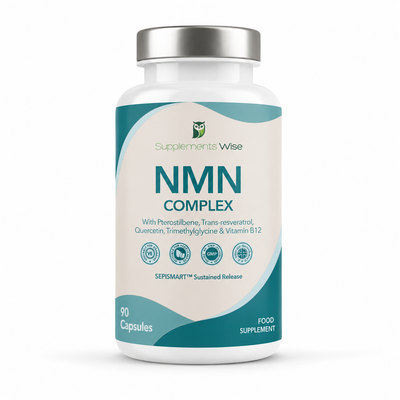
Made in the UK · GMP certified
NMN Complex with Resveratrol, Delayed Release
90 vegan capsules · 30 to 90-day supply
- 500mg NMN plus 600mg TMG at the full 3-capsule serving
- Trans-resveratrol, pterostilbene, quercetin and methyl B12 in the same capsule
- Replaces three bottles and closes the methyl loop
Vegan · 30-day returns · Free UK shipping
Which one should you pick for your goal?
The 2026 head-to-head result means the choice is less about chemistry and more about which trial population you resemble and how much you want to spend. The matrix below is a fair starting point.
| Your primary goal | Best-supported starting point | Trial anchor |
|---|---|---|
| Everyday NAD+ support in your 40s or 50s | Either at 500mg / day, whichever is cheaper per gram | Christen 2026 |
| Walking distance, quality-of-life, muscle function over 40 | NMN 500 to 600mg / day, morning, delayed-release | Yi 2023, Igarashi 2022 |
| Blood pressure and arterial stiffness support | NR 1000mg / day for 6 weeks, then reassess | Martens 2018 |
| A one-capsule Sinclair-style stack | NMN Complex with TMG, pterostilbene, resveratrol, quercetin, B12 | Complex formulations of Yi 2023 and van Ballegooijen 2017 |
| Value-first, long-term use over years | NMN standalone at 500mg / day | Christen 2026 + UK price gap |
Worth Knowing
Whichever precursor you pick, treat the first eight to twelve weeks as a benchmark trial. Record two or three simple markers before you start (resting blood pressure, six-minute walk distance or a fixed one-mile time, and self-scored energy on a five-point scale each morning). Re-measure at 8 weeks. That is the only reliable way to tell whether NMN, NR or any complex is doing real work for you specifically.
Which red flags mean you should skip both?
NMN and NR are food supplements, not medicines, but they are not right for every UK adult. Skip both, and speak to your GP first, if any of the following applies.
- You are pregnant, trying to conceive, or breastfeeding
- You are under 18 years old
- You have an active or historical malignancy, particularly one that has been described as fed by NAD+ metabolism (talk to your oncologist first)
- You are on chemotherapy or radiotherapy
- You have liver disease or unexplained persistent fatigue that has not yet been investigated by your GP
- You are on a blood-pressure medication and considering NR without medical supervision, because NR has lowered systolic blood pressure in trials
Two useful UK reference points if you are unsure: the NHS vitamins and minerals guidance for the boring but important floor, and our own longevity supplements UK evidence guide for how NMN and NR fit into the wider healthspan stack alongside CoQ10, magnesium and omega-3.
Key Takeaway
After the 2026 Christen head-to-head trial, "which raises NAD+ better, NMN or NR" is no longer the right question. Both do the job at 1000mg / day. The right UK question is whether you want the lower price per gram (NMN wins), the longer cardiovascular pilot (NR wins), or the one-capsule stack with methyl donor and sirtuin support (NMN Complex wins). Pick one, run it for eight to twelve weeks, and measure something specific before you decide.
Frequently asked questions
Is NMN better than NR for raising NAD+?
Not in the only head-to-head trial that exists. Christen and colleagues (2026, Nature Metabolism) found that 1000mg of NMN and 1000mg of NR raised whole-blood NAD+ by almost the same amount over 14 days, with no statistically significant difference. On the specific question of NAD+ elevation, they are close to interchangeable at that dose.
What dose of NMN or NR should I take for longevity?
The trial doses with the cleanest positive outcomes are 500 to 900mg of NMN per day (Yi 2023) and 1000mg of NR per day (Martens 2018 and Christen 2026). For most UK adults a sensible starting dose is 500mg per day of your chosen precursor, taken in the morning, for at least eight weeks.
Do I need to take TMG with NMN or NR?
You do not strictly need it at short trial doses, but for long-term use it is a sensible pairing. Higher and longer NMN or NR dosing draws on the body's methyl-group pool to clear excess nicotinamide, and trimethylglycine (TMG) restores that pool. Formulas that bundle TMG into the same capsule as NMN save you buying a second product.
Is NR safer than NMN because of Niagen's regulatory approval?
Niagen-branded NR has more formal regulatory paperwork behind it in the US and EU, but that reflects who paid for the novel-food dossier rather than a proven safety gap. In the Christen 2026 trial, NMN, NR and placebo showed similar safety profiles at 1000mg per day. Neither is a medicine and neither should replace a GP conversation if you are on prescribed drugs.
Can I take both NMN and NR at the same time?
You can, but there is no human trial showing that stacking the two raises NAD+ more than a full dose of either one alone. At 1000mg per day of either precursor the NAD+ ceiling is close to fully raised. The money you would spend on a second precursor is usually better spent on TMG, trans-resveratrol or pterostilbene.
How long before I notice anything from NMN or NR?
Blood NAD+ starts rising within days, but what you feel is slower and less consistent. In the Yi 2023 NMN trial the walking-distance and quality-of-life gains showed up around the 60-day mark, and the Martens 2018 NR trial ran six weeks. Give any precursor at least eight weeks at a fair dose before deciding it does not work.
Are there any side effects of NMN or NR I should watch for?
Both are well tolerated at trial doses. The most commonly reported side effects in the literature are mild digestive upset in the first week, occasional headaches at higher doses, and (with NR) a small blood-pressure drop that matters if you are already on antihypertensive medication. Stop and speak to your GP if you notice yellowing of the skin or eyes, dark urine or new fatigue.
NMN and NR are the two headline compounds in the modern longevity supplement conversation, and thanks to the 2026 head-to-head trial we can now speak honestly about how similar their NAD+ effects really are. At the UK price gap and with the co-factor bundling now available in NMN complexes, our recommendation for most buyers is to start with NMN, run a fair eight-to-twelve-week trial, and consider the complex route if you want the extra sirtuin and methylation support without buying four separate bottles.
Run the one-capsule NAD+ stack for 12 weeks
NMN Complex with Resveratrol bundles NMN, TMG, pterostilbene, trans-resveratrol, quercetin and methyl B12 into one delayed-release capsule. One bottle, one timing, no juggling of four separate products.
Shop NMN Complex with ResveratrolUK GMP-certified · Vegan · 30-day returns · Free UK shipping
This article is for information only and is not medical advice. Food supplements should not replace a varied diet or a healthy lifestyle. Speak to your GP or pharmacist before starting any new supplement, especially if you are pregnant, breastfeeding, taking medication or managing a health condition.