Migraine Supplements: A UK Evidence Guide to Preventing Attacks

If you live with migraine in the UK, you have almost certainly seen the same three supplements crop up in every article, forum post and pharmacy leaflet: magnesium, vitamin B2 (riboflavin) and coenzyme Q10. The reason is simple: these three are the only nutritional supplements with genuine clinical trial data behind them for migraine prevention. Most other supplements you will see promoted rely on marketing rather than published trials.
This guide walks through what the evidence actually shows, what UK bodies like The Migraine Trust and BASH (British Association for the Study of Headache) recommend, and how to build a sensible supplement stack alongside (never instead of) proper migraine care from your GP or neurologist.
Key Takeaway
Three supplements have real trial data for migraine prevention in the UK: magnesium (400 to 600mg elemental daily), riboflavin (400mg daily) and coenzyme Q10 (100 to 300mg daily). All three work on the same mitochondrial pathway and typically need 8 to 12 weeks before you notice fewer or milder attacks.
What Actually Causes Migraines and Why Supplements Can Help
Migraine is not a bad headache. It is a neurological condition affecting roughly 10 million people in the UK, with the brain briefly losing its ability to regulate pain, sensory input and blood flow. Attacks can last anywhere from 4 to 72 hours and often bring nausea, vomiting and extreme sensitivity to light and sound alongside the head pain.
One of the most consistent findings in migraine research is that migraine brains have impaired mitochondrial energy production. Put simply, brain cells struggle to make and use energy efficiently, which lowers the threshold for an attack. Magnesium, riboflavin and CoQ10 all support this same energy pathway, which is why they show up together in almost every serious clinical trial.
Supplements will not cure migraine and they will not replace preventive medication for people who need it. What they can do, in a subset of sufferers, is reduce attack frequency and severity enough to noticeably change day to day life.
What UK Guidelines Say About Supplements for Migraine
The UK guidance picture is more nuanced than a simple yes or no. NICE (the National Institute for Health and Care Excellence) does not routinely recommend supplements as first line migraine prevention, focusing instead on medications like propranolol, topiramate and CGRP monoclonal antibodies.
The Migraine Trust, however, explicitly lists riboflavin, magnesium and CoQ10 as options worth discussing with your GP. BASH (British Association for the Study of Headache) takes a similar view, acknowledging riboflavin at 400mg daily as a potential treatment in its clinical guidelines. The American Academy of Neurology rates magnesium as Level B evidence, meaning "probably effective", which is the highest evidence grade given to any nutritional supplement for migraine.
| UK/International Body | Supplements Acknowledged | Position |
|---|---|---|
| NICE (UK) | Not routinely recommended | Focus is prescription prevention |
| The Migraine Trust | Riboflavin, magnesium, CoQ10 | Worth discussing with GP |
| BASH (UK) | Riboflavin 400mg | Listed as potential option |
| AAN/AHS (USA) | Magnesium, riboflavin, feverfew | Level B ("probably effective") |
| Canadian Headache Society | Riboflavin, CoQ10, magnesium | Strong recommendation |
The gap between NICE and the patient charities is largely a matter of how each body weighs the evidence. NICE demands prescription-grade RCT data, while The Migraine Trust and BASH accept the smaller but consistent nutraceutical trials given that these supplements are cheap, safe and unlikely to cause harm.
Magnesium: The Strongest Single-Supplement Evidence
Magnesium has the most robust clinical backing of any supplement for migraine prevention. Studies have consistently found that people with migraine, particularly menstrual and aura-type migraine, are more likely to have low magnesium levels in blood, saliva and cerebrospinal fluid than people without migraine.
The landmark UK-relevant trial is Peikert 1996, a randomised, double-blind, placebo-controlled study of 81 adults with migraine given 600mg oral magnesium daily for 12 weeks. Attack frequency dropped by 41.6% in the magnesium group compared to just 15.8% in the placebo group, with attack duration and intensity both meaningfully reduced.
What the Research Says
Peikert et al. 1996 (Cephalalgia, DOI: 10.1046/j.1468-2982.1996.1604257.x) randomised 81 migraine patients to 600mg magnesium daily or placebo for 12 weeks. Attack frequency fell 41.6% with magnesium vs 15.8% with placebo. The AAN and American Headache Society both grade magnesium as Level B evidence for migraine prevention.
What Form and Dose of Magnesium Works for Migraine
Form matters more than most people realise. Magnesium oxide, which is what many cheap supermarket supplements use, has poor absorption and often causes diarrhoea before you reach the migraine-relevant dose. Magnesium bisglycinate, malate and taurate absorb better and are far gentler on the stomach.
The Migraine Trust recommends 400 to 600mg of elemental magnesium daily, which is roughly double the standard NRV of 375mg. Most people cannot hit that dose from a single form without stomach issues, which is why complex formulas that blend two or three well-absorbed forms are the sensible choice for migraine prevention.
Our Triple Magnesium Complex combines bisglycinate, malate and taurate at 375mg elemental magnesium per 3-capsule serving, with 1.4mg of vitamin B6 to support absorption. Most migraine trial dosing sits between one and two servings per day, ramped up over 2 to 3 weeks to reduce any digestive adjustment.
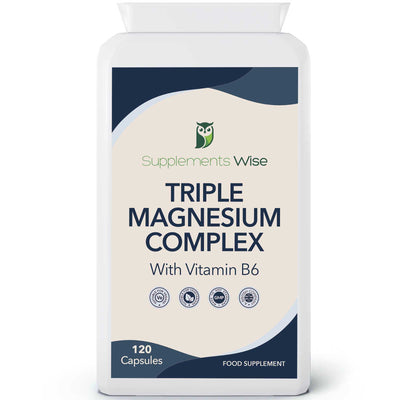
Triple Magnesium Complex 120 Capsules
Bisglycinate, malate and taurate for gentler high-dose magnesium.
UK GMP-certified · Vegan · 30-day returns · Free UK shipping
£14.95
Add to CartRiboflavin (Vitamin B2): The 400mg Protocol
Riboflavin is the most surprising supplement on the migraine evidence list because the effective dose is so much higher than typical B-vitamin doses. Standard B-complex products contain 1 to 5mg of riboflavin, but migraine trials use 400mg daily, roughly 300 times the reference nutrient intake.
The Boehnke 2004 open study, run at the Charite hospital in Berlin, gave 400mg riboflavin daily to 23 migraine patients for at least three months and found meaningful reductions in attack frequency and severity. The earlier Schoenen 1998 RCT (also 400mg for 3 months) found a 50% or greater reduction in attack frequency in 59% of patients on riboflavin vs 15% on placebo.
A note that trips a lot of people up on Reddit and TikTok: riboflavin turns your urine bright yellow at these doses. This is completely harmless, is a marker that you are absorbing the supplement, and fades once you reduce the dose. Do not assume something is wrong if this happens.
Worth Knowing
Supplements Wise does not currently stock a standalone 400mg riboflavin product, so we cannot recommend our own catalogue for this specific ingredient. If you want to try the B2 protocol, look for a UK GMP-certified standalone riboflavin capsule at 400mg per dose. Do not attempt to reach the dose by taking multiple B-complex tablets, which would push several other B vitamins to levels you do not want.
Coenzyme Q10: The Mitochondrial Angle
CoQ10 (ubiquinone) is the substance your mitochondria use to convert food into ATP, the fuel that powers every brain cell. Migraine brains show reduced mitochondrial efficiency, and levels of CoQ10 tend to be lower in people with migraine than in matched controls, which is the rationale for supplementing it.
The Sandor 2005 RCT is the classic trial: 42 migraine patients received 100mg CoQ10 three times daily (300mg total) or placebo for 3 months. Attack frequency dropped by 50% or more in 47.6% of the CoQ10 group vs 14.4% on placebo, with the effect starting around week 5 to 7. A 2021 review of six studies covering 371 people confirmed the frequency and duration benefit but noted CoQ10 did not reduce attack severity.
What the Research Says
Sandor et al. 2005 (Neurology, DOI: 10.1212/01.WNL.0000151975.03598.ED) randomised 42 patients to 300mg CoQ10 daily or placebo for 3 months. 47.6% of the CoQ10 group had a 50% or greater drop in attack frequency vs 14.4% of the placebo group. The Canadian Headache Society explicitly recommends CoQ10 for migraine prevention.
Our Co-Enzyme Q10 300mg with Vitamin B1 delivers the full trial-relevant dose in a single daily capsule, sparing the three-times-a-day dosing of the original Sandor protocol. The added B1 (thiamine) supports the same mitochondrial pathway CoQ10 works on, which is a small but sensible piece of formulation for people building a migraine stack.
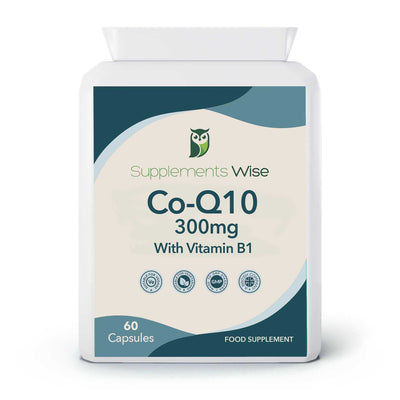
Co-Enzyme Q10 300mg with Vitamin B1
Trial-dose CoQ10 in one daily capsule, with B1 for mitochondrial support.
UK GMP-certified · Vegan · 30-day returns · Free UK shipping
£19.95
Add to CartWhat About Combination Supplements (Mg + B2 + CoQ10)
Because all three supplements work on the same mitochondrial pathway, the natural next question is whether taking them together adds up. The Gaul 2015 trial is the most direct test of this: a proprietary supplement containing 600mg magnesium, 400mg riboflavin and 150mg CoQ10 given daily to 130 migraine patients over three months.
Migraine days per month dropped from 6.2 to 4.4 in the supplement group vs 6.2 to 5.2 on placebo, with pain intensity and burden of disease scores also improving. The result was not dramatic, but it was consistent, and the safety profile was excellent, which is why fixed-dose migraine combinations sold in the UK typically follow this three-ingredient formula.
You can absolutely build the same stack yourself with individual UK GMP-certified products, which is usually cheaper than the proprietary combinations. The most important thing is to give any stack at least 8 to 12 weeks at trial-relevant doses before deciding whether it works, since almost all migraine supplement effects show up gradually rather than overnight.
| Supplement | Trial Dose | Evidence Grade | Time to Notice |
|---|---|---|---|
| Magnesium (bisglycinate/malate/taurate) | 400 to 600mg elemental daily | Level B (probably effective) | 6 to 12 weeks |
| Riboflavin (Vitamin B2) | 400mg daily | Level B (probably effective) | 8 to 12 weeks |
| Coenzyme Q10 | 100 to 300mg daily | Level C (possibly effective) | 5 to 12 weeks |
| Combined Mg+B2+CoQ10 | Full trial doses of each | Level B (small RCTs) | 8 to 12 weeks |
Ginger, Feverfew and Other Supplements You Will See Recommended
Beyond the big three, several other supplements pop up in migraine forums and pharmacy shelves. The evidence for these is weaker or has specific safety concerns, so they belong in a lower tier of your decision making.
Feverfew has small trials suggesting a modest benefit, but the AAN grade is Level B for a specific extract (MIG-99) that is hard to source in the UK. Generic feverfew capsules may not deliver the same effect. Supplements Wise does not currently stock feverfew.
Ginger has small studies showing a possible benefit for acute migraine attacks (not prevention), with 250mg to 500mg powdered root taken at the first sign of an attack. It is thought to work via similar anti-inflammatory pathways to sumatriptan, though the effect is far weaker.
Butterbur was previously recommended by the AAN but has been dropped from most guidelines because of hepatotoxicity concerns from unregulated products. Only PA-free (pyrrolizidine alkaloid-free) preparations should ever be considered, and even then most UK bodies now advise against it.
Omega-3 fish oils have mixed data, with some trials showing a small benefit for reducing migraine frequency but no consistent effect on severity. Most migraine specialists rank omega-3 as a nice-to-have rather than a core recommendation.
Melatonin has some evidence for reducing migraine frequency at 3mg daily, but is prescription-only in the UK for most adults, so this is not a route open to most home supplementers without a GP consultation.
Who Should Avoid These Supplements
Even safe supplements have people they are not suitable for. The most important groups to know about, and to talk to your GP before starting anything, are:
Kidney disease: high-dose magnesium (400mg+ daily) can accumulate and cause dangerous heart rhythm problems in people with reduced kidney function. Always check with your GP if you have any kidney condition.
Pregnancy: The Migraine Trust considers magnesium and riboflavin generally safe in pregnancy at typical doses, but CoQ10 is not recommended in pregnancy due to insufficient safety data. Speak to your midwife or GP before starting any supplement while pregnant or breastfeeding.
Blood-thinning medications: CoQ10 can interfere with warfarin and other blood thinners. High-dose magnesium can affect certain heart and blood-pressure medications. Bring the labels of anything you are taking to your GP or pharmacist for a compatibility check.
Children under 18: paediatric dosing is different, evidence is thinner and self-supplementation is not advised. Anyone under 18 with migraine should be assessed by a paediatric neurologist.
When to See Your GP or Neurologist
Supplements are not a substitute for medical care. There are specific migraine-related situations that need urgent or same-day GP review, and it is important to know what they look like.
Worth Knowing
Call 999 for the worst headache of your life, sudden severe headache like a "thunderclap", or head pain with confusion, weakness on one side, slurred speech or vision loss. See your GP the same week for new migraine over age 50, migraine changing pattern significantly, or migraine unresponsive to your usual treatment.
Chronic migraine (15 or more headache days per month) is a specific diagnosis that qualifies for NHS neurology referral and access to prescription preventives like propranolol, topiramate, amitriptyline, Botox and CGRP monoclonal antibodies (erenumab, fremanezumab, galcanezumab). Supplements sit alongside these treatments, not instead of them.
How to Build a Sensible Migraine Supplement Stack
If you are new to migraine prevention supplements, the sensible order is to start with one supplement, wait 8 to 12 weeks, then decide whether to add the next. Piling all three on at once makes it impossible to know which is doing the work if you improve, and it maximises the chance of a stomach adjustment or other side effect.
| Your Main Concern | Start With | Add at Week 8 to 12 If Needed |
|---|---|---|
| Menstrual migraine or aura | Magnesium complex 400 to 600mg | CoQ10 300mg |
| Fatigue-driven or chronic pattern | CoQ10 300mg | Magnesium complex |
| Frequent attacks, poor response to Mg | Riboflavin 400mg standalone | Magnesium complex + CoQ10 |
| Perimenopause + migraine change | Magnesium complex 400 to 600mg | CoQ10 300mg |
Alongside supplements, the lifestyle changes with the best migraine evidence are hard to beat: consistent sleep timing, adequate hydration, regular meals, moderate aerobic exercise and limiting known triggers (typically alcohol, poor sleep, dehydration and hormonal shifts). No capsule outperforms fixing a chronic sleep debt or a five-cup coffee habit.
Key Takeaway
Start with one supplement and give it 8 to 12 weeks at trial-relevant dose before deciding it does not work. Magnesium complex is the most reasonable starting point for most people because it also helps sleep and PMS. CoQ10 is a strong second layer, especially if migraines feel energy or fatigue driven.
Start your 12-week migraine trial
Trial-dose 300mg CoQ10 with B1, one capsule per day for the full 60-day protocol.
UK GMP-certified · Vegan · 30-day returns · Free UK shipping
£19.95
Shop CoQ10 300mgFrequently Asked Questions
What is the best vitamin for migraines?
Riboflavin (vitamin B2) at 400mg daily has the strongest single-vitamin evidence for migraine prevention. It typically takes 8 to 12 weeks to show effect. Magnesium and CoQ10 are minerals or coenzymes rather than vitamins but sit alongside riboflavin as the three most evidence-backed supplements.
How long does magnesium take to work for migraines?
Clinical trials of magnesium for migraine prevention typically run for 12 weeks, with the biggest benefit showing up in the final 4 weeks. Give any magnesium trial at least 8 to 12 weeks at 400 to 600mg elemental daily before deciding it has not worked for you.
Is riboflavin (vitamin B2) safe at 400mg?
Riboflavin at 400mg is well tolerated in migraine trials, with the main effect being bright yellow urine (harmless). It has no known toxicity ceiling and is water soluble so excess is excreted. Talk to your GP first if pregnant, breastfeeding or on any medication.
Can I take magnesium, riboflavin and CoQ10 together?
Yes, the Gaul 2015 trial specifically tested this combination and found it reduced migraine days more than placebo. There are no known negative interactions between the three. Start one at a time so you can tell which is working before layering the others.
Does CoQ10 help with migraines?
CoQ10 at 300mg daily has been shown to reduce migraine frequency and duration in multiple trials, though not attack severity. The Sandor 2005 RCT found 47.6% of the CoQ10 group had 50%+ fewer attacks vs 14.4% on placebo. Effect typically starts around week 5 to 7 of consistent use.
Are supplements a substitute for migraine medication?
No. Supplements work alongside medication and lifestyle changes, not instead of them. If you have chronic migraine (15+ headache days a month), speak to your GP about prescription preventives like propranolol, topiramate or CGRP monoclonal antibodies. Supplements can layer on top of these treatments.
What supplements are safe for migraines in pregnancy?
The Migraine Trust considers magnesium and riboflavin generally safe in pregnancy at typical doses. CoQ10 is not recommended in pregnancy due to insufficient safety data. Speak to your midwife or GP before starting any supplement while pregnant or breastfeeding.
Explore Our Migraine and Wellbeing Range
Browse the full vitamins & minerals range
All UK GMP-certified, vegan-friendly where possible, and free UK shipping on every order.
Shop All Vitamins & MineralsRelated reading: Coenzyme Q10 300mg UK Evidence Guide, Best Time to Take Magnesium, Magnesium Citrate vs Glycinate vs Complex, Perimenopause Supplements UK Evidence Guide, Magnesium for Sleep. For NHS guidance, see the NHS migraine page and The Migraine Trust supplements page.
This article is for information only and is not medical advice. Food supplements should not replace a varied diet or a healthy lifestyle. Speak to your GP or pharmacist before starting any new supplement, especially if you are pregnant, breastfeeding, taking medication or managing a health condition.