Signs of B12 Deficiency UK: 8 Symptoms and When to Act in 2026

The clearest signs of B12 deficiency in UK adults are unexplained tiredness that sleep does not fix, pins and needles in the hands or feet, a smooth or sore red tongue, mouth ulcers that keep coming back, breathlessness on stairs, dizzy spells, mood changes and memory slips. Any two of these together, sitting in a body that also eats little meat, takes a stomach-acid medication or has ever had gut surgery, is a strong reason to ask a GP for a B12 blood test before it gets any worse.
Vitamin B12 shortfall is not always the pale-and-anaemic picture the textbooks describe. The National Institute for Health and Care Excellence has quietly acknowledged that neurological symptoms can appear before anaemia, and that treating a low-normal serum B12 in the presence of clear symptoms is still reasonable. That means the NHS blood test can miss the earliest cases.
This guide takes the eight most reliable signs of low B12, ranks them by how often UK adults report them, explains what the actual NHS testing and treatment pathway looks like, and shows where a daily methylcobalamin capsule genuinely helps and where it will not. Everything below is UK-relevant, evidence-first and honest about what supplements can and cannot fix.
Key Takeaway
The eight most common signs of B12 deficiency in UK adults, ranked by frequency, are persistent fatigue, pins and needles in the hands or feet, a sore or smooth red tongue, recurring mouth ulcers, breathlessness on stairs, memory or concentration slips, mood dips and unsteady balance. Any two together warrant a GP blood test before you self-treat with tablets.
Made in the UK · GMP certified
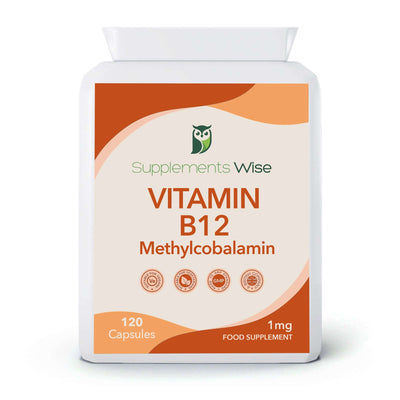
Vitamin B12 Methylcobalamin 1mg 120 Capsules
120 vegan capsules · 4-month supply at 1 a day
- 1000mcg methylcobalamin per capsule, the bioactive form the body uses without conversion
- Aligned with British Society for Haematology guidance for oral maintenance in mild dietary shortfall
- Small vegan HPMC capsule, easy to take with or without food, no flavour
Vegan · 30-day returns · Free UK shipping
In this article
- What is vitamin B12 and why does the UK diet run low?
- What are the 8 most common signs of B12 deficiency?
- What are the neurological symptoms of B12 deficiency?
- What unusual signs do most people miss?
- What are the symptoms of B12 deficiency in women?
- Who is most at risk of low B12 in the UK?
- How is B12 deficiency tested and treated on the NHS?
- When do capsules help and when do you need injections?
- Which symptoms mean you should see a GP this week?
- Which habits and products actually make B12 shortfall worse?
- How long do B12 capsules take to shift symptoms?
- Frequently asked questions
What is vitamin B12 and why does the UK diet run low?
Vitamin B12, or cobalamin, is a water-soluble vitamin that the body cannot make on its own. It is essential for red blood cell formation, the protective myelin sheath around nerves and normal DNA synthesis in every dividing cell in the body.
In the UK, B12 comes almost entirely from animal foods including meat, fish, eggs and dairy, plus fortified breakfast cereals and fortified plant milks. Plant foods do not naturally contain reliable B12, so vegans and long-term vegetarians who are not fortifying or supplementing are at real risk. Older adults are also vulnerable because stomach acid production drops with age and B12 needs an acidic stomach environment to release from food protein.
The NHS recommends 1.5mcg of B12 a day for adults, but this figure is the amount needed to prevent classical anaemia, not to keep every tissue optimally supplied. Recent UK haematology guidance treats symptomatic borderline cases as real deficiency even when the standard blood test comes back low-normal.
What are the 8 most common signs of B12 deficiency?
Not every deficient person gets every symptom, and the order matters. UK case series and the 2014 British Society for Haematology guideline both put fatigue, oral symptoms and peripheral tingling ahead of the classical megaloblastic anaemia picture, because the nervous system and rapidly dividing cells often show damage first.
These are the eight signs UK adults report most reliably, ranked by how often they show up in primary care.
| Sign | What it actually feels like | Sensible next step |
|---|---|---|
| 1. Persistent tiredness | Wiped out on waking, no matter the sleep hours; short walks feel harder than they used to | GP blood test if it lasts more than four weeks |
| 2. Pins and needles | Tingling in the fingertips, toes or soles; occasional numb patches on the outer thighs | GP appointment within two weeks, mention neurological symptoms |
| 3. Sore or smooth red tongue | Beefy, unusually smooth tongue with fewer visible bumps; burning or metallic taste | GP visit, this is a strong single-sign flag |
| 4. Recurring mouth ulcers | Three or more separate ulcers in six weeks with no obvious food trigger | Ask for a full blood count plus B12, folate, ferritin |
| 5. Breathlessness on stairs | Winded from a single flight when you were not before; racing heart afterwards | GP, this may indicate developing anaemia |
| 6. Memory or concentration slips | Reaching for common words, forgetting why you walked into a room, mental fog after lunch | GP visit, especially if you are over 50 or vegan |
| 7. Mood dip or low motivation | Flat mood, less pleasure in usual activities, anxiety that has crept up over months | Talk to GP about B12 alongside standard mood assessment |
| 8. Unsteady balance | Feeling wobbly on the stairs at night, wider stance when standing still, occasional trips | Urgent GP appointment, this is a late neurological sign |
Any single one of these on its own is not diagnostic. The pattern that should make you act is two or more of the top four signs together, or any one of the neurological signs (pins and needles, memory issues, balance) in a person who does not eat much meat, takes a proton pump inhibitor for reflux, has had gastric surgery, or is over 60.
What are the neurological symptoms of B12 deficiency?
Neurological damage in B12 deficiency happens because myelin, the fatty insulation around nerve fibres, cannot be maintained without adequate cobalamin. The earliest neurological signs are usually symmetrical, meaning both hands or both feet at once, and slowly worsening.
What the Research Says
A 2017 Nature Reviews Disease Primers overview from Green and colleagues concluded that neurological symptoms of B12 deficiency, including subacute combined degeneration of the spinal cord, can present without any anaemia at all and can become irreversible if left untreated for more than a year. Early oral or intramuscular replacement usually resolves peripheral tingling and memory issues within three to six months, but late balance and spinal cord damage may not fully reverse (Green et al., 2017, DOI: 10.1038/nrdp.2017.40).
The most common neurological patterns are tingling or burning in a stocking-and-glove distribution, a wobbly gait particularly noticeable in the dark, loss of vibration sense in the feet, difficulty finding words and a heavy general fatigue that sleep does not lift. Rarer patterns include visual blurring from optic neuropathy, urinary urgency and low mood that responds poorly to antidepressants until B12 is corrected.
Any neurological sign in a suspected B12 case is a reason for the GP to consider intramuscular hydroxocobalamin injections rather than tablets, at least initially. The BSH guideline is clear on this: oral maintenance is fine for mild dietary shortfall, but neurological presentations get injected loading doses.
What unusual signs do most people miss?
Some of the less well-known signs are the ones that eventually trigger the GP visit, because they do not fit the "just tired" pattern that people can easily dismiss.
Watch for skin hyperpigmentation, meaning darker patches on the knuckles, elbows or palms, particularly in people with brown or black skin. Vitiligo-like white patches can also develop and both extremes reflect the same disruption to melanin production that low B12 causes. Premature greying of hair before 40 in someone with a Mediterranean diet history is another quiet flag.
Other signs worth naming: a yellow tinge to the skin or the whites of the eyes (mild jaundice from megaloblastic red cells breaking down early), heart palpitations at rest, tinnitus that has appeared in the past year, restless legs at night that ferritin cannot explain, and an unusual sensitivity to cold in the hands and feet even in warm rooms. For the tinnitus overlap, our tinnitus supplements guide covers the B12 connection in more depth.
What are the symptoms of B12 deficiency in women?
Women get the same eight core signs as men, but two patterns show up more often in UK data. Heavy periods and pregnancy both raise the risk because both increase B12 turnover, and perimenopausal women in their 40s and 50s frequently attribute early B12 symptoms to menopause instead.
The classic mix in women aged 40 to 55 is fatigue that no amount of sleep fixes, low mood or anxiety that has crept up, mouth ulcers or a sore tongue, tingling in the fingers particularly at night, and dips in short-term memory. When this cluster appears alongside heavy or irregular periods, it is worth asking the GP for both a full blood count and a B12 alongside standard menopause bloods.
Pregnancy quietly depletes B12 stores, and low maternal B12 has been linked to a small increase in the risk of neural tube defects that folic acid alone does not cover. UK pregnant women who eat little or no meat should ask about a B12 check as part of routine antenatal blood tests. Our folic acid vs methylfolate pregnancy guide covers where B12 fits in the wider prenatal picture.
Who is most at risk of low B12 in the UK?
Some groups run a much higher baseline risk. If you fit two or more of the descriptions below, the case for a B12 blood test is stronger than it would be for the general population.
Vegans and long-term vegetarians are the most obvious group because B12 in plant foods is either absent or in a chemically inactive form. Fortified breakfast cereals and fortified plant milks help, but many UK vegans do not eat them daily. Adults over 60 come next because ageing gastric mucosa produces less acid and less intrinsic factor, the two things B12 absorption depends on.
Anyone taking proton pump inhibitors such as omeprazole or lansoprazole for more than two years is at higher risk, as is anyone on metformin for type 2 diabetes for more than four years. People who have had gastric bypass, sleeve gastrectomy or any surgery involving the terminal ileum lose the anatomy needed for B12 absorption. Autoimmune conditions like Hashimoto's thyroiditis, coeliac disease and Crohn's disease also increase risk, as does long-term heavy alcohol use.
Pernicious anaemia is the classical autoimmune cause: the immune system destroys the stomach cells that make intrinsic factor. It affects around 2% of adults over 60 in the UK and needs lifetime hydroxocobalamin injections, not tablets.
How is B12 deficiency tested and treated on the NHS?
The first line is a serum vitamin B12 blood test alongside a full blood count. Ferritin and folate are usually added because iron and folate deficiencies can mimic or coexist with low B12. The UK cut-off for "low" serum B12 is usually below 200 nanograms per litre, but the reference range varies by lab and any value between 200 and 350 in a symptomatic person is worth investigating further.
If serum B12 is borderline (200 to 350) and symptoms persist, the GP can request an active B12 test, sometimes called holotranscobalamin, or a methylmalonic acid test, or intrinsic factor antibodies to rule out pernicious anaemia. NICE Clinical Knowledge Summaries updated in 2024 explicitly acknowledge that treating a borderline low result in a symptomatic patient is reasonable while waiting for further tests, because the risk of missing early neurological damage outweighs the risk of a short course of B12.
Treatment is usually intramuscular hydroxocobalamin 1mg injections. Loading doses are alternate days for two weeks (six injections in total), then maintenance is one injection every two to three months for life if pernicious anaemia or malabsorption is confirmed, or one every three months for dietary cases with sufficient dietary correction. Oral high-dose B12 at 1000 to 2000 micrograms a day is a genuine second-line option for confirmed dietary deficiency without neurological signs, backed by a 2018 Cochrane review.
When do capsules help and when do you need injections?
Methylcobalamin capsules are genuinely useful in three scenarios: prevention for vegans and long-term vegetarians who are not yet deficient, maintenance for confirmed dietary shortfall without any neurological signs, and top-up for adults over 60 who are borderline on serum B12 and want to hedge without pushing for injections they may not qualify for.
Capsules are not enough when the deficiency is neurological or absorption-related. If you already have tingling, unsteady gait, memory issues or a confirmed diagnosis of pernicious anaemia, oral tablets alone are not the standard of care and you should not rely on them instead of GP-guided injections. The tablet route in confirmed pernicious anaemia is a specialist decision, not a self-prescribing one.
For the general dietary top-up case, a daily 1000 microgram methylcobalamin capsule is straightforward and matches the dose Cochrane reviewed. If you want to understand which form of B12 to pick, our methylcobalamin vs cyanocobalamin guide walks through the trade-offs, and the companion piece on when to take vitamin B12 covers timing and whether food matters.
Key Takeaway
A daily 1000mcg methylcobalamin capsule is a sensible option for dietary prevention and mild borderline cases. It is not a substitute for GP-guided hydroxocobalamin injections when neurological symptoms are present or when pernicious anaemia is confirmed. Get the blood test first, then decide.
Which symptoms mean you should see a GP this week?
Worth Knowing
Book an urgent GP appointment (within a week, not "when convenient") if you have new pins and needles that will not settle, unsteady balance or falls, difficulty walking heel-to-toe, sudden vision changes, chest pain or racing heart at rest, confusion or personality change, jaundice or dark urine, unexplained bruising, or a smooth beefy red tongue with mouth ulcers. Call 111 or attend A&E if you have new one-sided weakness, drooping face, slurred speech, or acute breathlessness at rest, because these can be signs of a stroke or a heart problem that no B12 supplement will address.
The general rule for B12: neurological symptoms are always a "see a doctor first, take tablets second" situation. Delaying treatment of neurological deficiency by more than 12 months significantly raises the risk of permanent nerve damage. Getting a proper test done costs you a week and a blood draw, and can save you a lifetime of numb feet or unsteady walking.
Which habits and products actually make B12 shortfall worse?
Not everything sold to "boost energy" or "support nerves" is helpful, and some things actively make low B12 worse or delay the correct diagnosis. Save your money for the tests and the correct treatment.
| Skip these | Do this instead |
|---|---|
| Cheap cyanocobalamin gummies with 25mcg and a sugar shell | A 1000mcg methylcobalamin or hydroxocobalamin capsule that actually matches trial-tested doses |
| Sugar-caffeine energy drinks marketed as "B12 boosters" | A proper GP blood test if the tiredness is not fixed by sleep and diet |
| Long-term PPI (omeprazole, lansoprazole) taken every day without a review | Ask the GP to review your PPI at annual medication check, especially if on it more than two years |
| Heavy weekly drinking (over 14 UK units) plus a low-meat diet | Stay under 14 UK units a week, spread across at least three days, and include B12-rich food or a supplement |
| "Iron and B12" combos with 1mcg of B12 in a tablet aimed at fatigue | Separate 1000mcg B12 and a real iron supplement if ferritin is actually low |
The most damaging pattern is self-treating with low-dose B12 gummies for months while symptoms creep on, because the tablets can normalise the serum B12 test enough to reassure a GP that there is no problem, without doing anything to reverse the underlying malabsorption or autoimmune process. If you suspect deficiency, get the blood test before you start a high-dose supplement, or wait at least four months after stopping to retest.
How long do B12 capsules take to shift symptoms?
For dietary deficiency without neurological symptoms, a 1000mcg daily methylcobalamin capsule typically starts to lift fatigue within two to four weeks. Sore tongue and mouth ulcers usually resolve in four to eight weeks. Pins and needles from mild peripheral deficiency can take three to six months to fade, and any residual numbness that has been present for more than a year may not fully resolve even with treatment.
For injections in confirmed deficiency, the loading course of six injections over two weeks usually produces a noticeable energy lift within a fortnight, and mood and cognitive symptoms often improve over the following two to three months. Neurological symptoms lag behind haematological ones by weeks to months, which is why the standard advice is to keep taking maintenance treatment even when you feel better.
If eight weeks of a genuine 1000mcg methylcobalamin capsule has not made any dent in the symptoms, that is a signal to go back to the GP rather than double the dose. The diagnosis may be something other than B12, or the deficiency may be one that needs injections rather than tablets. For related low-mood or brain-fog patterns that overlap with B12 shortfall, our brain fog supplements guide and pins and needles guide both cover the wider picture.
Frequently asked questions
What is the number one sign of B12 deficiency?
The single most common sign UK adults report is persistent tiredness that sleep does not fix. On its own it is not diagnostic, because dozens of things cause tiredness. Combined with any of the top four other signs (pins and needles, sore tongue, mouth ulcers, breathlessness), it becomes a strong reason to ask your GP for a B12 blood test.
How quickly do B12 deficiency symptoms come on?
B12 shortfall usually develops slowly over months to years, because the liver stores enough for two to five years of normal turnover. That is why the symptoms creep in and get attributed to age, stress or perimenopause. Sudden onset over days is unusual and points to another cause that needs urgent GP review.
Can I test for B12 deficiency at home?
Home finger-prick B12 tests exist and can give a rough serum reading, but they cannot check ferritin, folate, full blood count or intrinsic factor antibodies. A proper GP blood panel is the right first step because low B12 rarely occurs on its own, and coexisting low ferritin or folate changes both the diagnosis and the treatment.
What are the neurological symptoms of B12 deficiency?
The commonest neurological signs are tingling or burning in the fingers and toes, wobbly balance particularly in the dark, difficulty finding words, and memory or concentration slips. Rarer patterns include blurred vision from optic nerve involvement, restless legs, and low mood that does not respond to standard treatment. Any neurological sign warrants a GP appointment within days, not weeks.
Do I need methylcobalamin or is cyanocobalamin fine?
Both work for most people because the body converts cyanocobalamin to the active forms. Methylcobalamin is the form the body uses directly for many enzyme reactions, so it may be a small advantage for older adults or people with genetic conversion issues. If a supplement is the plan, a 1000mcg methylcobalamin capsule is a clean choice; if injections are prescribed, the NHS uses hydroxocobalamin because it stays in circulation longer.
Are pins and needles always a sign of B12 deficiency?
No. Peripheral tingling has many causes including trapped nerves, diabetes, alcohol overuse, thyroid disease and side effects from certain medications. It is a reliable B12 flag when it is symmetrical (both hands or both feet), persistent for more than two weeks and appears in someone with a plausible risk profile such as a vegan diet, older age or long-term PPI use. A GP blood test sorts the causes cheaply.
Can B12 deficiency cause anxiety and low mood?
Yes. B12 is essential for the production of several neurotransmitters, and low B12 is associated with a modest increase in depression and anxiety symptoms, particularly in older adults. Correcting the deficiency does not replace standard mental health treatment, but it can be a genuine contributor and is worth ruling out early when mood problems appear alongside physical B12 signs.
Key Takeaway
Signs of B12 deficiency are usually gradual, easy to miss and often blamed on age or stress. If two or more of the eight signs above have been quietly building for weeks, get the GP blood test before self-treating. A daily 1000mcg methylcobalamin capsule is a sensible dietary top-up, not a replacement for proper testing when symptoms are present.
Start the sensible 12-week B12 trial
120 vegan capsules of pure methylcobalamin, one a day for four months, made in the UK and priced to be part of a long-term plan not a one-off punt. Free UK delivery.
Shop B12 MethylcobalaminUK GMP-certified · Vegan · 30-day returns · Free UK shipping
Sources cited in this article:
Green R et al (2017), vitamin B12 deficiency, Nature Reviews Disease Primers 3:17040, DOI: 10.1038/nrdp.2017.40.
Devalia V, Hamilton MS, Molloy AM (2014), British Society for Haematology guidelines for the diagnosis and treatment of cobalamin and folate disorders, British Journal of Haematology 166(4):496-513, DOI: 10.1111/bjh.12959.
Wang H et al (2018), oral vitamin B12 versus intramuscular vitamin B12 for vitamin B12 deficiency, Cochrane Database of Systematic Reviews 3:CD004655, DOI: 10.1002/14651858.CD004655.pub3.
Andrès E et al (2004), vitamin B12 (cobalamin) deficiency in elderly patients, CMAJ 171(3):251-259, DOI: 10.1503/cmaj.1031155.
This article is for information only and is not medical advice. Food supplements should not replace a varied diet or a healthy lifestyle. Speak to your GP or pharmacist before starting any new supplement, especially if you are pregnant, breastfeeding, taking medication or managing a health condition.