How Long Does NMN Take to Work? A UK Evidence-Based Timeline

NMN starts raising blood NAD+ within two hours of the first capsule, but the effects that most people notice, meaning sharper afternoons, easier stairs, and cleaner morning bloods, land somewhere between weeks four and twelve. Sustained metabolic and physical performance changes need at least eight weeks of daily dosing at 250 mg or above.
This guide walks through the timeline hour by hour, week by week, and month by month, anchored to the four largest randomised human trials rather than to influencer testimonials. It also names the milestones you should not expect and the honest reasons some people never feel a difference despite ticking every box.
If you are already taking an NMN suppelement and wondering why nothing has "kicked in" at day five, the short answer is that the signals it moves are internal and slow. Judge it at bloods and physical performance markers at week eight, not at a Tuesday afternoon.
Key Takeaway
Realistic NMN timeline at 250 to 500 mg per day of delayed-release NMN: blood NAD+ rises within 2 to 4 hours, a stable NAD+ plateau by day 14, subjective energy and sleep shifts in 3 to 8 weeks in responders, and measurable physical performance and insulin-sensitivity improvements at 8 to 12 weeks. Long-term cellular and biomarker changes over 6 to 12 months. Below-dose 100 mg cheap capsules rarely reach any of these milestones.
Made in the UK · GMP + BRC certified
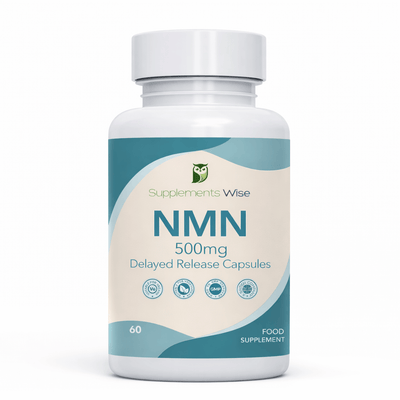
NMN 500mg Capsules, 60 Delayed Release Vegan Capsules
60 vegan capsules · 2-month supply at 1 cap/day
- 500 mg beta-NMN per single capsule, twice the Yoshino 2021 and Igarashi 2022 trial dose
- Delayed-release HPMC shell built to bypass stomach acid and release NMN in the small intestine
- Clean single-ingredient formula: just NMN, HPMC and the plant capsule; no fillers, no blend
Vegan · 30-day returns · Free UK shipping
In this article
- What is NMN actually doing inside your cells?
- What happens in the first 24 hours after a capsule?
- What should you feel in weeks 1 to 2?
- What changes between weeks 3 and 8?
- What does the 8 to 12 week evidence show?
- What happens between months 3 and 6?
- Which dose actually hits the timeline in trials?
- Why does NMN seem to work faster for some people?
- Which NMN products slow the timeline down?
- Should you pair NMN with resveratrol or TMG?
- When should you check with your GP first?
- Frequently asked questions
What is NMN actually doing inside your cells?
Nicotinamide mononucleotide is a direct precursor to nicotinamide adenine dinucleotide, better known as NAD+. NAD+ is the coenzyme that mitochondria use to convert food into ATP, and the same molecule that sirtuins (including SIRT1 and SIRT3) consume when they carry out DNA repair, inflammation control and metabolic regulation.
NAD+ concentrations inside human tissue decline by roughly 50% between the ages of 40 and 60. Raising NAD+ back towards a younger baseline is the mechanistic case for NMN, and it is why the ingredient landed on the Sinclair-style longevity map alongside trans-resveratrol (Nadeeshani et al., 2022, DOI: 10.1016/j.jare.2021.08.003).
What happens in the first 24 hours after a capsule?
Blood NAD+ starts rising within 1 to 3 hours of an oral NMN dose in healthy adults. The Yamaguchi group in Japan measured blood NAD+ pharmacokinetics after 125 mg oral NMN and saw a measurable plasma NAD+ rise within 2 hours and a return towards baseline by hour 8 (Yamaguchi et al., 2022, DOI: 10.1507/endocrj.EJ22-0313).
What you should not expect on day one: a felt energy surge, sharper focus, better sleep, or any subjective change at all. NAD+ rising in blood is not the same as your mitochondria producing more ATP, which is a slower downstream shift. If you feel "something" on day one, it is very likely to be either placebo or a caffeine effect from what else you took that morning.
What should you feel in weeks 1 to 2?
In the first two weeks the honest answer for most people is very little that is felt. What is happening on the inside is that daily dosing keeps blood NAD+ elevated for longer each day, and tissue NAD+ starts to catch up with plasma NAD+. This is when the stable "plateau" begins.
A minority of responders, particularly adults over 55 with genuinely low starting NAD+, report a subtle lift in daytime energy or sleep quality by day 10 to 14. That is not the norm, and framing it as "if you don't feel it by week 2 it isn't working" is one of the fastest ways to give up on a supplement that needed another six weeks.
What the Research Says
Yoshino and colleagues gave 250 mg NMN daily for 10 weeks to 25 prediabetic postmenopausal women in a randomised placebo-controlled trial. Insulin sensitivity in skeletal muscle improved by about 25% versus placebo, and NAD+-related metabolite signatures shifted measurably. There was no "feel it on day two" moment; the trial reported changes at the 10-week measurement (Yoshino et al., 2021, DOI: 10.1126/science.abe9985).
What changes between weeks 3 and 8?
Between weeks 3 and 8 the internal picture keeps building even when the felt picture is quiet. Recovery from the same 5 km run or the same weights session is often the first subjective thing responders notice, usually somewhere in the week 4 to 6 range. Sleep continuity and fasted-morning sharpness can improve modestly around the same window.
None of this is guaranteed, and it is very audience-dependent. A 32-year-old with a good diet, adequate sleep and no metabolic risk is unlikely to notice anything at week 8 either. A 58-year-old with early insulin resistance and creeping fasting glucose is much more likely to feel the shift, because the underlying pathway is doing more work.
What does the 8 to 12 week evidence show?
Weeks 8 through 12 is the window where randomised trials start reporting statistically significant results. Igarashi and colleagues gave 250 mg NMN daily for 12 weeks to 42 older Japanese men (mean age 65) and saw improvements in gait speed and grip strength compared with placebo, alongside a measurable rise in whole-blood NAD+ (Igarashi et al., 2022, DOI: 10.1038/s41514-022-00084-z).
Yoshino's 10-week insulin sensitivity result falls into this window too. Practical implication: if you plan to trial NMN, sit tight to at least the 12-week mark before judging results, and make the judgement using a specific measurable target (fasting glucose, resting heart rate on a Garmin, a timed walk, a home BP monitor) rather than by how you feel.
What happens between months 3 and 6?
Between months 3 and 6, the small human trials that have run this long see sustained NAD+ elevation, sustained physical performance improvement, and modest metabolic marker improvements at higher doses. Yi and colleagues ran a 60-day trial across 300 mg, 600 mg and 900 mg daily doses in older adults and reported a dose-response on both blood NAD+ and 6-minute walk distance, favouring higher doses (Yi et al., 2023, DOI: 10.1007/s11357-022-00705-1).
What we do not yet have is a large randomised human trial past 12 months. Mouse data on long-term NMN dosing looks positive on metabolic and cardiovascular endpoints (Mills et al., 2016), but mouse timelines do not read across to UK adults on a straight timescale. Sensible framing: judge at 12 weeks, review at 6 months, and treat 12-month claims as extrapolation rather than evidence.
Which dose actually hits the timeline in trials?
The lowest dose that appears in a positive human trial is 125 mg twice daily (Yamaguchi 2022). The most-cited positive metabolic trials use 250 mg once daily (Yoshino 2021, Igarashi 2022). The Yi 2023 dose-response study suggests 600 mg to 900 mg produces larger blood NAD+ rises and larger walking-distance improvements than 300 mg in older adults, though safety and cost push most sensible UK regimes to sit at 500 mg once daily.
Doses below 100 mg per day are unlikely to hit any of the timeline milestones in this article. That is one of the main reasons cheap 100 mg capsules bought on Amazon disappoint: even at three months, the pharmacokinetics do not reach the threshold where positive human trials saw effects.
Why does NMN seem to work faster for some people?
Three variables explain most of the felt-timeline differences. First, starting NAD+: someone with a genuinely low baseline (typically over 55, sedentary, poor sleep, high alcohol) has more room to move than a 30-year-old marathon runner. Second, dose form: delayed-release HPMC capsules deliver NMN past the stomach acid that degrades cheaper formats, so plasma NAD+ curves are cleaner and higher.
Third, the rest of the stack: taking NMN alongside trans-resveratrol, TMG and quercetin (the ingredients that appear in the classic Sinclair stack) accelerates the felt signal for many responders because SIRT1 activation is upstream of the same metabolic pathways NAD+ feeds. Our trans-resveratrol UK guide covers the pairing rationale, and the TMG UK guide covers the methyl support angle.
Which NMN products slow the timeline down?
Product choice moves the timeline more than most buyers realise. The table below covers the buyer traps that push people past week 12 with no measurable result. Our best NMN supplement UK guide sets out the dose, isomer and capsule checks worth making before you buy.
| Slows the timeline | Why | Reach for instead |
|---|---|---|
| 100 mg standard-shell NMN capsules | Below trial-active dose and degrades in stomach acid before absorption | 500 mg delayed-release NMN, three months minimum |
| "NAD+ boost" tablets that do not specify NMN or NR content | Usually plain niacinamide at RDA dose, which cannot hit a trial-active plasma NAD+ curve | A labelled NMN dose from a UK GMP supplier |
| Sublingual NMN powders sold on price | Absorption claims are largely unproven; delayed-release capsules match the published trial pharmacokinetics more closely | Delayed-release capsule as the default; sublingual only as a research-curiosity add-on |
| NMN "starter packs" of 15 or 30 days | Almost every published trial that showed effects ran for 8 to 12 weeks | A minimum three-month supply committed up front, judged at 12 weeks |
| NMN cycled two weeks on, two weeks off | Cycling resets the tissue NAD+ plateau, so the trial-window benefits do not accumulate | Daily dosing for at least 12 weeks, review at 6 months |
Worth Knowing
The MHRA has not yet issued a formal position on NMN sale in the UK as of writing. The ingredient remains legally sold as a food supplement here, unlike in the United States where the FDA moved to exclude it from the supplement category. Buy from a UK GMP-certified manufacturer with a clean batch-testing paper trail.
Should you pair NMN with resveratrol or TMG?
The default modern longevity stack pairs NMN with trans-resveratrol (a SIRT1 activator) and TMG (a methyl donor). The resveratrol pairing has a clean mechanistic story: NMN raises NAD+, resveratrol switches on SIRT1, SIRT1 consumes NAD+ to carry out its work. The David Sinclair longevity stack UK guide covers the full rationale.
The TMG addition is less about accelerating benefits and more about defence: NMN is metabolised through methylation-dependent pathways, and higher doses can nudge homocysteine upwards in a subset of responders, so adding a methyl donor keeps that pathway well-fuelled. The TMG UK guide covers who should stack it and who probably does not need to. If you would rather keep the daily routine to a single capsule, our NMN Complex combines all three ingredients so the whole stack lands together.
Made in the UK · GMP certified
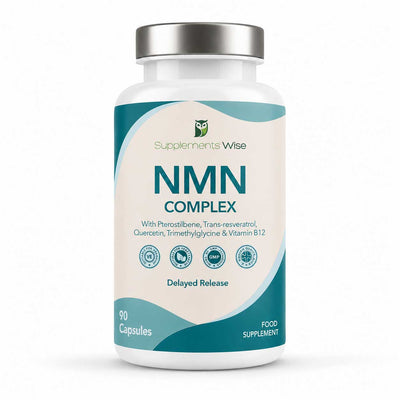
NMN Complex with Resveratrol, TMG, Quercetin and Pterostilbene
90 delayed-release vegan capsules · 30-day supply at 3 caps/day
- 500 mg NMN plus 120 mg trans-resveratrol in one delayed-release serving
- Adds 600 mg TMG for methyl support, 300 mg quercetin and 120 mg pterostilbene
- The full modular Sinclair stack in one capsule for readers who want everything together
Vegan · 30-day returns · Free UK shipping
When should you check with your GP first?
Speak to your GP before starting NMN if you are on chemotherapy, are pregnant or breastfeeding, are under investigation for a haematological condition, or are taking metformin and want to know whether the pairing matters. NMN and metformin are frequently combined in longevity influencer stacks; the interaction is not well-characterised in human trials, so worth flagging.
Also worth a GP conversation if you have an active or previously treated cancer diagnosis, since raising NAD+ has theoretical implications for cell proliferation pathways that human data has not yet fully settled. For most healthy UK adults over 40 with no red-flag conditions, NMN at 250 to 500 mg per day is generally well tolerated across the trials cited above.
Frequently asked questions
Should I feel NMN on day one?
Almost certainly not. Blood NAD+ rises within hours, but the downstream mitochondrial and metabolic changes take weeks. If you feel a lift on day one, it is more likely placebo or caffeine than NMN.
How long should I trial NMN before deciding it works?
Twelve weeks minimum at 250 to 500 mg per day of delayed-release NMN. Judge with a specific measurable target such as a home blood pressure monitor, resting heart rate, fasting glucose or a timed walk, not by how you feel on a random Tuesday.
Does NMN work faster if I take it in the morning?
Morning dosing aligns with the natural circadian NAD+ peak and is what most published trials use. Evening dosing is not "wrong" but there is no evidence it works faster and it may disturb sleep in a minority of responders.
Do I need to cycle NMN?
No. Cycling two weeks on and two weeks off resets the tissue NAD+ plateau, so the benefits that took eight weeks to accumulate can wash out. Daily dosing is what the trials used.
Why is my NMN not working after a month?
Usual causes: dose below 250 mg, non-delayed-release capsules degrading in stomach acid, four weeks is too short a judgement window, or a healthy starting baseline where there was little room to move. Give it another eight weeks before switching.
Can NMN cause side effects while it is starting to work?
Most people tolerate it well. Occasional reports of mild nausea, headache, or vivid dreams in the first fortnight usually settle by week three. Persistent side effects mean stopping and speaking to a GP.
Does NMN work faster if I combine it with resveratrol?
The felt timeline often shortens by a couple of weeks in responders, based on user reports and mechanistic reasoning. There is no head-to-head randomised trial comparing NMN alone against NMN plus resveratrol at matched doses, so treat this as plausible rather than proven.
Key Takeaway
Commit to a 12-week trial of delayed-release NMN at 250 to 500 mg per day, ideally stacked with trans-resveratrol and TMG. Judge at week 12 using a measurable target, not how you feel. Skip 100 mg cheap capsules, unlabelled "NAD+ boost" tablets, and 15-day starter packs, because the published human trials all ran for eight weeks or longer.
Start the 12-week NMN trial the way the trials did
NMN 500 mg Capsules deliver a single-ingredient 500 mg beta-NMN dose in a delayed-release HPMC shell, above the Yoshino 2021 and Igarashi 2022 trial doses, one capsule a day for a full two-month supply. UK GMP + BRC-certified · Vegan · 30-day returns · Free UK shipping.
Shop NMN 500 mgThis article is for information only and is not medical advice. Food supplements should not replace a varied diet or a healthy lifestyle. Speak to your GP or pharmacist before starting any new supplement, especially if you are pregnant, breastfeeding, taking medication or managing a health condition.