Best Supplements for Muscle Cramps UK: An Honest 2026 Guide

Muscle cramps are one of the most common reasons UK adults reach for a supplement, and they are also one of the areas where the evidence is thinnest and the marketing loudest. The honest answer is that magnesium bisglycinate has modest but real evidence for night cramps in some groups, electrolytes help exercise-induced cramps in warm weather, and most of the other cramp supplements on the market are either speculative or overpriced.
This 2026 guide walks through what the peer-reviewed evidence actually says, the sensible doses used in successful trials, and the claims worth ignoring. It is written for UK adults who wake up with a calf seizing at 3am, cramp through parkrun on a July morning, or fight foot cramps through the third trimester.
You will get a straight answer on why plain magnesium oxide failed a landmark trial, when a triple magnesium blend beats a single form, when electrolytes matter more than any capsule, and the six things doctors tell you to try before any pill.
Key Takeaway
For most UK adults with occasional night cramps, magnesium bisglycinate at 300 mg of elemental magnesium taken with the evening meal is the sensible first supplement to try for four to six weeks. If cramps hit during long or hot exercise, an electrolyte drink with sodium and potassium is a better answer than any capsule.
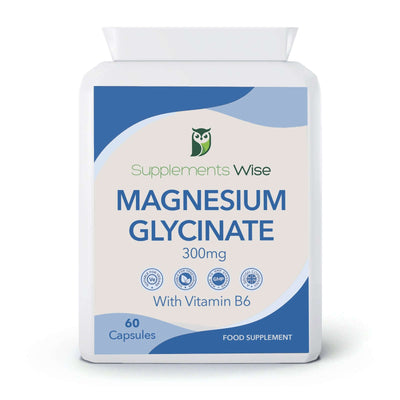
Top pickMade in the UK · GMP certified
Magnesium Glycinate with Vitamin B6, 60 Vegan Capsules
60 vegan capsules · 30 day supply at two a day
- 300 mg of elemental magnesium from chelated bisglycinate per two-capsule evening serving
- Same chelated form used in the Supakatisant pregnancy leg-cramp trial
- Gentle on the stomach, with 1.4 mg of vitamin B6 to support magnesium transport
Vegan · 30-day returns · Free UK shipping
In this article
- Do supplements actually help muscle cramps in the first place?
- Which type of magnesium works best for muscle cramps?
- When is a triple magnesium blend a better fit than a single form?
- When are electrolytes the right answer for exercise cramps?
- Does taurine help muscle cramps and is it worth adding?
- Can vitamin B12 or vitamin D deficiency cause muscle cramps?
- What is a sensible daily dose for cramp prevention?
- How long does magnesium take to work for muscle cramps?
- Which muscle cramp supplements should you skip?
- When should you see your GP about muscle cramps?
- How do you stack cramp supplements safely if the first one fails?
- Frequently asked questions
Do supplements actually help muscle cramps in the first place?
The honest picture is mixed. A 2020 Cochrane review by Garrison and colleagues pooled seven trials of older adults with idiopathic night cramps and concluded that oral magnesium is unlikely to provide clinically meaningful cramp relief for that specific group (Garrison et al., 2020, DOI: 10.1002/14651858.CD009402.pub3). The signal was clearer in pregnancy cramps and hinted at benefit when the magnesium form was well-absorbed.
That does not mean supplements are pointless. It means the answer depends on why you are cramping, which form of magnesium you take, and whether hydration, potassium and sodium status are actually the problem instead. Cramping through a hot 10 km is not the same problem as waking with a locked calf, and the fix is different.
Most people who fail one supplement have quietly failed a poorly absorbed form (magnesium oxide is the usual culprit) or ignored electrolytes when the real issue was fluid balance. Match the supplement to the cramp pattern, give it four to six weeks, and be honest about the limits.
Which type of magnesium works best for muscle cramps?
The form matters more than the milligram figure on the front of the tub. A 2017 randomised trial in JAMA Internal Medicine gave older adults 520 mg per day of magnesium oxide for four weeks and found no significant difference in nocturnal leg cramps compared to placebo (Roguin Maor et al., 2017, DOI: 10.1001/jamainternmed.2016.7052). Magnesium oxide has around 4 per cent bioavailability, so most of that dose never reached the muscle.
Chelated forms such as bisglycinate, malate and taurate absorb far better, are gentler on the stomach, and are the sensible starting point for anyone whose first magnesium supplement did nothing. Bisglycinate is the standout for night cramps because glycine has a calming effect and it rarely causes the loose stools that citrate can trigger.
Citrate is a reasonable general option, and it is the right pick if you also want a mild laxative effect. It is not the right pick if the reason you are cramping is dehydration from an existing gut issue.
What the Research Says
In Roguin Maor and colleagues' 2017 JAMA Internal Medicine trial, 94 older adults with frequent night cramps took 520 mg of magnesium oxide or placebo for four weeks. The magnesium group averaged 3.4 cramps per week, the placebo group averaged 3.2 cramps per week, and the difference was not statistically significant. The authors concluded that oral magnesium oxide should no longer be recommended for older adults with idiopathic nocturnal leg cramps (DOI: 10.1001/jamainternmed.2016.7052). The takeaway is not that magnesium fails everyone, it is that oxide is the wrong form and older adults with truly idiopathic cramps are a hard-to-treat group.
When is a triple magnesium blend a better fit than a single form?
If you are not sure which form suits you, or you want cramp support alongside sleep, energy and muscle-recovery cover, a chelated multi-form blend is a sensible catch-all. Blends usually pair bisglycinate (calming, gentle) with malate (energy, muscle recovery) and taurate (nervous system, cardiovascular) so you get the profile of each form without buying three tubs.
A triple magnesium blend also gives you a higher elemental total per serving than most single-form capsules while staying under the 400 mg UK upper safe intake for supplements. That is useful if you want a modest cushion above your dietary magnesium intake without pushing your gut past the citrate loose-stool threshold.
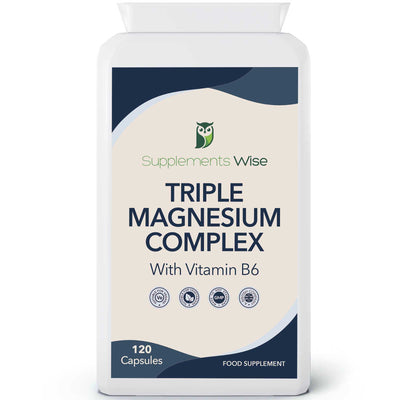
Made in the UK · GMP certified
Triple Magnesium Complex 120 Capsules with Vitamin B6
120 vegan capsules · 40 day supply at three a day
- 375 mg of elemental magnesium from bisglycinate, malate and taurate per three-capsule serving
- Three chelated forms in one capsule, no cheap magnesium oxide filler
- Split the daily dose across meals to keep absorption steady and avoid loose stools
Vegan · 30-day returns · Free UK shipping
When are electrolytes the right answer for exercise cramps?
Sodium and potassium losses matter far more than most cramp articles admit. Miller and colleagues' 2010 study in Medicine & Science in Sports & Exercise showed that a small volume of pickle juice cut electrically induced cramp duration by around 45 per cent within about 85 seconds, well before the sodium could reach the blood, suggesting a reflex mechanism in the mouth and throat (Miller et al., 2010, DOI: 10.1249/MSS.0b013e3181e14ff2). It is one of the fastest-acting cramp interventions in the literature.
The practical translation is that if you cramp during summer runs, long cycles, hot yoga or the third half of a football match, an electrolyte drink beats any capsule. The American College of Sports Medicine flags sodium replacement once activity passes 60 to 90 minutes or once ambient temperature climbs above around 20 degrees Celsius, both very common on a UK July weekend.
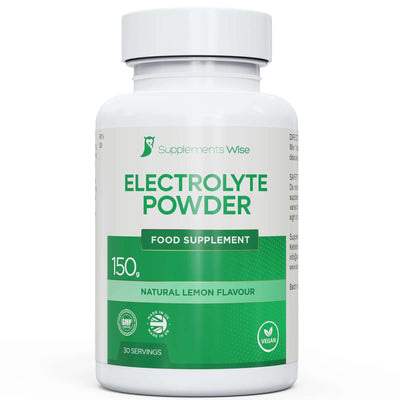
Made in the UK · GMP certified
Electrolyte Powder 150g Sugar-Free Natural Lemon Flavour
150 g tub · 30 servings at 5 g each
- 439 mg of sodium plus 757 mg of potassium citrate per 500 ml serving, hitting the ACSM sodium target
- 12 mg of magnesium bisglycinate for a small daily top-up alongside your capsule dose
- Zero sugar, no artificial sweetener, natural lemon flavour, letterbox-friendly tub
Vegan · 30-day returns · Free UK shipping
Does taurine help muscle cramps and is it worth adding?
Taurine appears in most triple magnesium blends for a reason. It is a semi-essential amino acid that stabilises calcium handling inside muscle cells and modulates the excitability of alpha motor neurons, which is the exact process that misfires during a cramp. Small trials in cirrhosis and athletic populations have shown reductions in cramp frequency at 500 to 1,500 mg per day, though the sample sizes are modest and the effect is not consistent across every group.
You do not need a standalone taurine capsule if your magnesium supplement already contains taurate. If cramps continue after four weeks of chelated magnesium plus decent hydration, adding 500 mg of taurine in the evening is a reasonable, low-risk next step. It is not a first-line intervention.
Can vitamin B12 or vitamin D deficiency cause muscle cramps?
Yes, both can, though it is often missed. Vitamin D deficiency is associated with musculoskeletal pain and low-grade cramping, especially in UK adults with limited winter sun exposure. If cramps are recent, mixed with bone or joint pain, and you have not had a blood test in a while, ask your GP to check 25(OH) vitamin D, ferritin, magnesium and calcium.
Vitamin B12 deficiency, which is very common in vegans, older adults and people on long-term metformin or PPIs, can also cause muscle twitches and cramping through peripheral nerve dysfunction. Fixing a genuine deficiency will do more for your cramps than any generic magnesium supplement, so bloods before capsules is the correct order of operations. NHS guidance on leg cramps also flags certain medications (statins, some diuretics, salbutamol) as common triggers worth reviewing with a pharmacist.
What is a sensible daily dose for cramp prevention?
Doses in successful trials cluster in a narrow range. Below is what UK adults should actually aim for once they have ruled out deficiency and adjusted lifestyle.
| Supplement | UK Evidence Grade | Sensible Daily Dose | Trial Length to Judge |
|---|---|---|---|
| Magnesium bisglycinate | Moderate for night and pregnancy cramps | 200 to 300 mg elemental in the evening | 4 to 6 weeks |
| Triple magnesium blend | Moderate, catches the "which form" problem | 300 to 400 mg elemental across two doses | 4 to 6 weeks |
| Electrolyte drink | Strong for exercise and heat cramps | 300 to 700 mg sodium during activity | Same session |
| Taurine (add-on) | Low to moderate | 500 to 1,000 mg in the evening | 4 weeks |
| Vitamin D3 (if deficient) | Strong once deficiency is confirmed | 1,000 to 4,000 IU with fat | 8 to 12 weeks |
How long does magnesium take to work for muscle cramps?
Magnesium is not a fast-acting cramp fix. Serum levels rise within days, but muscle-cell magnesium turns over slowly, so most trials that showed benefit ran for at least four weeks and often six to eight. If you have taken a chelated magnesium supplement every evening for six weeks with no change in cramp frequency, the honest read is that magnesium is not your problem.
Electrolytes are the opposite. If you are cramping during exercise and a sodium-containing drink stops it inside two minutes, you have your answer. Do not spend six weeks on capsules trying to fix a hydration problem.
Which muscle cramp supplements should you skip?
Not every capsule on the cramp shelf earns its price. The list below is what to actively avoid, and what to try instead.
| Skip These | Try Instead |
|---|---|
| Magnesium oxide 250 mg capsules | Chelated bisglycinate or a triple blend |
| Quinine tablets or tonic water for cramps | Stretching, hydration, magnesium bisglycinate |
| Isotonic sports drinks loaded with sugar | Sugar-free electrolyte powder in a bottle of water |
| Homeopathic Mag phos 6X pills | Actual dose-labelled chelated magnesium |
| 15-ingredient "muscle recovery" blends | One well-dosed magnesium plus decent hydration |
Quinine deserves a specific mention. The MHRA advises against routine quinine use for nocturnal leg cramps outside secondary-care settings because of the risk of thrombocytopenia and cardiac side effects. Tonic water in a glass at bedtime carries the same active ingredient and the same theoretical risk.
Worth Knowing
The 2020 Cochrane review found that magnesium supplementation does not meaningfully reduce cramps in unselected older adults. That does not mean it fails everyone. If you are pregnant, exercising heavily, taking a diuretic, or eating a diet low in leafy greens and nuts, your response is likely to be better than the trial averages. Give a chelated form four to six weeks and stop if nothing changes.
When should you see your GP about muscle cramps?
Most cramps are benign. The ones below are not, and they need a GP appointment rather than another supplement.
- Cramps in the same muscle every night for more than three weeks despite a chelated magnesium trial
- Cramping with visible muscle wasting, weakness that does not recover between episodes, or one-sided leg swelling
- Cramps paired with a recent statin, diuretic, PPI or thyroid medication change
- Cramps with pins-and-needles, numbness, or a burning-foot sensation (possible neuropathy)
- Cramps in someone with known kidney, thyroid or liver disease, or pregnancy after 32 weeks
- Any cramp associated with chest pain, breathlessness or a fainting episode (call 999)
How do you stack cramp supplements safely if the first one fails?
Stacking sensibly means adding one thing at a time. Start with a chelated magnesium at the evening meal for four to six weeks. If cramps continue and you are exercising or in a hot week, add an electrolyte drink around the activity itself before you buy another capsule.
Only after those two steps should you add taurine at 500 mg in the evening for another four weeks, and check bloods for vitamin D, B12, ferritin and thyroid function if you have not already. Adding four supplements at once means you will never know which one worked, and the wasted capsules add up faster than the answer.
Frequently asked questions
What is the best supplement to stop leg cramps at night in the UK?
For most UK adults with idiopathic night cramps, chelated magnesium bisglycinate at 200 to 300 mg of elemental magnesium taken with the evening meal is the sensible first supplement to try. Give it four to six weeks before judging. Avoid magnesium oxide, which failed the 2017 JAMA Internal Medicine trial in older adults.
Are electrolytes better than magnesium tablets for muscle cramps?
They are better for a specific pattern of cramp. If you cramp during long, hot or salty-sweat exercise, an electrolyte drink with 300 to 700 mg of sodium works within minutes and beats any capsule. For 3am calf cramps unrelated to exercise, chelated magnesium is the better first step.
How much magnesium is safe to take daily for cramps in the UK?
The UK safe upper limit for supplemental magnesium is 400 mg of elemental magnesium per day, on top of what you eat. Most cramp trials used 200 to 400 mg, so staying under the upper limit still gives you a trial-matched dose. Higher doses can cause diarrhoea and are not more effective for cramps.
Can I take magnesium every day long term for cramps?
Yes, chelated magnesium at 200 to 400 mg elemental per day is safe for long-term daily use in healthy adults. Anyone with kidney disease, on lithium, on bisphosphonates or on certain heart medications should check with a pharmacist or GP first. If cramps do not improve after six to eight weeks, magnesium is unlikely to be your problem.
Does dehydration always cause muscle cramps?
Not always. Cramps during hot or long exercise are often driven by combined fluid, sodium and potassium losses rather than water alone. Cramps that hit at rest in a cool bedroom are usually not a hydration issue and respond better to chelated magnesium than to more water.
Are magnesium gummies as effective as capsules for cramps?
Gummies deliver less elemental magnesium per serving because a gummy matrix limits how much active ingredient will fit. Most UK gummies land at 100 mg elemental or less, which is below the dose range used in cramp trials. If gummies are the only format you will actually take every night, they are better than nothing, but capsules give you a proper trial-matched dose.
Do banana or pickle juice remedies actually work?
Pickle juice has surprising evidence: Miller and colleagues showed it cut electrically induced cramps within 85 seconds, faster than sodium can enter the blood, so the effect is likely a reflex in the mouth and throat. Bananas contain 400 mg of potassium each and are a decent post-exercise snack, but their potassium alone is not enough to abort an active cramp.
Key Takeaway
Match the supplement to the cramp pattern. Chelated magnesium bisglycinate for night and idiopathic cramps, an electrolyte drink for exercise and heat cramps, and a GP visit rather than another capsule for anything that persists past six weeks or comes with red-flag symptoms.
If you would like to read more, our magnesium glycinate dosage guide, magnesium citrate vs glycinate vs complex comparison, endurance stack for runners, electrolytes explainer and best time to take magnesium guide cover the surrounding decisions in more depth.
Start the six-week cramp trial
Magnesium Glycinate with Vitamin B6, 300 mg elemental per two-capsule evening serving. UK GMP-certified · Vegan · 30-day returns · Free UK shipping.
Shop Magnesium GlycinateIf you take away one thing about supplements for cramps, let it be this: try magnesium bisglycinate or electrolytes for the right cause, and skip the rest.
This article is for information only and is not medical advice. Food supplements should not replace a varied diet or a healthy lifestyle. Speak to your GP or pharmacist before starting any new supplement, especially if you are pregnant, breastfeeding, taking medication or managing a health condition.