Supplements for Bloating UK: A 2026 Guide by Cause

If your stomach looks flat in the morning and pregnant by 4pm, you are far from alone. Roughly one in five UK adults deals with regular bloating, and most of them are being sold the same generic bloating supplements when the real answer depends entirely on which type of bloat they actually have.
Bloating is not one condition. It is a symptom with at least five distinct drivers, and the right supplement changes with the cause. Post-meal gas after a curry needs something different from cycle-related puffiness, and slow-gut constipation needs something different again from a suspected yeast overgrowth.
This guide names the 5 supplements that have real UK-relevant evidence, matches each one to the type of bloat it actually helps, and lists 4 categories to skip. If your bloating is new, painful, or paired with weight loss or blood, please skip the shop and see your GP first.
Key Takeaway
For post-meal gas and slow gastric emptying, ginger at 1g to 1.5g daily has the best trial data. For sluggish gut and constipation-driven bloating, magnesium citrate 300 to 400mg elemental has decades of use. Water retention responds to a low-dose diuretic blend with dandelion and vitamin B6, and suspected yeast overgrowth responds to a multi-botanical formula. Skip debloat gummies loaded with sugar alcohols, senna teas, wild yam creams and any bottle promising a flat stomach in 24 hours.

Top pickMade in the UK · GMP certified
Turmeric and Ginger Gummies with 95% Curcuminoids
120 gummies · 60-day supply at 2 gummies daily
- 180mg ginger extract per serving, the daily dose used in Wu 2008
- 13,500mg turmeric equivalent, standardised to 95% curcuminoids
- Natural orange, pectin-based, no chalky capsules to swallow
Vegan · 30-day returns · Free UK shipping
In this article
- The 5 types of bloating and why the cause matters
- Slow-gut and constipation bloating: magnesium citrate
- Post-meal gas and dyspepsia: ginger
- Suspected yeast overgrowth: a multi-botanical formula
- Water retention and hormonal bloat: a low-dose diuretic blend
- Everyday digestive discomfort: aloe vera complex
- A quick word on probiotics and fibre
- Bloating supplements you can skip entirely
- A realistic 4-week trial by cause
- When bloating means you should see your GP
- Frequently asked questions
The 5 types of bloating and why the cause matters
Bloating is one word covering at least five very different problems. Getting the type right is the difference between a supplement that works in a fortnight and a shelf full of expensive gummies that do nothing at all.
The five most common causes in UK adults are slow gastric emptying and constipation, post-meal gas and functional dyspepsia, small intestinal dysbiosis or yeast overgrowth, water and hormonal retention, and a general low-grade digestive intolerance to certain foods. Each has a different mechanism, and each has a supplement with real trial data behind it.
Use the table below to work out which type sounds like yours. If more than one applies, start with the type that feels dominant and layer the next one in after four weeks.
| If your bloat feels like this | The likely cause | Try this first |
|---|---|---|
| Heavy and hard, going 3+ days without a proper motion | Slow gut / constipation | Magnesium citrate in the evening |
| Comes on within 30 minutes of a meal, with gas or belching | Post-meal gas / dyspepsia | Ginger 1g to 1.5g daily |
| Sugar cravings, thrush history, brain fog, worse on carbs | Yeast or bacterial overgrowth | Multi-botanical anti-yeast formula |
| Rings tight, ankles puffy, worse before a period | Water retention / hormonal | Low-dose diuretic blend with B6 |
| Every meal feels heavy, general digestive unease | General digestive intolerance | Aloe vera botanical complex |
Slow-gut and constipation bloating: magnesium citrate
If you go three days between bowel motions and your bloat sits low and firm, the problem is almost always transit time. Stool sitting in the colon ferments, produces gas, and physically stretches the abdomen, and no digestive enzyme in the world will help until things move.
Magnesium citrate is the sensible starting point. It pulls water into the gut osmotically and gently softens stool, and it has decades of clinical use in functional constipation in adults. A 2021 UK-relevant trial in Neurogastroenterology and Motility found magnesium oxide significantly improved bowel movement frequency and stool consistency compared with placebo over 4 weeks (Mori H et al., 2021, DOI: 10.1111/nmo.14212).
Aim for 300mg to 400mg of elemental magnesium in the evening, taken with a full glass of water, and give it 5 to 10 days. If it works, you will notice the morning bloat drop first and the daytime one fade over the following fortnight. Our detailed guide to when to take magnesium covers timing in more depth.
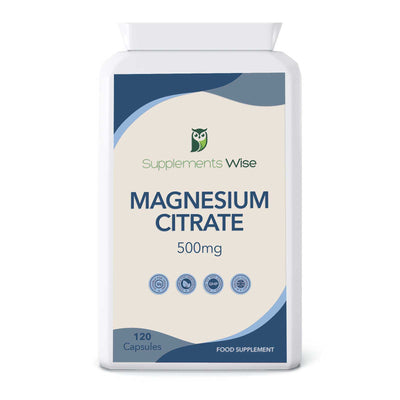
Made in the UK · GMP certified
Magnesium Citrate 500mg 120 Capsules
120 vegan capsules · 60-day supply at 2 capsules daily
- 1,000mg magnesium citrate per serving (152mg elemental)
- Citrate form draws water into the colon for gentle motility
- Single-ingredient, no fillers or added botanicals
Vegan · 30-day returns · Free UK shipping
If you know citrate gives you loose stools, or you want the same magnesium for sleep and mood without the laxative pull, our Magnesium Glycinate with B6 is a gentler alternative at the same elemental dose.
Post-meal gas and dyspepsia: ginger
If the bloat comes on within 30 minutes of eating and pairs with belching, upper stomach fullness or nausea, this is functional dyspepsia and slow gastric emptying. The stomach is holding the meal longer than it should, and food starts to ferment before it moves on.
Ginger is the botanical with the strongest evidence in this window. A crossover trial in dyspeptic patients found that 1.2g of ginger accelerated gastric emptying and stimulated antral contractions compared with placebo (Wu KL et al., 2008, DOI: 10.1097/MEG.0b013e3282f4b224). A separate randomised study of 11 patients with functional dyspepsia found that ginger significantly reduced post-meal fullness and bloating versus placebo (Hu ML et al., World J Gastroenterol 2011, DOI: 10.3748/wjg.v17.i1.105).
What the Research Says
Hu ML, Rayner CK, Wu KL et al. Effect of ginger on gastric motility and symptoms of functional dyspepsia. World J Gastroenterol 2011;17(1):105-110 (DOI: 10.3748/wjg.v17.i1.105). 1.2g of ginger given before a meal significantly accelerated gastric emptying and improved postprandial fullness compared with placebo.
Practical UK dose is 1g to 1.5g of ginger daily, ideally around meals, from a concentrated extract or gummy rather than raw ginger root, which most people struggle to eat in trial doses. Turmeric pairs naturally with ginger because its anti-inflammatory action helps the low-grade gut inflammation that often runs alongside functional dyspepsia. Our related turmeric and ginger benefits guide covers the joint pairing in more detail.
Suspected yeast overgrowth: a multi-botanical formula
If your bloat comes with sugar cravings, thrush history, a coated tongue, or noticeably worsens after bread, pasta and beer, the driver may be small intestinal yeast overgrowth. Candida is a normal gut resident, but when the balance tips towards yeast, low-grade gas, foggy thinking and stubborn bloating usually follow.
The clinical evidence for standalone anti-yeast supplements is mixed and hard to extract from placebo-controlled trials, but the traditional formula of caprylic acid, oregano, garlic, grapefruit seed extract and pau d'arco has decades of naturopathic use. A pragmatic 8-week trial is a fair test if this sounds like your bloat pattern, and it is the pattern that most often overlaps with high cortisol and stress-belly bloating too.
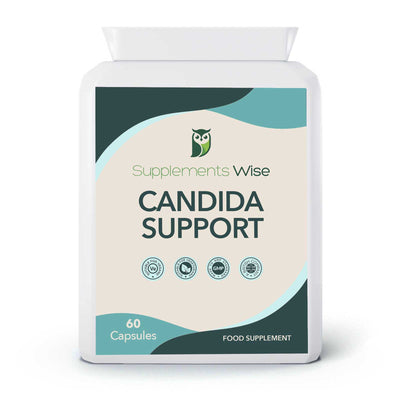
Made in the UK · GMP certified
Candida Support 15-Ingredient Digestive Balance Complex
60 vegan capsules · 30-day supply at 2 capsules daily
- 15-ingredient blend with caprylic acid, oregano, garlic and pau d'arco
- Designed for a standard 8-week anti-yeast programme
- Best-seller in our digestive support range
Vegan · 30-day returns · Free UK shipping
Water retention and hormonal bloat: a low-dose diuretic blend
Not all bloat is gas. If your rings feel tight, your ankles puff by evening, and your abdomen swells for a few days before your period, the mechanism is fluid retention, not gastric distension. Digestive supplements will do nothing for this, but a gentle herbal diuretic blend with vitamin B6 usually will.
Dandelion leaf has traditional and modern use as a mild diuretic, and a small 2009 pilot study found it increased urinary frequency in healthy adults within 5 hours of a single dose (Clare BA et al., 2009, DOI: 10.1089/acm.2008.0152). Vitamin B6 has separate data for premenstrual water retention, mood and breast tenderness in women (Wyatt KM et al., BMJ 1999, DOI: 10.1136/bmj.318.7195.1375).
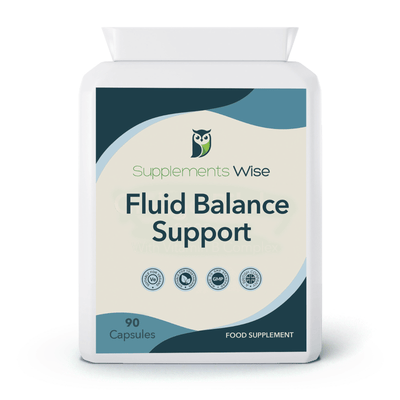
Made in the UK · GMP certified
Fluid Balance Support with Magnesium & Vitamin B6
90 capsules · 30-day supply at 3 capsules daily
- Dandelion, uva ursi and juniper as traditional mild diuretics
- Vitamin B6 for premenstrual fluid retention
- Magnesium to support electrolyte balance during use
Vegan · 30-day returns · Free UK shipping
For a fuller picture of hormonal and cycle-related puffiness, our water retention in women guide covers the salt, cycle and sleep pieces that usually matter more than any single supplement.
Everyday digestive discomfort: aloe vera complex
If the bloat is not tied to constipation, gas, yeast or cycle, but every meal feels a bit heavy and your stomach is generally not happy, a botanical digestive complex is the sensible catch-all. This bucket includes mild reflux, sluggish digestion after antibiotics, and the vague post-viral gut most people describe as "just not right".
Aloe vera has traditional use for gut lining support and a small evidence base in mild IBS. A 2018 systematic review of 3 randomised trials found aloe vera significantly reduced abdominal pain and flatulence in adults with IBS compared with placebo (Hong SW et al., 2018, DOI: 10.5056/jnm18077). Paired with fennel, ginger, peppermint and marshmallow root, it becomes a plausible daily digestive support product.
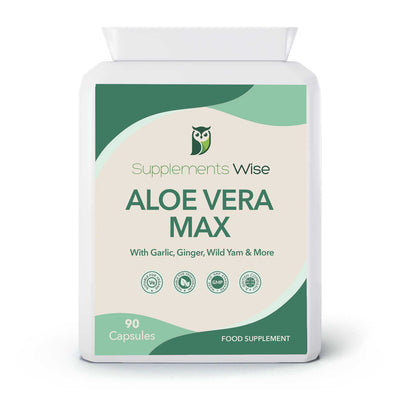
Made in the UK · GMP certified
Aloe Vera Complex with 9 Botanical Extracts
90 vegan capsules · 45-day supply at 2 capsules daily
- 9 botanical extracts including fennel, ginger and marshmallow
- Aloe leaf extract for gut lining and post-meal comfort
- Single daily catch-all when the bloat cause is unclear
Vegan · 30-day returns · Free UK shipping
A quick word on probiotics and fibre
You would expect a bloating article to open with probiotics, and the evidence for multi-strain probiotics in IBS-related bloating is genuinely reasonable. A 2019 meta-analysis of 21 trials in Nutrients found multi-strain probiotics significantly reduced abdominal bloating and pain in adults with IBS versus placebo (Niu HL et al., DOI: 10.3390/nu11122880).
Our 10 Billion CFU multi-strain Probiotic Complex is a sensible pick if this is your bloat pattern. The related timing question of when to take probiotics matters more than most people realise, and our probiotic timing guide is worth reading before you buy.

Made in the UK · GMP certified
Probiotic Complex 10 Billion CFU
120 capsules · 60-day supply at the standard morning dose
- Six clinically studied strains at 10 billion CFU
- Delayed-release capsules, so more bacteria survive stomach acid
- Plus 40mg chicory inulin (FOS) to feed them once they arrive
Vegan · 30-day returns · Free UK shipping
Fibre is the other honest mention. Soluble fibre such as psyllium can help constipation-driven bloating in some people and worsen it in others, so start with 5g and go slowly. Our fibre range is also being restocked, and in the meantime two kiwifruit a day has trial data behind it for the same effect (Chey SW et al., Am J Gastroenterol 2021).
Bloating supplements you can skip entirely
Four categories dominate Instagram and TikTok, and all four are wasting your money. Skip them and buy targeted single-cause supplements instead.
| Skip this | Why | Try instead |
|---|---|---|
| Debloat gummies loaded with sorbitol, xylitol or maltitol | Sugar alcohols are fermented in the colon and are a known cause of gas and bloating in FODMAP-sensitive people. | A capsule form of the same botanical without the sweetener. |
| Senna teas and stimulant laxative "detox" blends | They give a fast morning motion at the cost of colon habituation, and daily use can worsen chronic constipation over time. | Magnesium citrate in the evening. |
| Wild yam and progesterone creams marketed for hormonal bloat | Your body cannot convert diosgenin into progesterone; that step only happens in a lab. | A low-dose diuretic blend and, if severe, a GP conversation about HRT. |
| Any bottle promising a flat stomach in 24 hours | Real bloating fixes work over 2 to 4 weeks. Same-day flat-stomach claims almost always mean fluid loss or a stimulant laxative. | A 4-week trial matched to your cause. |
Activated charcoal deserves a separate note. It has a small evidence base for intestinal gas but binds to medications and vitamins, so it should not be a daily supplement. Our full write-up on activated charcoal for bloating covers the honest use case, which is occasional rather than routine.
A realistic 4-week trial by cause
Do not start five things at once. Pick the type of bloat you have most weeks and run the matching 4-week trial, then keep it if it works. If it does not, move to the next most likely cause rather than layering products.
| Bloat type | 4-week trial | What to track |
|---|---|---|
| Slow gut / constipation | Magnesium citrate 300 to 400mg elemental in the evening. | Days per week with a morning motion, morning bloat score out of 10. |
| Post-meal gas / dyspepsia | Ginger 1g to 1.5g daily, split around meals. | Belching, fullness at 30 minutes and 90 minutes after eating. |
| Yeast / dysbiosis | 8-week multi-botanical anti-yeast course. | Sugar cravings, coated tongue, weekly bloat pattern. |
| Water retention / hormonal | Low-dose diuretic blend with B6, days 20 to 5 of your cycle. | Ring tightness, ankle puffiness, morning weight swing. |
| General digestive unease | Aloe vera botanical complex, 2 capsules daily. | Post-meal comfort, evening tummy tightness. |
Worth Knowing
Do not chase every possible cause at once. Running one clean 4-week trial tells you far more than throwing five bottles at the problem and never learning which one actually worked. Take a phone photo of your abdomen morning and evening on day 1 and day 28; the visual comparison is more useful than any tape measure.
When bloating means you should see your GP
Most bloating is functional and responds to sensible diet, sleep and one targeted supplement. Some bloating is a warning sign, and the NHS asks you to book an urgent appointment for a specific short list of features that must not be missed.
See your GP if your bloating has become persistent for three weeks or more, especially if it is paired with unintentional weight loss, blood in the stool, a persistent change in bowel habit after age 50, difficulty swallowing, or a family history of bowel, ovarian or stomach cancer. Bloating with pelvic pain in women is also a NICE red flag for ovarian cancer and should be checked with a CA-125 blood test.
Perimenopausal bloating, IBS, coeliac disease, thyroid disease and iron deficiency all overlap in how they present. Our related guides on water retention, B12 deficiency and brain fog supplements are worth a read if any of those apply. A simple blood panel from your GP will usually rule the common overlapping issues in or out.
Key Takeaway
Match the supplement to the bloat. Ginger for post-meal gas, magnesium citrate for constipation-driven bloat, a diuretic blend for cycle puffiness, a botanical complex for suspected yeast, and aloe vera for general digestive unease. Give each one a clean 4-week trial before adding another. Skip debloat gummies, senna teas, wild yam creams and 24-hour flat-stomach bottles entirely.
Frequently asked questions
What is the fastest supplement for bloating relief?
Ginger works within a single meal for post-meal gas and dyspepsia, and its effect on gastric emptying has been measured within 30 to 60 minutes in trial settings. Magnesium citrate works within 6 to 12 hours for constipation-driven bloating. Anything else takes at least 1 to 2 weeks of consistent daily use before you should judge it.
Do digestive enzymes actually help bloating?
Digestive enzymes help specific carbohydrate intolerances, such as lactose intolerance with lactase, or FODMAP intolerance with alpha-galactosidase. For general bloating without a proven enzyme deficiency, the evidence is much weaker, and ginger or magnesium citrate are more reliable first choices.
Should I take a probiotic for bloating?
Multi-strain probiotics have reasonable meta-analysis data for reducing abdominal pain and bloating in IBS, so yes if your pattern fits IBS. Look for a product with at least 10 billion CFU across several strains, take it consistently for 8 weeks, and time it as covered in our probiotic timing guide.
Can magnesium make bloating worse?
Magnesium citrate pulls water into the gut and can cause loose stools if the dose is too high, which some people misread as worse bloat. Start at 300mg elemental, take it in the evening with water, and if it is uncomfortable switch to magnesium bisglycinate at the same elemental dose for a gentler stool effect.
Is bloating always caused by food?
Often, but not always. Stress and high cortisol slow gastric emptying and can drive an entire bloat pattern of their own. Hormonal fluid retention is not caused by food at all, and constipation-driven bloat has more to do with hydration, magnesium status and movement than with what you last ate.
Are apple cider vinegar and lemon water useful for bloating?
Both have very limited high-quality trial evidence in bloating specifically. Apple cider vinegar may help some people with low stomach acid and post-meal fullness, but the mechanism is not proven and daily undiluted acetic acid can erode tooth enamel. Neither replaces a targeted, evidence-backed supplement matched to your bloat type.
When should I worry about bloating?
Book an urgent GP appointment if your bloating has been persistent for 3 weeks or more, especially with weight loss, blood in the stool, difficulty swallowing, a change in bowel habit after age 50, or pelvic pain in women. NICE lists these as red flags that need investigation, not supplements.
Start with the ginger route
Our top pick for the most common bloat type: post-meal gas. 180mg ginger extract paired with 95% curcuminoid turmeric in a natural orange gummy. UK GMP-certified · Vegan · 30-day returns · Free UK shipping.
Shop Turmeric & Ginger GummiesThis article is for information only and is not medical advice. Food supplements should not replace a varied diet or a healthy lifestyle. Speak to your GP or pharmacist before starting any new supplement, especially if you are pregnant, breastfeeding, taking medication or managing a health condition.