Best Supplements for PMS UK: A 2026 Evidence Guide by Symptom

If the week before your period turns into cramps, mood swings, tender breasts, puffy fingers and a fatigue you cannot explain, you are looking at premenstrual syndrome. Around 30% of women of reproductive age in the UK meet the criteria for PMS, and roughly 5 to 8% meet the tighter criteria for PMDD, according to the Royal College of Obstetricians and Gynaecologists.
Most PMS supplements on the shelf are throwing everything at everyone. A better approach is to work out which two or three symptoms actually dominate your luteal phase, and match one evidence-backed supplement to each. That is how the trial data was gathered in the first place.
This guide names the 4 PMS supplements with real UK-relevant evidence, maps each to the symptom cluster it actually treats, lists 4 categories to skip, and gives you a clean 3-cycle plan to test them without wasting money. If your symptoms are severe or you are being told everything is normal when it clearly is not, see the GP section at the bottom first.
Key Takeaway
For cramps, ginger at 750mg to 2g daily in the 3 days before and first 3 days of your period matches ibuprofen for pain relief in multiple randomised trials. For mood, irritability and headaches, magnesium at 250 to 360mg elemental daily across the whole cycle has decades of PMS trial data. For water retention, bloating and breast tenderness, a low-dose diuretic blend with vitamin B6 is the evidence-backed pick. For the crashing energy and low mood, methylcobalamin B12 tops up the deficit that combined oral contraceptives and heavy periods often leave behind. Skip evening primrose oil, chasteberry marketed as a fix-all, wild yam creams and any bottle promising a "hormone reset".
Top pickMade in the UK · GMP certified
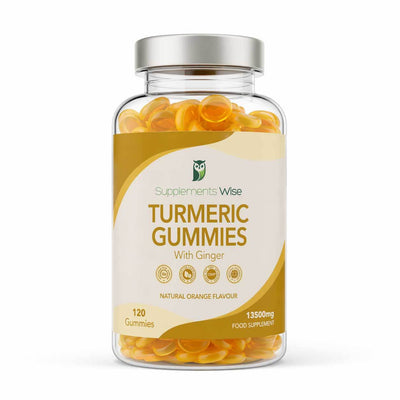
Turmeric and Ginger Gummies with 95% Curcuminoids
120 gummies · 60-day supply at 2 gummies daily
- 180mg ginger extract per serving, near the 250mg dose used in Ozgoli 2009
- 13,500mg turmeric equivalent per serving standardised to 95% curcuminoids
- Natural orange, pectin-based, no chalky capsules on a cramp day
Vegan · 30-day returns · Free UK shipping
In this article
- What actually drives PMS symptoms
- Ginger for cramps: the strongest cycle-pain evidence
- Magnesium for mood, headaches and irritability
- Fluid balance blend for water retention and breast tenderness
- B12 and folate for luteal-phase fatigue
- PMS supplements you can skip entirely
- A realistic 3-cycle trial plan
- Diet, sleep and cycle-tracking basics that matter more than any bottle
- When PMS means you should see your GP
- Frequently asked questions
What actually drives PMS symptoms
PMS is not one condition either. It is a cluster of symptoms driven by the fall in progesterone and oestrogen across the second half of your cycle, and the way that fall interacts with prostaglandins, serotonin, magnesium status and fluid handling.
Match your dominant two or three symptoms to the table below. That is the sensible starting point, because the same supplement can be a hero for one symptom cluster and useless for another.
| If your PMS looks like this | Likely driver | Try this first |
|---|---|---|
| Sharp lower-belly cramps, back ache, worse on day 1 and 2 | Prostaglandin-driven pain | Ginger 750mg to 2g daily around your period |
| Mood swings, tearfulness, tension headaches, irritability | Low luteal magnesium, serotonin dip | Magnesium 250 to 360mg elemental across the cycle |
| Puffy ankles and fingers, tight rings, sore heavy breasts | Cyclical fluid retention | Low-dose diuretic blend with vitamin B6 |
| Crashing energy, brain fog, low mood, cravings the week before | Under-recognised B12 and folate shortfall | Methylcobalamin B12 daily, with methyl folate if on the pill |
If two clusters apply, start with the one that costs you the most days a month and add the second after one full cycle. Layering everything at once is how women end up spending £50 a month on supplements and never learning what actually helped.
Ginger for cramps: the strongest cycle-pain evidence
Ginger has genuinely surprising trial data in primary dysmenorrhoea, and it is the supplement most likely to give a woman with painful periods a real, measurable win. The mechanism is anti-prostaglandin, the same pathway ibuprofen targets, and the trials have been repeated across at least four independent groups.
A 2009 randomised trial in Iranian teenagers with painful periods gave 250mg of ginger four times daily for the first three days of the period and reported pain relief equal to mefenamic acid and ibuprofen (Ozgoli G et al., J Altern Complement Med 2009, DOI: 10.1089/acm.2008.0311). A 2012 RCT confirmed the effect at 1,500mg daily across five cycles (Rahnama P et al., BMC Complement Altern Med 2012, DOI: 10.1186/1472-6882-12-92), and a 2014 study found the same benefit when ginger was started 2 days before the period rather than on day 1 (Kashefi F et al., Pain Manag Nurs 2014, DOI: 10.1016/j.pmn.2013.09.001).
What the Research Says
Ozgoli G, Goli M, Moattar F. Comparison of effects of ginger, mefenamic acid, and ibuprofen on pain in women with primary dysmenorrhea. J Altern Complement Med 2009;15(2):129-132 (DOI: 10.1089/acm.2008.0311). Ginger 250mg four times daily on days 1 to 3 of the period reduced pain severity by 82% versus 82% for mefenamic acid and 84% for ibuprofen, with no statistical difference between the three.
Practical UK dose is 750mg to 2g of ginger daily, ideally started 2 to 3 days before your period is due and continued through the first 3 days. Anti-inflammatory turmeric pairs sensibly with it, because both target the same prostaglandin pathway. Our top-pick gummy above gives 180mg of concentrated ginger extract per 2-gummy serving, so the everyday cycle dose is 2 to 3 gummies depending on how much pain you get.
Magnesium for mood, headaches and irritability
If your PMS is more mood than cramps, the evidence points to magnesium first. Women with PMS have measurably lower red-cell magnesium than women without PMS, and the deficit is worst in the luteal phase where symptoms peak (Facchinetti F et al., Obstet Gynecol 1991).
A 1998 UK trial in the Journal of Women's Health tested 200mg elemental magnesium daily for 2 cycles and reported significant reductions in fluid retention, breast tenderness and weight gain in the second cycle (Walker AF et al., 1998, DOI: 10.1089/jwh.1998.7.1157). A 2012 Iranian RCT of 126 women showed 250mg magnesium daily improved luteal-phase anxiety and mood scores versus placebo (Ebrahimi E et al., Iran J Nurs Midwifery Res 2012, PMID 23833683).
Made in the UK · GMP certified
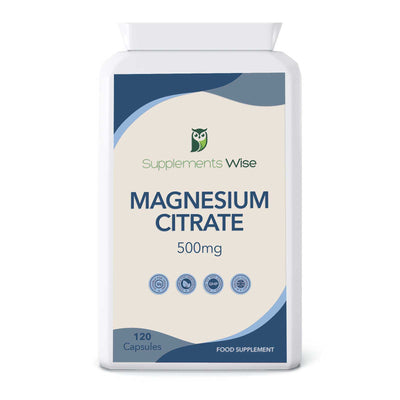
Magnesium Citrate 500mg 120 Capsules
120 vegan capsules · 60-day supply at 2 capsules daily
- 1,000mg magnesium citrate per serving delivering 152mg elemental
- Take 2 in the evening for mood and cramp support across the cycle
- Single-ingredient, no fillers or added botanicals
Vegan · 30-day returns · Free UK shipping
Take magnesium citrate across the whole cycle, not just the luteal week, because the trials that worked all used continuous daily dosing. If the citrate form gives you loose stools, our Magnesium Glycinate with B6 is a gentler alternative at the same elemental target, and our form comparison guide covers when each one is worth the extra pound.
Fluid balance blend for water retention and breast tenderness
The puffy fingers, tight waistbands and heavy tender breasts of the week before your period are not gut bloating. They are oestrogen-driven fluid retention, and the aldosterone system that shifts sodium and water is the mechanism the treatment has to target. Digestive supplements do nothing here.
Vitamin B6 has the longest trial history for premenstrual fluid symptoms. A 1999 BMJ systematic review of 9 published trials concluded that up to 100mg of vitamin B6 daily produced meaningful improvements in premenstrual symptoms including breast tenderness, mood and fluid retention (Wyatt KM et al., 1999, DOI: 10.1136/bmj.318.7195.1375). Dandelion leaf adds a mild traditional diuretic effect, with a small 2009 pilot showing increased urinary frequency within 5 hours of a single dose (Clare BA et al., 2009, DOI: 10.1089/acm.2008.0152).
Made in the UK · GMP certified
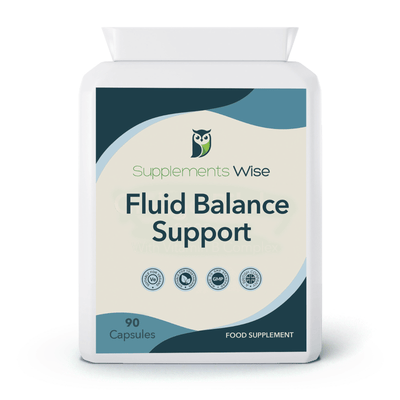
Fluid Balance Support with Magnesium & Vitamin B6
90 capsules · 30-day supply at 3 capsules daily
- Dandelion, uva ursi and juniper as traditional mild diuretics
- Vitamin B6 at a dose backed by the 1999 BMJ PMS review
- Use from day 20 of your cycle to day 5, not continuously
Vegan · 30-day returns · Free UK shipping
Cycle the diuretic blend rather than taking it continuously. Day 20 through day 5 catches the fluid-heavy window without dehydrating you in the follicular phase where fluid handling is already normal. Our water retention in women guide covers the salt and sleep pieces that usually matter alongside any capsule.
B12 and folate for luteal-phase fatigue
The under-recognised PMS driver is a low-grade B12 and folate deficit that shows up as crashing energy, low mood and stubborn brain fog in the week before your period. Two big overlaps sit behind it: combined oral contraceptives measurably lower B12 and folate status across a full year of use (Lussana F et al., Thromb Res 2003, DOI: 10.1016/S0049-3848(03)00347-6), and heavy menstrual bleeding drives an iron loss that hides an underlying B12 problem.
A 2011 Am J Clin Nutr prospective cohort of over 3,000 US women found those with the highest intake of B vitamins from food had a 25 to 35% lower risk of developing PMS over 10 years (Chocano-Bedoya PO et al., 2011, DOI: 10.3945/ajcn.110.009530). The active methylcobalamin form is the one your body uses without an extra conversion step, which matters more if you carry a common MTHFR variant.

Made in the UK · GMP certified
Vitamin B12 Methylcobalamin 1,000mcg
120 vegan capsules · 4-month supply at 1 capsule daily
- 1,000mcg methylcobalamin per capsule, the active bioavailable form
- Take one daily with breakfast, useful year-round for pill users
- Pairs with methyl folate for the full one-carbon methylation cycle
Vegan · 30-day returns · Free UK shipping
If you take the combined pill or have heavy periods, pair B12 with an active methyl folate and get an iron panel from your GP rather than blind-supplementing iron. Our signs of B12 deficiency guide covers what to look for beyond luteal fatigue.
PMS supplements you can skip entirely
Four categories dominate the PMS aisle in UK pharmacies and Instagram ads, and none of them earn their place. Redirect the spend to one of the four above.
| Skip this | Why | Try instead |
|---|---|---|
| Evening primrose oil for PMS or breast tenderness | A 2013 Cochrane review of 8 trials found no significant benefit of evening primrose oil for mastalgia or PMS versus placebo (Srivastava A et al., DOI: 10.1002/14651858.CD005395.pub2). | A low-dose diuretic blend with B6 for the tender-breast, puffy week. |
| Chasteberry marketed as a "hormone reset" fix-all | Trial data is limited to specific extracts at specific doses, mostly for mastalgia, and it interacts with the combined pill and dopaminergic medication. Not a plug-and-play daily. | Match your dominant symptom cluster to the four supplements above. |
| Wild yam and progesterone creams marketed to "balance hormones" | Your body cannot convert diosgenin from wild yam into progesterone, and non-prescription creams sold as bioidentical are unregulated. | A GP conversation about the combined pill, POP or, in the right context, HRT. |
| Iron every month, without a blood test | Iron helps if you are deficient and can be actively harmful if you are not. Ferritin and full iron studies via your GP are the right first step. | GP iron panel first; supplement only if the ferritin is genuinely low. |
Calcium, vitamin D, saffron and inositol also come up in PMS conversations. Calcium has meta-analysis data at around 1,000mg daily and is worth a look if your diet is genuinely low, saffron has a small but real body of evidence at 30mg daily for PMDD-type mood, and myo-inositol is well studied in PCOS rather than PMS. All three are second-line rather than first-line.
A realistic 3-cycle trial plan
PMS lives on a monthly clock, so testing supplements needs a monthly clock too. One cycle is not long enough to know if something worked, and three is usually the right window before you decide to keep, drop or swap.
Track two things across the trial: a daily symptom score from 0 to 10 for your dominant symptom, and the number of days per cycle that symptom cost you. Both numbers should trend down by cycle three if the supplement is doing anything at all.
| Dominant symptom | 3-cycle plan | What to track |
|---|---|---|
| Cramps | Ginger 750mg to 2g daily, from 2 days before your period through day 3. | Ibuprofen tablets used per cycle, pain score at hour 2 of day 1. |
| Mood and irritability | Magnesium citrate 250 to 300mg elemental in the evening, every day. | Days of low mood per cycle, self-scored irritability out of 10. |
| Water retention and breast tenderness | Fluid balance blend with B6 from day 20 to day 5 only. | Ring tightness score, breast tenderness on day 25. |
| Fatigue and low mood | Methylcobalamin B12 1,000mcg daily, plus methyl folate if on the pill. | Energy score in the luteal week vs the follicular week. |
Worth Knowing
Do not start four supplements at once. Pick the symptom that costs you the most days, run one 3-cycle trial, and only layer the next if the first genuinely helped. Anything sold to you as "starts working in the first cycle" for PMS is being sold with more confidence than the evidence deserves.
Diet, sleep and cycle-tracking basics that matter more than any bottle
No supplement out-performs the basics if the basics are ignored. Aerobic exercise, sleep regularity and moderating salt in the luteal week each have PMS trial data of their own, and cycle-tracking is the single most useful free tool in PMS management.
A 2019 systematic review of 15 exercise trials in PMS reported that at least 30 minutes of moderate aerobic activity three times a week significantly reduced symptom severity across cramps, mood and fatigue (Pearce E et al., BMJ Open Sport Exerc Med 2020). Sleep matters because luteal-phase insomnia amplifies everything else; our sleep supplements guide covers the magnesium and glycine angle if that is your bottleneck.
Cut discretionary salt in days 20 to 28, keep caffeine to before lunch, and log two things a day in an app you already use: symptom score and cycle day. Two months of that data will tell you more about your PMS pattern than any hormone panel your GP can offer.
When PMS means you should see your GP
Most PMS is managed at home with basics, one supplement, and time. Some patterns need a proper NHS conversation, and the NICE guidance is clear about when a GP visit is the right next step.
Book an appointment if your symptoms are severe enough to affect work, relationships or daily function, if you have thoughts of self-harm in the luteal phase, if your periods have become heavier or more painful in the last 6 months, or if the pain of your period is a level you would not describe as normal cramping. NICE calls the severe end of the spectrum PMDD, which affects around 5 to 8% of women and often responds to SSRIs, the combined pill or CBT.
Endometriosis, adenomyosis, thyroid disease and iron deficiency all mimic or overlap with PMS. A ferritin, TSH and B12 panel is a sensible first ask if you have not had one recently. Our related guides on cortisol and stress, perimenopause and sleep are worth reading if any of those apply.
Key Takeaway
Match the supplement to your dominant PMS symptom. Ginger for cramps, magnesium for mood, a diuretic blend for water retention, and methylcobalamin B12 for luteal fatigue. Give each one 3 full cycles before deciding, skip evening primrose, chasteberry-as-fix-all, wild yam creams and blind iron, and see your GP if any symptom is severe or your period pain has changed.
Frequently asked questions
What is the single most evidence-backed supplement for PMS?
For period pain and cramps, ginger has the strongest single-supplement evidence, matching mefenamic acid and ibuprofen for pain relief in three separate randomised trials at 750mg to 2g daily around the period. For mood, magnesium wins at 250 to 360mg elemental across the cycle. There is no single "best PMS supplement" for all symptoms; matching the supplement to the dominant symptom is what makes the evidence apply.
How long does a PMS supplement take to work?
Ginger for cramps works within a single cycle, often within the first painful day. Magnesium for mood and irritability usually needs 2 full cycles to show a real change, and 3 cycles to know if it is holding. A diuretic blend for fluid retention should show a small effect in the first cycle you use it, and B12 for fatigue is usually clearer at 6 to 8 weeks.
Is evening primrose oil worth taking for PMS?
The 2013 Cochrane review of 8 trials of evening primrose oil in mastalgia and PMS found no significant benefit over placebo. It is safe, but the money is better spent on a B6-containing diuretic blend for the same symptom cluster, or on ginger and magnesium for the cramp and mood side.
Which magnesium is best for PMS?
The PMS trials used elemental doses of 200 to 360mg daily and did not depend on a particular form. Magnesium citrate is the most cost-effective and doubles as a mild osmotic laxative, which suits women whose PMS pattern includes constipation. Bisglycinate is gentler on the stool and often preferred for evening mood and sleep support.
Do PMS supplements interact with the combined pill?
The four supplements in this guide are safe alongside the combined pill and the progestogen-only pill. Chasteberry is the notable exception and should not be combined with hormonal contraception without a GP conversation. Combined pill users are also more likely to need the B12 top-up, because a full year of pill use measurably lowers B12 and folate status.
Should I take iron every month for heavy periods?
Only if a GP blood test has confirmed low ferritin or iron-deficiency anaemia. Iron helps genuine deficiency, but supplementing when your stores are already normal has no benefit and can be actively harmful over time. If your periods are heavy enough to worry about iron, that is itself a reason for a GP visit.
What is the difference between PMS and PMDD?
PMS covers the everyday cluster of physical and mood symptoms in the week before your period, and around 30% of women meet the criteria at some point. PMDD is the severe end of the spectrum, affects 5 to 8% of women, and involves marked mood changes that measurably interfere with work, relationships and function. PMDD often needs medical treatment rather than supplements alone, and is a clear reason to book a GP appointment.
Start with the ginger route
Our top pick for the most common PMS symptom: cramps. 180mg ginger extract with 95% curcuminoid turmeric in a natural orange gummy. UK GMP-certified · Vegan · 30-day returns · Free UK shipping.
Shop Turmeric & Ginger GummiesThis article is for information only and is not medical advice. Food supplements should not replace a varied diet or a healthy lifestyle. Speak to your GP or pharmacist before starting any new supplement, especially if you are pregnant, breastfeeding, taking medication or managing a health condition.